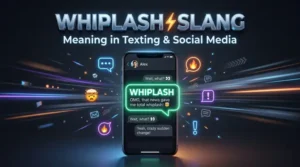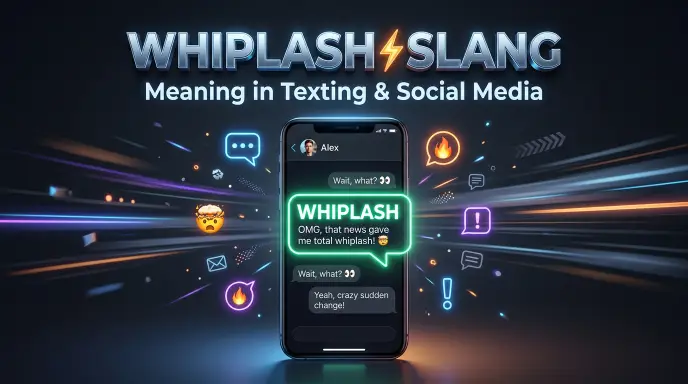
Whiplash slang usually describes a feeling of sudden confusion, shock, or emotional change caused by something that shifts very quickly. For example, someone might say, “That plot twist gave me whiplash,” meaning the sudden change felt surprising or hard to process.
People often search for whiplash slang after seeing the word in a text, social media post, meme, or conversation. The term can sound confusing because whiplash also has a real medical meaning. In casual slang, however, people often use it as a figurative expression. It describes a sudden shift in mood, opinion, tone, or situation.
This article explains what whiplash means in slang, how people use it online, and when you should take the word literally instead.
Quick Answer
- In slang, whiplash means feeling shocked, confused, or overwhelmed by a sudden change. People often use it humorously when a conversation, story, mood, or situation changes direction very quickly. The meaning is figurative and does not usually refer to a physical injury.
What Does Whiplash Slang Mean in Text?
Whiplash in slang describes the mental or emotional effect of a sudden change. Something happens so quickly that a person jokingly says it gave them “whiplash.”
Imagine a friend who acts happy one moment and angry the next. You might say:
“The mood change gave me whiplash.”
You do not mean that your neck suffered an injury. Instead, you mean the fast change surprised or confused you.
People also use the word when they experience:
- A sudden change in someone’s attitude
- A confusing plot twist
- A fast shift in an online discussion
- Mixed messages from another person
- A quick change in fashion, trends, or opinions
- An unexpected change in tone
The slang meaning focuses on speed and surprise. A slow change usually would not inspire someone to use the word this way.
Whiplash Has a Literal Meaning Too
Before using the slang meaning, it helps to understand the difference between the two uses.
Whiplash is also a medical term for a neck injury that can happen when the head moves suddenly and forcefully. For example, it can occur during certain accidents.
The slang use borrows the idea of a sudden, forceful movement. Instead of describing the neck, people describe their reaction to a sudden emotional or mental shift.
Here is the difference:
| Use | Meaning | Example |
| Literal | A physical neck injury | “The doctor checked her for whiplash.” |
| Slang | Shock or confusion after a sudden change | “That ending gave me whiplash.” |
This difference matters. If someone talks about pain, an accident, or a physical injury, they likely mean the real medical condition. Do not assume they are joking.
Does Whiplash Have a Full Form?
No. Whiplash does not have a full form and does not stand for a longer phrase.
It is a complete English word. In slang, people use the existing word in a figurative way.
So, searches such as “whiplash full form” or “what does whiplash stand for” do not usually apply to this expression.
How Do People Use Whiplash as Slang?
People often use whiplash after a sharp and unexpected change. The phrase usually exaggerates their reaction for humor or emphasis.
Sudden mood changes
A person may act friendly and then become cold without warning.
“She was laughing with me five minutes ago. Now she is mad. I have emotional whiplash.”
This sentence expresses confusion about the sudden change.
Confusing stories or plot twists
A movie, TV show, or book can change direction quickly.
“That episode gave me whiplash. I did not expect the story to change like that.”
The speaker means the shift happened so suddenly that it felt shocking.
Mixed messages
Someone may give two completely different signals.
“First he said he wanted to go, then he canceled and changed his mind again. The whiplash is real.”
This use often appears online when people feel confused by inconsistent behavior.
Fast changing opinions
People can also use the term when public opinion changes quickly.
“Everyone hated the trend last week, and now everyone loves it. I have whiplash.”
The phrase highlights how quickly attitudes changed.
Is Whiplash Slang Rude or Offensive?
Whiplash slang is usually neutral and not offensive. People often use it in a humorous or dramatic way.
However, context matters because whiplash also describes a real injury. Joking about “getting whiplash” from a sudden change usually causes no problem. Still, avoid making light of someone’s actual injury or pain.
For example:
- “That plot twist gave me whiplash.” :Casual and harmless.
- “My neck hurts after the accident. I think I have whiplash.” :A serious physical context.
The same word can carry very different meanings. Pay attention to the situation before responding.
Where Is Whiplash Slang Commonly Used?
People can use this expression in both spoken and online conversations. It works best in informal settings.
Texting and group chats
Friends may use the word when a conversation takes an unexpected turn.
“We went from talking about pizza to planning a trip abroad. I have whiplash.”
The speaker jokes about the fast topic change.
TikTok and short form videos
Social media users may describe a sudden change in a video, trend, or creator’s content as “whiplash.”
For example:
“The switch from the sad video to the dance clip gave me whiplash.”
The phrase helps communicate a strong and immediate reaction.
Reddit and online discussions
People may use whiplash when an opinion changes quickly or when a discussion becomes unpredictable.
“The comments went from supportive to angry so fast. Total whiplash.”
Discord and gaming chats
Gamers can use the expression after a fast change in the mood or direction of a match.
“We were winning, then everything fell apart in one minute. That was whiplash.”
The term does not belong specifically to gaming. Still, it fits naturally in fast moving group conversations.
Instagram and Snapchat
The word can appear in captions, comments, and messages. People often use it to react to sudden changes in photos, stories, relationships, or trends.
RealLife Examples of Whiplash Slang
The tone can change depending on the situation. These examples show how people may use the word.
Friendly example
A: “I just changed my hair color again.”
B: “You had a different color yesterday. You are giving me whiplash!”
This sounds playful and friendly.
Casual text example
“I went from excited to disappointed in ten seconds. Emotional whiplash.”
The speaker describes a sudden change in feelings.
Argumentative example
“You keep changing your story. Honestly, you are giving everyone whiplash.”
Here, the phrase sounds more critical. The speaker points out inconsistent behavior.
Social media example
“The video started as a cooking tutorial and ended with a breakup story. I got whiplash.”
The speaker uses exaggeration to describe an unexpected shift.
Gaming example
“One second our team had control, and the next second we lost the match. That comeback gave me whiplash.”
The rapid change creates surprise.
Family conversation example
“Dad said we were staying home, then suddenly he said we were leaving in five minutes. I got whiplash.”
The phrase adds humor to a sudden change of plans.
Why Do People Say “Emotional Whiplash”?
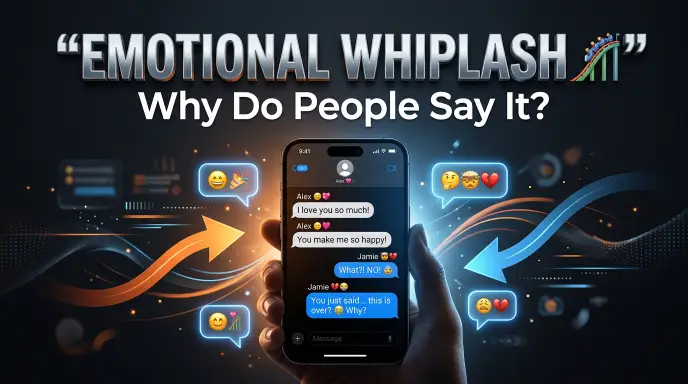
Emotional whiplash is a common figurative phrase for strong feelings that change quickly because another person or situation sends mixed signals.
For example, someone might say:
“One day they act close to me, and the next day they ignore me. I have emotional whiplash.”
The phrase does not describe a medical diagnosis. It describes the speaker’s experience of confusion or rapid emotional change.
People often use it when they feel pulled between different emotions, such as:
- Hope and disappointment
- Happiness and sadness
- Confidence and doubt
- Trust and confusion
Because the phrase can describe difficult relationships, use it thoughtfully. Sometimes people use it casually. Other times, they describe a genuinely stressful situation.
The Origin and Background of Whiplash as an Expression
The word whiplash first refers to a sudden, forceful movement and the physical injury associated with that type of motion. English speakers later began using the word figuratively.
Figurative language often takes a physical experience and applies it to emotions or thoughts. In this case, the idea of a sudden jolt helps explain a sudden mental or emotional reaction.
The figurative use did not begin as a modern internet only slang term. However, social media has helped popular phrases such as “emotional whiplash” and “that gave me whiplash” spread through casual online communication.
Today, people use the expression across different platforms. It remains understandable because the image behind the phrase is easy to recognize.
Whiplash Compared With Similar Slang and Expressions
Several words and phrases can express a similar feeling. They do not all mean exactly the same thing.
| Expression | Meaning | Main Feeling |
| Whiplash | Shock from a sudden change | Surprise and confusion |
| Emotional roller coaster | Many emotional ups and downs | Ongoing emotional change |
| Mind blown | Extreme surprise | Amazement |
| Plot twist | An unexpected change in a story | Surprise |
| Mixed signals | Confusing and inconsistent messages | Uncertainty |
For example, emotional roller coaster often describes changes over a longer period. Whiplash usually focuses more on a sharp or sudden shift.
Likewise, mind blown often suggests amazement. Whiplash can include confusion, surprise, frustration, or even humor.
When Should You Avoid Using Whiplash as Slang?
You can use the slang meaning in many casual conversations. However, another phrase may work better in some situations.
Consider avoiding it when:
- Someone discusses a real neck injury.
- You speak about a serious accident.
- You write formal or professional content.
- Your audience may misunderstand the figurative meaning.
- You want to describe a serious emotional situation with more precise words.
For example, if someone tells you about pain after an accident, do not reply with a joke about “whiplash.” Take the situation seriously.
In a formal workplace message, you might replace:
“The policy change gave me whiplash.”
With:
“The sudden policy change was confusing.”
The second version sounds clearer and more professional.
Better Alternatives in Formal Conversations
Whiplash slang can sound dramatic or playful. If you want a more neutral phrase, try one of these alternatives:
- “That sudden change surprised me.”
- “I found the shift confusing.”
- “The situation changed very quickly.”
- “I did not expect that change.”
- “The mixed messages confused me.”
These phrases communicate the same basic idea without slang or exaggeration.
Why Do People Use Whiplash in Communication?
People use the word because it creates a clear image. A simple phrase can show that a change happened quickly and had a strong effect.
It can also make a message feel:
- More expressive
- More humorous
- More dramatic
- More relatable
- Easier to understand
Instead of writing a long explanation about a confusing situation, someone can simply say, “I got Friends who understand the context immediately know that something changed fast.
That said, slang works best when both people understand it. Clear language remains the better choice when accuracy matters.
What Impact Does Slang Like Whiplash Have on Communication?
Figurative slang can make conversations more vivid. It gives people a quick way to describe complex reactions.
However, the same phrase can create confusion when people interpret it literally. This is especially true with a word like whiplash, which has an established medical meaning.
Context solves most of the problem. Consider:
- Who is speaking?
- What happened before they used the word?
- Are they joking or discussing a real injury?
- Does the conversation involve physical pain?
These clues help you understand the intended meaning.
Is Whiplash Safe to Use on Social Media?
Yes, whiplash is generally safe to use on social media as a figurative expression. People often use it to react to fast changes in content, stories, trends, or conversations.
Examples include:
“The ending gave me whiplash.”
“The mood change was wild. I have whiplash.”
“That conversation changed direction so fast.”
Still, avoid using the term carelessly when a post discusses a real accident or injury. In those situations, the medical meaning matters more than slang.
Common Misunderstandings About Whiplash Slang
One common mistake is thinking that whiplash always means a physical injury. In casual conversation, people often use it figuratively.
Another mistake involves assuming that every use of the word is slang. That is not true. If someone talks about an accident, neck pain, or medical care, take the word literally unless the context clearly suggests a joke.
People also sometimes use whiplash and emotional roller coaster as if they mean the same thing. They overlap, but they describe different patterns. Whiplash usually suggests a sudden jolt, while a roller coaster suggests repeated ups and downs.
The best way to understand the word is to look at the full conversation.
FAQ’S
Q1:What does whiplash mean in slang?
In slang, whiplash means shock, confusion, or an emotional reaction caused by a sudden change. People often use it as an exaggeration for humor.
Q2:What does “that gave me whiplash” mean?
It means something changed so suddenly that it felt surprising, confusing, or hard to process. The speaker usually uses the phrase figuratively.
Q3:What is emotional whiplash?
Emotional whiplash describes confusion or stress caused by rapid emotional changes or mixed signals. It is a figurative expression, not automatically a medical term.
Q4:Is whiplash slang rude?
No. Whiplash slang is generally neutral. However, the phrase can sound critical when someone uses it to complain about another person’s inconsistent behavior.
Q5:Is whiplash used on social media?
Yes. People use it in posts, comments, memes, and messages to describe sudden changes in tone, mood, stories, or situations.
Q6:Can I use whiplash in a professional setting?
You can use it in a casual workplace conversation, but formal communication usually benefits from clearer language. Say “confusing” or “unexpected change” when you need a professional tone.
Conclusion
Whiplash slang describes the shock, confusion, or emotional jolt that can follow a sudden change. Someone might use it after a surprising plot twist, a fast mood change, or a confusing set of mixed messages.
The word can sound funny, dramatic, or frustrated depending on the situation. However, context matters because whiplash also has a real medical meaning. When people discuss accidents or physical pain, treat the word seriously.
In casual conversations, though, the meaning is simple: something changed so quickly that it caught you off guard. Once you understand the context, you can easily tell if someone means the slang expression or the literal term.
Descover More About!
- Dig Meaning Slang: What Does “Dig” Mean?
- Coffee in Slang Crossword Clue: Meaning and Answers
- Bacon Slang: What Does Bacon Mean in Slang?