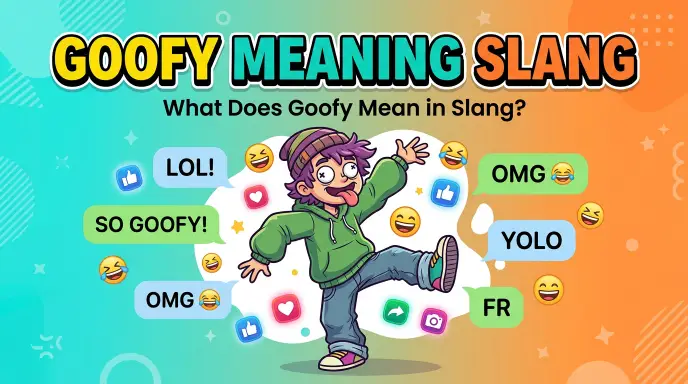
Goofy meaning slang usually describes someone or something that seems silly, funny, awkward, or a little ridiculous. People often use “goofy” in a playful way when a person acts in a funny or unusual manner.
You may see goofy in texts, TikTok comments, Instagram posts, gaming chats, Discord messages, and everyday conversations. The word can sound friendly when someone uses it to tease a friend. However, it can also sound insulting when someone uses it to mock another person.
This guide explains goofy meaning slang in simple English. You will learn what the word means, how people use it in text, where it appears online, if it sounds rude, and how its tone changes with context.
Quick Answer
- Goofy means silly, funny, awkward, or ridiculous. In slang, people often use it to describe someone who behaves in a playful or unintentionally funny way.
For example:
“Bro, you’re so goofy 😂”
This usually means, “You are acting really silly or funny.”
What Does Goofy Mean in Slang?
The goofy meaning slang depends on the situation, but the main idea stays the same: something feels silly, strange, funny, or awkward.
People often call a friend “goofy” when that person makes a strange joke, does a funny dance, makes a silly face, or behaves in an unusual way.
For example:
“Why are you walking like that? You look goofy.”
The speaker may not feel angry. They may simply find the person’s behavior funny.
The word can also describe objects, actions, outfits, or situations.
Examples include:
- “That hat looks goofy.”
- “He made a goofy face.”
- “That was a goofy mistake.”
- “This game gets goofy after midnight.”
In many casual conversations, goofy has a light and playful tone.
What Does Goofy Mean in Text?
When someone sends “goofy” in a text, they usually mean silly, funny, weird, or playful.
The exact tone depends on the message around it.
For example:
“You’re goofy 😂”
This often sounds friendly.
However:
“You look goofy.”
This could sound like an insult if the speaker uses a serious tone.
Emojis can also change the feeling. A laughing emoji, skull emoji, or crying laughing emoji can make the word feel more playful.
Is Goofy a Slang Word?
Goofy can work as casual slang, but it is also a standard English word.
The word has a long history in English. Modern online communities often use it in a more casual and playful way.
The slang like use became especially common in online conversations, memes, gaming communities, and social media. People use it because it quickly describes something that feels silly or ridiculous.
So, goofy is not only internet slang. It has a regular English meaning too.
Is Goofy Rude or Offensive?
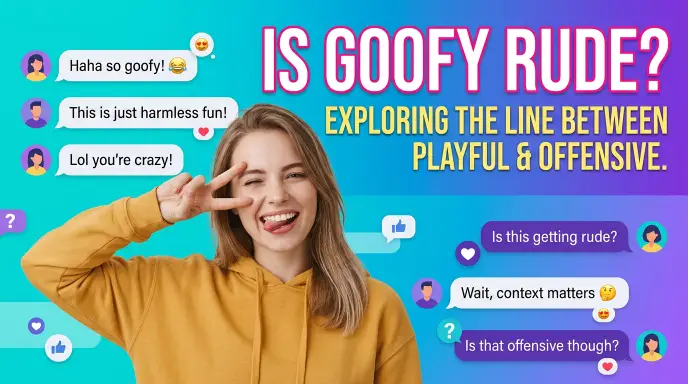
Goofy is usually not offensive. However, the word can sound rude if someone uses it to embarrass or insult another person.
The relationship between the speakers matters.
Friendly use
“You’re so goofy 😂”
A friend may say this after you make a silly joke.
Light teasing
“Why did you wear two different shoes? You’re goofy.”
The speaker may tease you without serious anger.
Negative use
“Stop acting goofy.”
This can sound more critical. The speaker may want the other person to behave seriously.
Stronger insult
“That guy is goofy and annoying.”
Here, the word carries a more negative tone because the speaker adds another criticism.
A useful rule is simple: context and tone matter more than the word alone.
Where Is Goofy Commonly Used?
People use goofy in many casual settings. You may see it in:
- Text messages
- TikTok comments
- Instagram captions
- YouTube comments
- Discord chats
- Gaming conversations
- Reddit discussions
- Group chats
- Memes
- Casual face to face conversations
The word works especially well when people joke about funny behavior.
Goofy on TikTok
TikTok users often use goofy when someone makes a funny video, strange expression, unusual movement, or silly joke.
Example:
“Bro is so goofy 😭”
The comment may show amusement rather than anger.
Goofy on Discord
Discord users can use the word while talking with friends or gaming groups.
“Why did you jump off the map? You’re goofy.”
The speaker may tease a teammate after a funny mistake.
Goofy in Gaming
Gamers often use goofy to describe strange game moments, funny character actions, or unusual strategies.
“That was the goofiest strategy I’ve ever seen.”
Here, goofy means strange, silly, or amusing.
Goofy in Texting
Friends may use the word in normal messages.
“You always send the weirdest stickers. You’re so goofy.”
This usually shows friendly teasing.
Real Life Examples of Goofy
The word can carry different tones. Here are some natural examples.
1. Friendly Example
A: “I just tried to dance while cooking.”
B: “You’re so goofy 😂”
Here, the speaker sounds amused and friendly.
2. Casual Example
“That was a goofy mistake.”
The speaker calls the mistake silly rather than serious.
3. Social Media Example
“Why is this video so goofy? 😭”
The person finds the video funny or ridiculous.
4. Gaming Example
“Our team had the goofiest game ever.”
The speaker describes a strange and funny gaming experience.
5. Discord Example
Friend 1: “I accidentally muted myself for ten minutes.”
Friend 2: “Bro, you’re goofy.”
The second friend teases the first person.
6. Mildly Negative Example
“He keeps acting goofy during the meeting.”
This use sounds less friendly. The speaker thinks the person should act more seriously.
7. Describing an Object
“These shoes look goofy with this outfit.”
Here, the word describes the appearance rather than a person’s personality.
Goofy Meaning in Different Contexts
| Context | Meaning | Tone |
| Friends | Silly or funny | Friendly |
| Texting | Playful or strange | Casual |
| TikTok | Funny or ridiculous | Playful |
| Gaming | Strange or funny | Casual |
| Discord | Silly behavior | Friendly |
| Workplace | Not serious or inappropriate | Often negative |
| Argument | Ridiculous or foolish | Negative |
This table shows why you should not judge the word without looking at the full conversation.
Origin and Background of Goofy
The word goofy has existed in English for a long time. It originally described someone or something that seemed foolish, silly, or awkward.
The exact origin of the word remains uncertain. Some sources connect its early use with American English in the 19th century, but the precise origin does not have a clear, universally accepted explanation.
The word later gained a strong pop culture connection through Goofy, the Disney character first introduced in the 1930s. The character’s name helped make “goofy” familiar to a wide audience.
Modern internet users now use the word independently of the character. Online slang often uses goofy to describe funny behavior, awkward moments, strange choices, and ridiculous situations.
Goofy vs. Silly vs. Weird
These words overlap, but they do not always mean exactly the same thing.
| Word | Basic Meaning | Common Tone |
| Goofy | Silly, funny, or awkward | Often playful |
| Silly | Not serious or sensible | Usually mild |
| Weird | Strange or unusual | Neutral or negative |
| Ridiculous | Extremely unreasonable or absurd | Often negative |
| Foolish | Lacking good judgment | More serious |
Goofy often feels warmer than foolish. It can describe someone who acts silly without suggesting that the person lacks intelligence.
When Should You Avoid Using Goofy?
You can use goofy in most casual conversations, but some situations need more care.
Formal Workplace Communication
Avoid calling a coworker “goofy” in a formal email or serious meeting. The word can sound unprofessional.
Instead of:
“Your idea is goofy.”
Try:
“I think we should look at another approach.”
Academic Settings
You may use the word with close friends at school, but avoid it when you need formal language.
Sensitive Conversations
If someone feels embarrassed or upset, calling them “goofy” may make things worse.
Before using the word, consider the person’s mood and your relationship with them.
Polite Alternatives to Goofy
If you want a softer expression, you can choose:
- Silly
- Playful
- Funny
- Lighthearted
- Quirky
- Amusing
- A little unusual
For example, instead of:
“That looks goofy.”
You could say:
“That looks a little funny.”
The second version may sound gentler.
Why Do People Use Goofy?
People use goofy because it gives them a quick way to describe silly behavior.
The word can also create a relaxed mood. Friends may use it to tease each other without making the conversation feel serious.
Online, short words work well in comments and captions. A phrase such as “so goofy 😭” can express amusement without a long explanation.
The word also works across different situations. You can describe a person’s behavior, a funny video, an unusual outfit, a strange game moment, or a ridiculous mistake.
Common Misunderstandings About Goofy
1. Goofy Does Not Always Mean Stupid
Some people think goofy means unintelligent. That is not always true.
Someone can act goofy while still being smart.
2. Goofy Does Not Always Mean Insulting
Friends often use the word as playful teasing.
“You’re goofy 😂”
That message may show affection rather than disrespect.
3. Context Changes the Meaning
Compare these two examples:
“My little brother is so goofy.”
“That manager is acting goofy.”
The first sentence sounds affectionate. The second can sound critical.
4. Goofy Is Not Only Internet Slang
People used goofy before social media existed. The internet simply helped spread casual uses of the word to a wider audience.
Is Goofy Safe for Social Media?
Yes. Goofy is generally a harmless word for social media.
It does not normally contain offensive or dangerous meaning. People commonly use it to describe funny behavior, strange situations, or playful moments.
Still, your wording matters. Calling a stranger “goofy” may annoy them if they think you are mocking their appearance or behavior.
A friendly context usually makes the meaning clear.
Is Goofy Appropriate at Work?
Goofy can sound too casual for professional communication.
You can use it with a close coworker in a relaxed conversation, but formal emails, reports, meetings, and client messages need more professional wording.
For example, instead of:
“That plan sounds goofy.”
Try:
“That plan may need some changes.”
This approach keeps the message clear and respectful.
FAQ’S
Q1. What does goofy mean in slang?
Goofy means silly, funny, awkward, or ridiculous. People often use it as playful teasing when someone behaves in a funny way.
Q2. What does goofy mean in text?
In text messages, goofy usually means silly or funny. The exact tone depends on the conversation and the relationship between the people.
Q3. Is calling someone goofy an insult?
Not always. Friends often use goofy as a playful compliment or tease. However, the word can sound insulting when someone uses it to mock another person.
Q4. Is goofy a bad word?
No. Goofy is generally a harmless word. Its meaning can become negative when the speaker uses it in a mocking or disrespectful way.
Q5. Can I use goofy on TikTok or Instagram?
Yes. People commonly use goofy in casual social media posts, comments, captions, and videos to describe funny or silly behavior.
Q6. What is another word for goofy?
Depending on the context, you can use silly, funny, playful, quirky, amusing, or ridiculous.
Conclusion
The goofy meaning slang usually points to someone or something that feels silly, funny, awkward, or ridiculous. Friends often use the word as playful teasing, while other situations can give it a more negative tone.
You may see goofy in texting, TikTok comments, gaming chats, Discord, Instagram, Reddit, and everyday conversations. The word itself is generally harmless, but the context decides how it feels.
If you want to use goofy, think about your audience first. It works well in casual conversations, but a more professional word fits better at work, school, or other formal settings.
Dig More About!
- Merch Meaning in Slang: What Does Merch Mean?
- You Ate Slang Meaning in Text
- What Does FW Mean in Slang? FW Meaning in Text