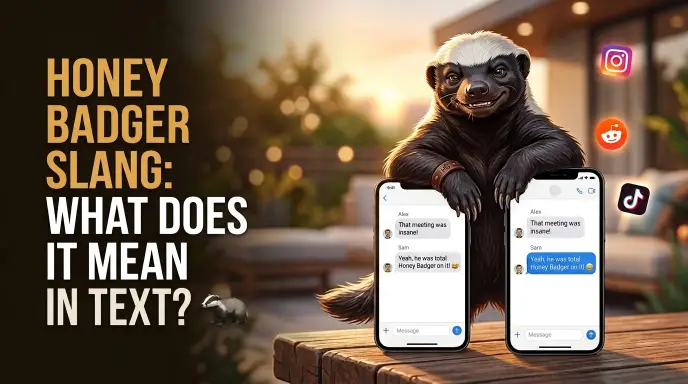
Honey badger slang usually describes someone who acts fearless, stubborn, determined, or completely unconcerned about criticism. The phrase became especially popular online through the famous “Honey Badger Don’t Care” meme. Today, people often use it in a funny or admiring way to describe a person with a bold, tough attitude.
People may search for honey badger slang after seeing the phrase in a text, meme, TikTok comment, or social media post. The meaning can seem confusing because a honey badger is also a real animal. This article explains what the slang means, where it came from, how people use it, and when you may want to avoid it.
Quick Answer
- Honey badger slang describes a person who seems fearless, persistent, and unconcerned about what other people think. It often suggests a “keep going and don’t care about the criticism” attitude, although people can also use it jokingly to describe stubborn or reckless behavior.
What Does Honey Badger Mean in Slang?
When someone calls a person a honey badger, they usually compare that person to the animal’s tough and determined reputation.
For example:
“She is a honey badger when she wants something. She never gives up.”
This sentence describes someone with strong determination.
The slang can also suggest that a person ignores criticism or pressure. That meaning comes from the popular idea that a honey badger keeps doing what it wants, even when something stands in its way.
However, the tone matters. Calling someone a honey badger can sound like praise, a joke, or mild criticism.
Positive Meaning
People may use the term positively to describe someone who:
- Stays confident
- Refuses to give up
- Faces difficult situations
- Ignores unnecessary criticism
- Keeps working toward a goal
Negative Meaning
Sometimes, the term can suggest that someone:
- Refuses to listen
- Acts too aggressively
- Ignores helpful advice
- Takes unnecessary risks
Therefore, the surrounding conversation helps you understand the intended meaning.
Does Honey Badger Have a Full Form?
No. Honey badger does not have a full form.
It is not an abbreviation or texting acronym. The phrase comes from the name of a real animal, also known as a ratel. The slang meaning developed later through popular culture and internet memes.
So, if someone searches for honey badger full form, the simple answer is that the phrase does not stand for a longer group of words.
What Does “Honey Badger Don’t Care” Mean?
“Honey badger don’t care” means that someone does not seem bothered by danger, criticism, or other people’s opinions.
The phrase often expresses an exaggerated attitude. People use it for humor, confidence, or defiance.
For example:
“Everyone told him the challenge was too hard, but honey badger don’t care.”
The speaker jokes that the person plans to continue anyway.
The phrase can sound funny because it creates an image of someone moving forward without worrying about anything around them.
Still, real life requires balance. Ignoring pointless criticism can help, but ignoring useful advice can cause problems.
Where Is Honey Badger Slang Commonly Used?
You may see honey badger slang in informal conversations and online communities. The phrase fits casual communication better than formal writing.
Common places include:
- Text messages
- Social media comments
- TikTok videos
- Instagram captions
- Reddit discussions
- Memes
- Gaming communities
- Group chats
The phrase often appears when someone wants to describe a bold or determined attitude.
In Text Messages
A friend might say:
“You applied for the job even after everyone doubted you. Total honey badger energy.”
This use sounds supportive and playful.
On Social Media
Someone might write:
“Starting my project even though I feel nervous. Honey badger mode!”
Here, the phrase expresses determination.
In Gaming
Gamers may use the term for a player who keeps attacking or trying despite repeated setbacks.
For example:
“That player has honey badger energy. Nothing makes them quit.”
The exact wording may vary, but the idea remains similar.
Is Honey Badger Slang Rude or Offensive?
Honey badger slang is usually not offensive. Most people use it as a humorous or informal comparison.
However, the meaning can change with tone.
If you call someone a honey badger because they are brave and persistent, it may sound like a compliment. If you use it to suggest that they are aggressive or refuse to listen, it may sound less positive.
Consider this example:
“You are a honey badger. You never let anyone push you around.”
This sounds positive.
Now consider:
“Stop acting like a honey badger and listen for once.”
This sounds critical.
Therefore, the phrase itself is generally harmless, but the sentence around it can change the feeling.
Real Life Examples of Honey Badger Slang

Friendly Conversation
Mia: Are you really going to try again after that failed attempt?
Sara: Of course. I am not giving up.
Mia: That is some serious honey badger energy!
This example shows admiration for persistence.
Casual Text Message
“He got rejected twice, but he is still chasing his dream. The guy is a honey badger.”
The speaker describes someone who refuses to quit.
Social Media Example
“Me ignoring the negative comments and finishing my art anyway. Honey badger mode. 😄”
This example uses the term in a confident and playful way.
Argumentative Context
“You can disagree with her, but once she makes up her mind, she goes full honey badger.”
Here, the speaker suggests that the person can become very stubborn.
Gaming Example
“We lost three rounds, but our teammate kept fighting. Honey badger mentality!”
The term describes persistence during a difficult game.
Where Did Honey Badger Slang Come From?
The modern slang and meme meaning became widely known after the viral video “The Crazy Nastyass Honey Badger,” which appeared online in January 2011. The video used humorous narration over wildlife footage and popularized the catchphrase “honey badger don’t care.”
The narrator presented the animal as unusually fearless and difficult to stop. That exaggerated image became part of internet culture.
As the meme spread, people started using honey badger as a figurative description for a person who seemed bold, persistent, or unconcerned about other people’s opinions.
The phrase remains recognizable, especially among people familiar with early 2010s internet culture. However, younger users may know the general idea without knowing the original video.
Why Did the Honey Badger Meme Become So Popular?
The meme worked because the idea was simple and funny. People enjoyed the exaggerated image of a small animal acting tough and unstoppable.
The phrase also gave people a quick way to describe a familiar personality type. Instead of saying, “This person is extremely determined and does not care about criticism,” someone could simply say:
“They have honey badger energy.”
The expression creates a strong mental image. That makes it useful in memes and casual conversations.
Honey Badger vs. Similar Slang Terms
Several expressions can describe confidence or determination. However, each one has a slightly different tone.
| Term | General Meaning | Tone |
| Honey badger | Fearless, stubborn, and hard to stop | Funny and bold |
| Unbothered | Not upset or worried | Calm and casual |
| Savage | Bold, harsh, or impressive | Playful and dramatic |
| Fearless | Not easily scared | Serious or positive |
| Don’t care | Not concerned about something | Casual and direct |
Honey badger stands out because it often adds humor. The expression does not simply mean “brave.” It also suggests a stubborn, determined attitude.
When Should You Avoid Using Honey Badger Slang?
You should avoid using the phrase in very formal situations.
For example, it may not fit well in:
- Job applications
- Academic essays
- Formal business emails
- Serious workplace reports
A manager may understand the phrase, but some readers may find it too casual or dated.
Instead of writing:
“I have a honey badger attitude toward challenges.”
You could write:
“I stay persistent when I face challenges.”
The second option sounds clearer and more professional.
You should also avoid using the phrase if someone might misunderstand your tone. A joke about being fearless can sound careless when the situation involves real danger.
Polite and Professional Alternatives
If you want to express the same idea without slang, you can choose clearer words.
Try:
- Determined
- Persistent
- Resilient
- Confident
- Strong willed
- Fearless
For example:
“She remains determined despite setbacks.”
This sentence communicates a similar positive meaning without using informal slang.
Why Do People Use Honey Badger Slang?
People use this slang because it makes conversations more colorful. A single animal comparison can communicate confidence, stubbornness, humor, and determination at the same time.
The phrase also works well when someone wants to celebrate a person who refuses to give up.
For example:
“My friend kept practicing until she improved. She has a real honey badger attitude.”
The expression adds personality to the sentence.
Memes also help slang survive. Even when an original meme becomes less popular, its most memorable phrases can remain part of everyday online language.
The Impact of Honey Badger Slang in Communication
Slang can make a conversation feel more relaxed and personal. Honey badger gives people a playful way to describe a strong personality.
However, slang can also create confusion. Not everyone knows the original meme. Someone may think you are talking about the animal rather than a person’s attitude.
For that reason, consider your audience. Use the phrase with friends or in casual spaces where the tone is clear.
Simple language works best when you need everyone to understand you.
Is Honey Badger Slang Safe for Social Media?
Yes, honey badger slang is generally safe for social media. The term does not normally contain offensive language.
You can use it in captions, comments, and casual posts.
For example:
“Trying again tomorrow. Honey badger energy! 💪”
The phrase works well when you want to share motivation with humor.
Still, avoid using the attitude to encourage dangerous or reckless behavior. The meme represents an exaggerated personality. Real confidence includes good judgment.
Common Misunderstandings About Honey Badger Slang
Thinking It Only Means Brave
The phrase can describe bravery, but it often includes stubbornness and indifference to criticism too.
Assuming It Is a New Gen Z Term
The expression became famous during the early 2010s through a viral internet meme. It is not a brand new slang term.
Believing It Always Means Something Positive
The phrase can be a compliment, but it can also criticize someone who refuses to listen or acts too aggressively.
Confusing the Meme With the Real Animal
The meme exaggerates the honey badger’s behavior for comedy. The slang meaning comes from that cultural image rather than a scientific description of the animal.
Using It in Every Situation
The term works best when the person or situation actually involves persistence, boldness, or a carefree attitude. Overusing any slang can make writing sound forced.
FAQ’S
Q1:What does honey badger mean in slang?
In slang, a honey badger usually describes someone who is fearless, persistent, stubborn, or unconcerned about other people’s opinions.
Q2:What does “honey badger don’t care” mean?
The phrase means that someone acts as though criticism, danger, or pressure does not bother them. People often use it as a joke or meme reference.
Q3:Is honey badger a compliment?
It can be. People often use it to praise determination and confidence. However, it can also suggest stubbornness, depending on the tone.
Q4:Does honey badger have a full form?
No. Honey badger is not an acronym, so it has no full form.
Q5:Is honey badger slang still popular?
The original meme became famous in 2011. The phrase still appears in internet culture, although it may feel nostalgic or dated to some users today.
Q6:Can I use honey badger slang at work?
You can use it in a casual workplace conversation if your audience understands the reference. For formal communication, words such as persistent or resilient work better.
Conclusion
Honey badger slang describes a fearless, determined, and often stubborn attitude. The phrase became popular through the “Honey Badger Don’t Care” internet meme and remains a humorous way to describe someone who refuses to back down.
The key to using the phrase correctly is understanding the context. It can praise confidence and persistence, but it can also point out stubborn or reckless behavior. Use it in casual conversations, memes, and social media when the playful tone fits.
In the end, honey badger slang works best as a colorful way to describe someone who keeps moving forward and refuses to let ordinary obstacles stop them.
Dig More About!
- What Does Mofongo Mean in Slang? Mofongo Meaning in Text
- French Text Slang Translation: Common French Slang in Text
- What Does White Whale Mean in Slang?Meaning in Text