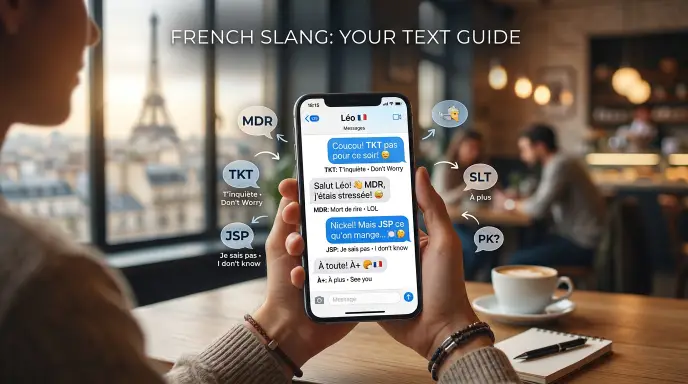
French text slang translation can feel confusing when you receive a short message from a French speaking friend or see a comment online. French texters often shorten words, drop letters, and use informal expressions that standard translation tools may not explain clearly.
For example, someone may write “tkt”, “mdr”, or “pk” in a message. These terms can look strange if you only know formal French. However, they usually make texting faster and more casual. Young people and online communities often use them in chats, social media comments, and private messages.
Learning common French texting slang can help you understand conversations more naturally. It can also help you avoid using the wrong tone when replying.
Quick Answer
- French text slang translation helps you understand informal French words, abbreviations, and expressions used in messages and online chats. Terms like MDR mean “LOL,” while TKT means “don’t worry.”
What Does French Text Slang Translation Mean?
French text slang translation means converting informal French expressions into clear English. These expressions often appear in text messages, social media posts, and casual online conversations.
Formal French follows standard grammar and spelling. Text slang, however, often breaks those rules to save time or create a relaxed tone.
For example:
- MDR = laughing out loud / LOL
- TKT = don’t worry
- PK = why?
- BJR = hello
- Ciao = bye
The exact English translation can change depending on context. Therefore, you should not always translate slang word by word.
A French speaker may use one expression differently from another speaker. Age, location, and online culture can also affect slang.
Common French Text Slang Translations
Here are some popular French texting terms and their usual English meanings.
| French Text Slang | French Meaning | English Translation |
| MDR | Mort de rire | LOL / dying of laughter |
| PTDR | Pété de rire | Laughing really hard |
| TKT | T’inquiète | Don’t worry |
| PK / PQ | Pourquoi | Why |
| BJR | Bonjour | Hello |
| BSR | Bonsoir | Good evening |
| STP | S’il te plaît | Please |
| MDRR | Extended form of MDR | LOL / hahaha |
| JSP | Je sais pas | I don’t know |
| JPP | J’en peux plus | I can’t take it anymore |
| Oklm | Au calme | Chilling / relaxed |
| Wesh | Informal greeting | Yo / hey |
| T’as capté? | Tu as compris? | Do you get it? |
These translations give you the general meaning. Still, tone and context can change how each expression sounds.
What Does French Text Slang Mean in Text Messages?
French text slang usually makes messages shorter, faster, and more personal. People often type the way they speak.
For instance, someone may write:
TKT, ça va aller.
A natural English translation is:
Don’t worry, everything will be okay.
The abbreviation TKT comes from t’inquiète, which means “don’t worry.”
Another person might write:
JSP quoi faire MDR.
This means:
I don’t know what to do LOL.
The writer combines an abbreviation with an expression of laughter. This style feels casual and relaxed.
French Text Slang Full Forms and Definitions
Many French slang terms come from shortened phrases. Understanding the original phrase can make them easier to remember.
MDR Meaning in French Text
MDR stands for mort de rire. Literally, the phrase means “dying of laughter.”
In everyday English, the closest translation is usually LOL.
Example:
Tu me fais trop rire MDR.
Translation:
You make me laugh so much LOL.
People sometimes add extra letters, such as MDRR or MDRRR, to show stronger laughter.
TKT Meaning in French Text
TKT stands for t’inquiète, a casual way to say “don’t worry.”
Example:
TKT, je vais arriver à l’heure.
Translation:
Don’t worry, I’ll arrive on time.
Friends often use this abbreviation in quick messages.
JSP Meaning in French Text
JSP stands for je sais pas, which means “I don’t know.”
Example:
JSP où il est.
Translation:
I don’t know where he is.
This abbreviation works well in casual chats. It does not suit formal writing.
PTDR Meaning in French Text
PTDR is a stronger expression of laughter than MDR. It comes from a very informal phrase and usually means something like laughing really hard.
Because the expression sounds more informal, you should use it carefully. It works best among friends or in casual online spaces.
Is French Text Slang Rude, Offensive, or Neutral?
Most French text slang is neutral or casual. However, some expressions can sound rude, depending on the words and situation.
Terms such as MDR, TKT, and JSP usually sound harmless. Friends often use them in relaxed conversations.
Other slang expressions may sound disrespectful or inappropriate in formal settings. For example, some French insults and crude expressions can cause offense just as English slang can.
Therefore, consider three things before using French slang:
- Who you are talking to
- Where the conversation takes place
When you feel unsure, use standard French. Clear and polite language can prevent misunderstandings.
Where Is French Text Slang Commonly Used?
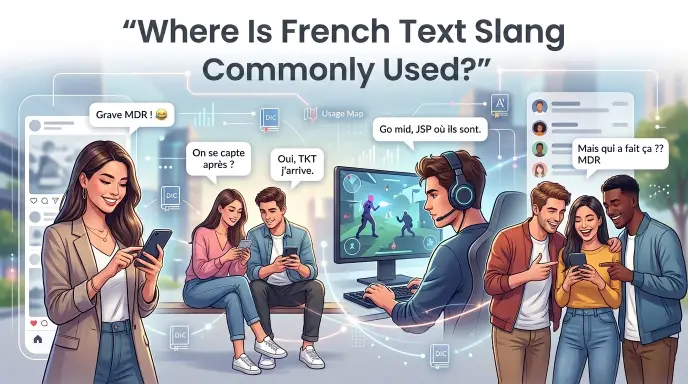
People use French text slang in many informal digital spaces. You may see it in private messages, comments, and online communities.
Common places include:
- Text messages
- TikTok
- Snapchat
- Discord
- Online gaming chats
- Reddit discussions
- Casual group chats
The platform can influence the style. A short comment on TikTok may contain more abbreviations than a message to a teacher.
Young people often create and spread new expressions online. As a result, French internet slang can change quickly.
French Text Slang on Social Media
Social media encourages short and fast communication. Therefore, French users often shorten common words and phrases.
For example, someone might comment:
MDR c’est trop drôle!
Translation:
LOL, that’s so funny!
Another person might write:
TKT ça arrive à tout le monde.
Translation:
Don’t worry, it happens to everyone.
Some expressions also come from memes, music, gaming, and youth culture. Their meanings may change as trends change.
When translating a social media post, look at the entire sentence instead of focusing on one slang word.
Real Life Examples of French Text Slang Translation
Context changes the feeling of slang. These examples show how common expressions work in different situations.
Friendly Conversation
French:
A: Désolé, je suis en retard.
B: TKT!
English:
A: Sorry, I’m late.
B: Don’t worry!
The reply sounds friendly and relaxed.
Casual Text Message
French:
JSP quoi regarder ce soir MDR.
English:
I don’t know what to watch tonight LOL.
The speaker feels casual and playful.
Argumentative or Frustrated Tone
French:
JPP, tu ne m’écoutes jamais!
English:
I can’t take it anymore, you never listen to me!
Here, JPP shows strong frustration. Tone matters a lot in this example.
Gaming or Social Media Context
French:
Ce niveau est trop dur, jpp 😭
English:
This level is too hard, I can’t take it anymore 😭
The speaker exaggerates for humor and frustration.
Popular French Slang Words Beyond Texting
French speakers also use informal spoken slang in messages. These words may not follow the same pattern as texting abbreviations.
Wesh
Wesh often works as an informal greeting. Depending on context, it can feel similar to “yo,” “hey,” or “what’s up?”
Example:
Wesh, ça va?
Translation:
Hey, how are you?
Its tone is very informal. You should avoid it in professional situations.
Mec
Mec often means guy, dude, or man.
Example:
Ce mec est sympa.
Translation:
That guy is nice.
Friends may also use it when talking directly to someone.
Meuf
Meuf is a slang term for a woman or girl. It comes from a type of French word reversal known as verlan.
The term can sound casual, but it may not suit every situation. Use respectful language when you do not know the person well.
Oklm
Oklm comes from au calme, which suggests feeling calm or relaxed.
Online, people may use it to describe a chilled situation.
Example:
Je suis chez moi oklm.
Translation:
I’m at home, just chilling.
The Origin and Background of French Text Slang
French slang has developed through everyday speech, youth culture, regional language, and online communication. Texting later created another reason for people to shorten words.
Mobile phones once had small keyboards and limited message space. Short forms helped people type faster. Even though modern phones make typing easier, many abbreviations remain popular because people recognize them quickly.
French also has a long tradition of informal wordplay. Verlan, for example, changes the order of sounds in some words to create new slang.
Online culture continues to shape the language. New expressions can become popular quickly through videos, memes, music, and gaming.
Not every French speaker uses the same slang. Regional and generational differences can change which words feel natural.
French Text Slang vs. English Text Slang
French and English texting cultures share many similarities. Both languages use abbreviations to save time and express emotion.
| French Slang | English Equivalent | Meaning |
| MDR | LOL | Laughing |
| TKT | DW | Don’t worry |
| JSP | IDK | I don’t know |
| STP | PLZ | Please |
| PK | WY | Why |
| PTDR | LMAO | Strong laughter |
The translations do not always match perfectly. For example, MDR has a literal French meaning that differs from the English phrase “laughing out loud.” Still, both expressions serve a similar purpose in conversation.
The best translation focuses on meaning and tone rather than literal words.
When Should You Avoid Using French Text Slang?
French text slang works best in informal situations. You should avoid most abbreviations in professional or academic communication.
For example, do not use JSP in a formal email to a teacher or employer. Write the full phrase instead.
You should also avoid slang when:
- You do not understand its meaning
- You are speaking with someone you do not know well
- The conversation involves serious topics
- You need a professional tone
- The slang could cause confusion
Slang can make communication feel friendly. However, clear language often works better when the situation matters.
Polite Alternatives to French Text Slang
You can replace casual slang with standard French when you need a more respectful tone.
Here are a few examples:
| Casual Text | More Standard French | English Meaning |
| TKT | Ne t’inquiète pas | Don’t worry |
| JSP | Je ne sais pas | I don’t know |
| STP | S’il vous plaît | Please |
| PK? | Pourquoi? | Why? |
| BJR | Bonjour | Hello |
The standard versions may take longer to type, but they often sound clearer and more appropriate.
Why Do People Use French Text Slang?
People use text slang because it makes conversations faster and more expressive.
A short term like MDR can instantly show laughter. TKT can offer reassurance in only three letters. These expressions also help people feel connected to friends and online communities.
Slang can show:
- Humor
- Friendship
- Emotion
- Group identity
- Casualness
- Familiarity
However, slang can also create confusion. Someone learning French may understand every standard word but still struggle with a message full of abbreviations.
That is why context remains important.
The Impact of Slang on Communication
Slang can make communication feel natural and personal. It allows people to express emotion quickly.
At the same time, slang can create barriers between people who know an expression and people who do not. A phrase that feels obvious to one group may confuse another group completely.
French text slang also changes quickly. Some abbreviations stay popular for years, while others lose popularity.
For learners, the best approach involves understanding common slang without feeling pressure to use every expression. You can recognize casual language and choose words that match your own comfort level.
Is French Text Slang Safe for Social Media?
Most common French texting abbreviations are safe for social media. Terms such as MDR, TKT, and JSP usually carry harmless meanings.
However, social media slang can change quickly. Some words may have different meanings in different communities.
Before using an unfamiliar expression, check its context. Avoid copying slang from a comment without understanding it.
A simple rule can help: if you would not feel comfortable saying the phrase directly to someone, do not post it publicly.
Clear and respectful communication usually creates the best results online.
Common Mistakes When Translating French Text Slang
Translating Every Word Literally
Literal translation can create strange English sentences. Focus on the meaning of the whole expression instead.
For example, MDR works more naturally as LOL than as a literal translation.
Assuming Every Abbreviation Has One Meaning
Context can change meaning. Some abbreviations may also have different meanings outside French texting.
Read the full conversation before translating.
Using Slang in Formal Situations
A casual abbreviation can sound unprofessional in an email or school assignment.
Choose standard French when the situation requires formality.
Copying Slang Without Understanding the Tone
Some words sound playful among close friends but rude in other situations.
Learn both the meaning and the social context before using new slang.
Expecting Every French Speaker to Use the Same Terms
French slang varies by country, region, age group, and community. A term that feels common in one group may sound unfamiliar somewhere else.
FAQ’S
Q1:What does MDR mean in French text slang?
MDR means mort de rire. In English, it usually works like LOL or “laughing out loud.”
Q2:What does TKT mean in French texting?
TKT means t’inquiète, which translates naturally as don’t worry.
Q3:What does JSP mean in French slang?
JSP stands for je sais pas, an informal form of “I don’t know.”
Q4:Is French text slang rude?
Most common abbreviations are not rude. However, some slang expressions can sound offensive or overly casual. Always consider the context.
Q5:Can I use French text slang with native speakers?
Yes, you can use common slang with friends when you understand its meaning and tone. However, standard French offers a safer choice in formal situations.
Q6:What is the best way to translate French slang?
Look at the full sentence and the conversation’s tone. Translate the intended meaning instead of translating each word literally.
Conclusion
French text slang translation helps you understand the informal side of French communication. Common expressions such as MDR, TKT, JSP, and PTDR can appear in texts, social media posts, gaming chats, and conversations between friends.
The most important thing to remember is that context matters. A slang word can sound funny, friendly, frustrated, or informal depending on the situation.
You do not need to memorize every French abbreviation at once. Start with the most common terms and learn how people use them in real conversations. Over time, French texting slang will become easier to recognize and understand.
Use slang carefully, translate the meaning rather than individual words, and choose a tone that fits the conversation.
Discover M ore About!
- What Does White Whale Mean in Slang?Meaning in Text
- Irish Slang for Drunk: Common Irish Words and Meanings
- What Does Motor Boat Mean in Slang? Meaning in Text