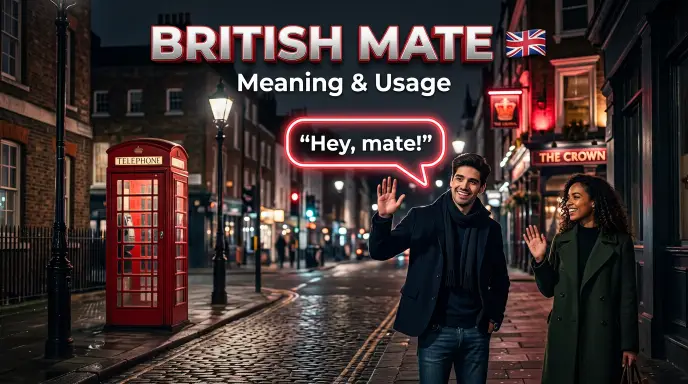
Mate British slang usually means a friend, companion, or person you know. In the UK, people also use “mate” as a friendly way to address someone, even if they do not know that person well. However, the tone can change its meaning. A warm “Cheers, mate!” sounds friendly, while a sharp “Listen, mate!” may sound annoyed.
Many people search for mate British slang after hearing it in British TV shows, films, online videos, or real conversations. The word looks simple, but its meaning depends on the situation and the speaker’s tone.
This guide explains what mate British slang means, where people use it, when it sounds friendly, and when you should avoid it. You will also find realistic examples and answers to common questions.
Quick Answer
- In British slang, mate usually means friend, buddy, pal, or fellow. People often use it as a casual way to address another person. It usually sounds friendly, but tone and context can make it sound neutral, sarcastic, or even confrontational.
What Does Mate British Slang Mean?
The most common meaning of mate in British English is simply friend. For example, someone might say, “I’m meeting my mate after work.”
However, British speakers also use “mate” when talking directly to someone. In this case, the person does not always need to be a close friend.
For example:
“Excuse me, mate. Do you know where the station is?”
Here, “mate” works like a casual and friendly form of address.
The meaning often depends on three things:
- Your relationship with the person
- The situation
- The speaker’s tone of voice
That is why the same word can sound warm in one conversation and tense in another.
The Main Meanings of Mate in British English
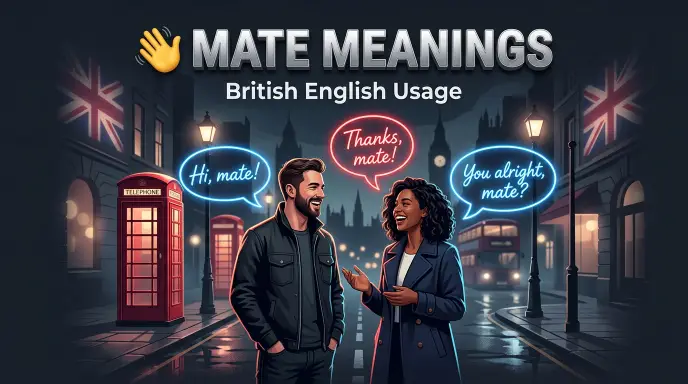
“Mate” has more than one common use. Understanding these uses makes British conversations much easier to follow.
Mate Means a Friend
This is the simplest meaning. A mate can be someone you know and spend time with.
Examples include:
- “She’s one of my best mates.”
- “I’m going out with my mates tonight.”
- “My mate helped me move house.”
In these sentences, “mate” means friend or buddy.
Mate as a Friendly Way to Address Someone
British people may call someone “mate” during a casual conversation, even without knowing them personally.
For example:
“Thanks, mate!”
“You dropped your phone, mate.”
This use often creates a relaxed and informal feeling. Still, strangers may react differently depending on the setting and tone.
Mate Can Sound Annoyed or Confrontational
Tone can completely change the feeling of the word.
Imagine someone says:
“Mate, you can’t park there.”
The speaker may simply give helpful advice. However, a stronger voice can make the same sentence sound like a warning.
Likewise, “Oi, mate!” can sound friendly among friends or aggressive during an argument. The surrounding words and tone tell you what the speaker means.
Does Mate Have a Full Form?
No. Mate is not an abbreviation, so it does not have a full form.
The word has existed in English for centuries and developed into a common word for a companion or friend. Today, people use it widely in British English and in several other English speaking countries.
So, if you search for the mate full form, the simple answer is that there isn’t one. “Mate” is a complete word.
Where Is Mate Commonly Used?
Mate appears in everyday British speech. People use it in face to face conversations, text messages, and online chats.
You may hear it in:
- Casual conversations
- Text messages
- Group chats
- British TV shows and films
- Football and sports conversations
- Pubs and social settings
- Gaming chats
- Social media comments
The word is especially common in informal speech. Friends may use it several times during a relaxed conversation.
Mate in Texting and Social Media
People often type “mate” exactly as they say it.
For example:
“Mate, you won’t believe what just happened.”
“That was amazing, mate 😂”
On social media, the word can also add humor or emphasis. Someone may write “mate…” before sharing a surprising or frustrating reaction.
The punctuation and emojis can help show the intended tone.
Mate in Gaming and Discord
Gamers from the UK and other English speaking regions often use “mate” while chatting.
For example:
“Nice one, mate!”
“Mate, cover the left side!”
In a friendly game, it often sounds casual. During a heated match, however, the same word may sound sarcastic or frustrated.
Is Mate Rude, Offensive, or Harmless?
Mate is usually harmless and friendly. It does not normally count as offensive language.
Still, context matters.
A cheerful “Thanks, mate” usually sounds warm. On the other hand, “Mate, what are you doing?” may sound irritated.
Some people also prefer not to receive overly familiar terms from strangers. For this reason, “mate” works best in relaxed situations where casual language feels natural.
Is Mate Appropriate at Work?
Mate can work in an informal workplace, especially among coworkers who already know each other.
However, avoid using it in very formal situations, such as:
- A job interview
- A serious business meeting
- A formal email
- A conversation with a client who prefers formal language
Instead, use the person’s name or a polite greeting.
The workplace culture matters. Some British offices use “mate” freely, while others maintain a more professional tone.
Real Life Examples of Mate British Slang
These examples show how the word can change depending on the situation.
Friendly Conversation
Sam: “Are you coming to the game?”
Alex: “Yeah, mate. I’ll be there at seven.”
Here, “mate” clearly sounds friendly.
Casual Text Message
“Hey mate, are we still meeting tomorrow?”
This sounds relaxed and natural between friends.
Helping a Stranger
“Excuse me, mate. You left your bag behind.”
The speaker uses “mate” in a casual and helpful way.
Annoyed Conversation
“Mate, I already told you not to touch that.”
The word itself does not create the anger. The rest of the sentence and the speaker’s tone create it.
Social Media Context
“Mate, this video is hilarious 😂”
Here, “mate” adds a casual and personal touch to the reaction.
Gaming Context
“Good play, mate! That saved the round.”
This use sounds supportive and friendly.
Mate Compared With Similar Slang Terms
Several English words have a meaning close to “mate,” but they do not always sound the same.
| Term | Common Meaning | Typical Usage |
| Mate | Friend or casual form of address | Very common in the UK |
| Pal | Friend | Friendly and casual |
| Buddy | Friend | Common in North American English |
| Bro | Close friend or peer | Very casual and popular online |
| Matey | Friend or companion | Less common and sometimes playful |
| Lad | Young man or male friend | Common in some British contexts |
“Mate” has a strong connection with British English, but people also use it in countries such as Australia and New Zealand. The exact tone and frequency can vary by region.
Origin and Background of Mate
The word “mate” has a long history in English. It originally referred to a companion or someone connected to another person through work, travel, or a shared activity.
Over time, everyday speakers began using it more broadly for a friend or companion. British English kept “mate” as a very common informal word, and it became a familiar part of daily conversation.
It is important not to treat “mate” as a modern internet slang term. The word existed long before TikTok, Discord, and social media. Modern platforms simply give people new places to use it.
Today, the word remains common in spoken British English. It has not disappeared or become outdated. However, younger speakers may mix it with newer terms such as “bro,” depending on their friend group and online culture.
Why Do British People Use Mate So Often?
People use “mate” because it can make a conversation feel more relaxed and personal.
It can help speakers:
- Show friendliness
- Address someone casually
- Create a sense of connection
- Make a request sound less formal
- Add emphasis to a reaction
For example, compare these two sentences:
“Can you help me?”
“Can you help me, mate?”
The second sentence may sound warmer in the right situation. Of course, tone still matters.
The word also works because it is flexible. A speaker can use it with close friends, coworkers, teammates, or sometimes strangers.
Why Context Matters So Much
Context gives “mate” much of its meaning. You should listen to the speaker’s voice and look at the situation before deciding if the word sounds friendly or negative.
For example:
“Cheers, mate!”
This usually shows appreciation.
Now consider:
“Mate, seriously?”
This may show disbelief or frustration.
Neither meaning comes from the word alone. The speaker’s relationship, facial expression, tone, and surrounding words all shape the message.
This makes “mate” a useful example of how slang and casual language work. You cannot always understand tone by looking at one word in isolation.
When Should You Avoid Using Mate?
You do not need to avoid “mate” completely. However, some situations call for more formal language.
Consider avoiding it when:
- You write a formal business email
- You speak during a job interview
- You address someone who expects formal communication
- You speak to a customer in a professional setting
- You do not know if the person welcomes casual language
If you feel unsure, use the person’s name or a simple polite phrase.
For example, instead of saying “Can you help me, mate?” you can say:
“Could you please help me?”
That option works in almost every situation.
Can You Use Mate With Teachers or Parents?
Yes, but the relationship matters.
Friends often call each other “mate” naturally. Some people may also use it with family members. However, calling a teacher “mate” may sound too casual in some schools.
You should follow the tone that fits the environment. If your teacher uses relaxed language, “mate” may not cause a problem in casual conversation. Still, a respectful greeting usually offers the safer choice.
The same idea applies to parents. Some families use casual slang freely, while others prefer different ways of speaking.
Common Misunderstandings About Mate
People who learn British English sometimes misunderstand this word. Here are a few common mistakes.
Mate Does Not Always Mean a Close Friend
You can call someone “mate” without having a close friendship. The word can simply act as a casual form of address.
Mate Does Not Always Sound Friendly
The word often sounds friendly, but tone can make it sarcastic or annoyed.
Mate Is Not Only British
British English strongly connects with “mate,” but speakers in Australia, New Zealand, and other places also use it.
Mate Is Not a Texting Abbreviation
Unlike “LOL” or “BRB,” mate does not stand for a longer phrase. It is a normal word that people use casually.
Is Mate Safe to Use on Social Media?
Yes. Mate is generally safe to use on social media because it does not contain offensive language.
You should still think about tone. Online messages lack facial expressions and voice, so a joke can sometimes look rude in writing.
For example:
“Mate, what is this? 😂”
The laughing emoji may show that the speaker is joking.
Without context, the same words could sound critical. Adding clear wording or emojis can help your meaning come across.
FAQ’S
Q1:What does mate mean in British slang?
In British slang, “mate” usually means friend, buddy, or pal. People also use it as a casual way to address another person.
Q2:Is mate a British word?
Yes, “mate” is strongly associated with British English and appears frequently in everyday speech across the UK. Other English speaking countries also use it.
Q3:Is mate rude in the UK?
No, mate is usually friendly and harmless. However, an angry or sarcastic tone can make it sound confrontational.
Q4:Can I call a stranger mate?
Yes, many British speakers use “mate” when speaking casually to strangers. Still, some situations require more formal language.
Q5:What is the difference between mate and friend?
A friend usually describes a relationship, while “mate” can mean friend or simply work as a casual way to address someone.
Q6:Is mate still popular in British slang?
Yes. “Mate” remains a common part of everyday British English. People of different ages use it, although individual habits vary.
Conclusion
Mate British slang usually means a friend or a casual way to address another person. It is one of the most familiar words in everyday British English, and it often makes a conversation feel relaxed and friendly.
The key to using “mate” correctly is understanding context. A warm tone can make it sound welcoming, while an annoyed tone can give it a completely different feeling. Because of that, you should listen to the whole conversation instead of judging the word by itself.
When you hear “mate” in a British text, TV show, gaming chat, or real life conversation, think about the relationship and tone. In most cases, it simply means friend, buddy, or pal.
Discover More About!
- 100 Dollar Bill Slang: What Do People Call a $100 Bill?
- Acere Cuban Slang: What Does Acere Mean?
- Green Out Meaning Slang: What Does It Mean?