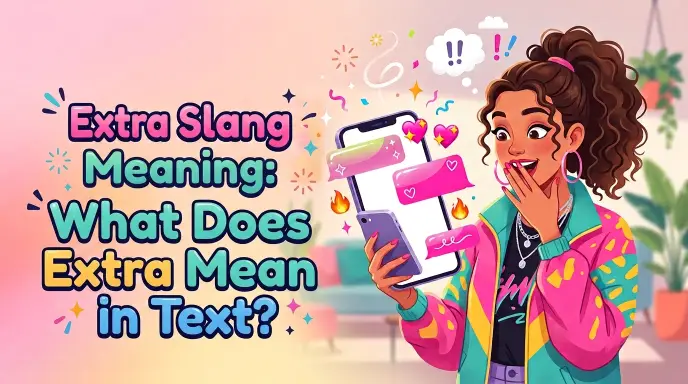
Extra slang meaning usually describes someone who acts in an overly dramatic, exaggerated, or attention seeking way. People often use the word jokingly when someone makes a bigger deal out of something than necessary. However, the tone can change with context. Friends may say it playfully, while others may use it as criticism.
You may see extra in text messages, social media comments, videos, and everyday conversations. For example, a friend might spend an hour getting ready for a casual trip to the store, and someone may jokingly say, “You’re so extra!”
This guide explains what extra means in slang, how people use it, where you may see it, and when you should avoid using it.
Quick Answer
- In slang, extra means overly dramatic, excessive, or more intense than the situation requires. People often use it to describe someone who does too much or reacts in a big way.
- The phrase can sound funny and friendly among close friends. Still, it can sound rude if you use it to criticize someone.
What Does Extra Mean in Text?
When someone calls a person extra, they usually mean that the person has gone beyond what seems normal or necessary. The word often describes behavior, reactions, clothing, plans, or emotions.
For example, imagine someone receives one small compliment and starts celebrating loudly. Their friend might say, “Why are you being so extra?” The friend means that the reaction seems bigger than the moment calls for.
People also use extra in a positive way. Someone may admire a bold outfit or a creative party and say, “I love how extra this is!” In that case, the word can mean fun, confident, and wonderfully over the top.
Context makes a big difference.
Extra Slang Meaning: The Main Uses
The slang term extra can carry more than one feeling. Here are the most common uses.
Extra Means Overly Dramatic
This meaning often appears when someone reacts strongly to a small problem or situation.
Example: “The movie ended late, and Jake acted like the whole night was ruined. He was being extra.”
The speaker thinks Jake gave the problem more attention than it deserved.
Extra Means Doing Too Much
People may also use extra when someone puts far more effort into something than necessary.
Example: “We only needed snacks, but she brought decorations, games, and a huge cake. She’s extra!”
This use can sound playful or critical. Your relationship with the listener often decides the tone.
Extra Can Mean Bold and Fun
Sometimes, people use extra as a compliment. A person may enjoy being dramatic, stylish, creative, or expressive.
Example: “That outfit is so extra, and I absolutely love it!”
Here, extra suggests confidence and personality rather than bad behavior.
What Is the Full Form of Extra?
Extra does not have a full form or stand for a longer phrase. It is a regular English word that gained a popular slang meaning.
In standard English, extra can mean additional or more than usual. Slang uses build on that basic idea. When someone acts extra, other people feel that the person has added more drama, effort, or emotion than the situation needs.
Is Extra Rude or Offensive?
Extra is not generally offensive, but it can sound rude in some situations.
Close friends often use it as a joke. For example, one friend may laugh and say, “You are so extra!” after another friend tells a dramatic story. Both people may understand the joke and enjoy the moment.
However, calling someone extra during an argument can sound dismissive. The word may suggest that their feelings do not matter or that they should stop expressing themselves.
Think about these points before using it:
- Use it playfully with people who understand your sense of humor.
- Avoid it when someone feels genuinely upset.
- Do not use it to mock a person’s personality.
- Pay attention to tone and relationship.
The same word can sound friendly or hurtful depending on how and when you say it.
Where Is Extra Commonly Used?
People use extra in many casual spaces. It works best in informal conversations.
Texting and Group Chats
Friends may use the word when someone shares a dramatic story, sends many messages, or reacts strongly.
Friend 1: I bought balloons for a small dinner.
Friend 2: Balloons too? You are so extra!
Friend 1: I wanted to make it fun!
The tone here feels light and playful.
Social Media
You may see extra in comments about fashion, celebrations, beauty looks, or funny videos. People often use it to praise something bold or dramatic.
A comment such as “This is extra in the best way!” usually gives a positive reaction.
TikTok and Instagram
Creative videos and eye catching outfits often receive comments that use extra. Users may describe a big reaction, dramatic style, or unusual amount of effort.
The word can celebrate creativity when the context feels positive.
Gaming and Online Communities
Gamers may call a teammate extra when that person celebrates too much, reacts dramatically, or makes a simple event feel huge.
The word can also describe a funny personality in a Discord community or group chat.
Everyday Conversations
People have used extra in casual speech for years. You may hear it among friends, classmates, and family members.
Formal settings usually require more careful language.
Real Life Examples of Extra Slang
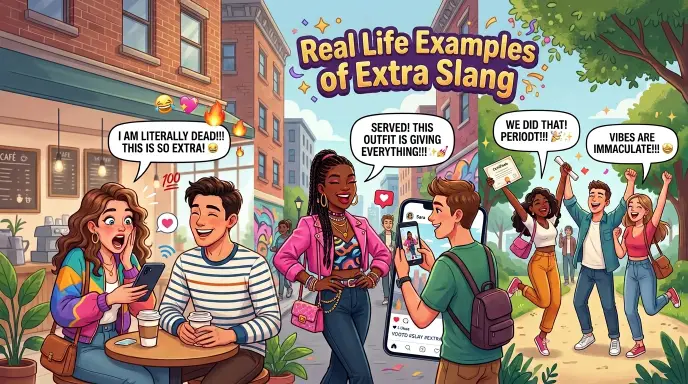
The examples below show how extra can change with the situation.
Friendly Example
Friend 1: You bought a gift for everyone at the party?
Friend 2: Yes, I wanted everyone to smile!
Friend 1: You are extra, but that is really sweet.
Here, extra sounds affectionate and playful.
Casual Text Example
Friend 1: I changed my profile picture three times today.
Friend 2: Three times? You are being extra today.
Friend 1: I could not pick my favorite!
This example shows a light joke between friends.
Argumentative Example
Person 1: I am upset because you forgot our plans.
Person 2: Stop being extra. It was one mistake.
This use can sound rude because Person 2 dismisses the other person’s feelings. A kinder response would acknowledge the problem instead.
Social Media Example
Comment: That birthday setup is so extra, and I love every part of it!
In this context, extra works as praise. The writer enjoys the large and creative celebration.
Gaming Example
Player 1: We won one round, and you started dancing around the room.
Player 2: A win is a win!
Player 1: You are so extra!
The phrase describes an exaggerated but funny reaction.
Where Did the Slang Meaning of Extra Come From?
The slang use of extra grew from the ordinary English idea of having more than usual. People began using the word to describe behavior that seemed excessive, dramatic, or overdone.
The modern slang meaning became widely familiar through popular culture and casual speech. Black American speech and culture played an important role in the wider use and spread of many modern expressions, including ways people use familiar English words in new social contexts. However, language history can vary across communities, and it is difficult to assign one exact starting date to every slang use of extra.
Over time, social media helped the term reach a larger audience. Today, people understand it in many English speaking communities, although its tone can still vary.
Extra vs. Similar Slang Terms
Several words can express a similar idea, but they do not always mean exactly the same thing.
| Slang Term | Common Meaning | Typical Tone |
| Extra | Overly dramatic or excessive | Playful or critical |
| Dramatic | Showing strong emotions or reactions | Neutral or negative |
| Over the top | Too extreme or exaggerated | Often playful |
| Doing too much | Putting in more effort or drama than needed | Often critical |
| The most | Acting in an excessive or dramatic way | Casual and humorous |
Extra often sounds more playful than “dramatic,” especially among friends. Still, tone always matters.
When Should You Avoid Using Extra?
Avoid calling someone extra when they share a serious feeling or problem. The word can make a person feel ignored or mocked.
You may also want to avoid it in professional settings. A workplace message should clearly explain what you mean instead of using slang.
For example,
instead of saying, “Your presentation is extra,” you could say:
- “The presentation has many details.”
- “The design feels very bold.”
- “The presentation may include more information than we need.”
Clear language helps prevent confusion.
Polite Alternatives to Extra
If you want to describe someone’s behavior without sounding rude, choose words that match your meaning.
You can say:
- Enthusiastic for someone with lots of energy.
- Expressive for someone who shows emotions openly.
- Creative for someone with bold ideas.
- Detailed for someone who puts extra effort into something.
- Dramatic when you need a direct but neutral description.
These words often work better in school, work, or formal conversations.
Why Do People Use Extra as Slang?
People use extra because one short word can describe a big feeling. It adds humor and personality to a conversation.
The term can also create a sense of connection. Friends may tease each other in a friendly way, especially when everyone understands the joke.
Social media also favors short and expressive language. Extra quickly tells readers that something feels bigger, louder, or more dramatic than expected.
How Does Using Extra Affect Communication?
Slang can make a conversation feel relaxed and natural. However, slang can also create confusion when people do not share the same cultural or social context.
When you call something extra, the listener may hear praise, teasing, or criticism. Your tone, relationship, and situation help shape the meaning.
Before using the term, ask yourself one simple question: Will the other person understand how I mean it?
That small check can help you communicate more clearly.
Is Extra Safe to Use on Social Media?
Yes, extra is generally safe to use on social media. The word does not contain profanity or a harmful meaning by itself.
However, avoid using it to bully or repeatedly mock someone. A playful comment can become hurtful when the other person does not enjoy the joke.
Positive examples include:
- “Your style is extra, and I love it!”
- “This party is extra in the best way!”
- “That video was extra funny!”
These comments clearly show a positive or friendly tone.
Common Misunderstandings About Extra
A common mistake involves assuming that extra always means something bad. That is not true. The word can show admiration, humor, or criticism.
Another mistake involves using it as a replacement for every word that means “more.” Extra as slang usually focuses on behavior, style, effort, or emotion that feels excessive.
Also, not everyone enjoys the label. Some people see their dramatic or expressive personality as part of who they are. Use the word with care, especially when you do not know the person well.
FAQ’S
Q1:What does extra mean in slang?
In slang, extra usually means overly dramatic, excessive, or more intense than necessary. It can sound playful, positive, or critical depending on the context.
Q2:Is calling someone extra an insult?
Not always. Friends often use it jokingly. However, the word can sound insulting when someone uses it to dismiss or mock another person’s feelings.
Q3:What does “you are so extra” mean?
“You are so extra” means that someone thinks you are acting in an exaggerated, dramatic, or over the top way. The phrase can also show affection or admiration.
Q4:Is extra a Gen Z slang word?
Many younger people use extra, but the term does not belong only to Gen Z. The slang meaning became popular before Gen Z dominated social media and remains common across different age groups.
Q5:Can I use extra at work?
You can use extra in a casual workplace conversation with people who understand the slang. However, clear and direct language works better in professional writing or formal discussions.
Q6:Does extra have a positive meaning?
Yes. People often use extra positively to describe bold fashion, creative ideas, exciting celebrations, or someone with a fun personality.
Conclusion
The extra slang meaning usually describes someone or something that feels overly dramatic, excessive, or bigger than expected. Yet the word does not always carry a negative meaning. Friends may use it as a joke, while social media users may use it to praise bold and creative choices.
The best way to understand extra is to look at the context. Pay attention to the tone, the relationship between speakers, and the situation. When used kindly, the word can add humor and personality to a conversation. When used carelessly, it can make someone feel dismissed.
If you understand the context, you can use extra naturally and know exactly what someone means when they say, “You’re so extra!”
Dig More About!
- Rock Slang Meaning in Text: What Does Rock Mean?
- Skid Meaning Slang: What Does Skid Mean?
- Honey Badger Slang: What Does It Mean in Text?