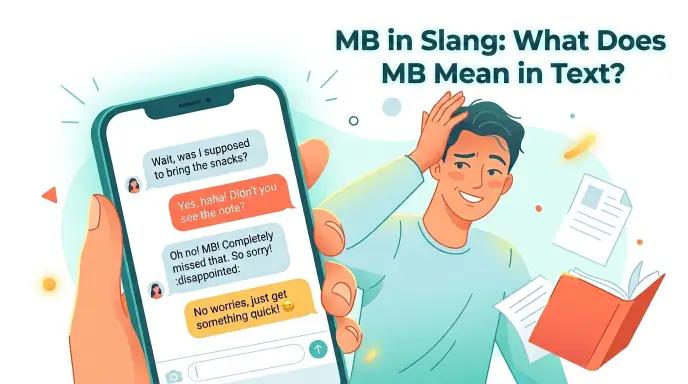
MB in slang usually means “my bad.” People use it to admit a small mistake or apologize in a casual way. For example, if someone forgets to reply and then says “MB,” they usually mean, “My mistake” or “Sorry about that.”
You may see MB in slang in text messages, gaming chats, Snapchat conversations, Discord servers, and other casual online spaces. However, the meaning can change depending on the conversation. In some situations, MB may stand for something completely different.
That is why context matters. A short abbreviation can carry several meanings, and the surrounding words often tell you what the sender means. This guide explains the most common MB meaning in text, how people use it, if it sounds rude, and when you should avoid using it.
Quick Answer:
- MB most commonly means “my bad.” It is a casual way to admit a mistake, accept blame, or say sorry for something small.
- For example:
- “MB, I sent the message to the wrong person.”
- In this case, the person admits the mistake without giving a long apology.
What Does MB Mean in Text?
In texting and online slang, MB usually means “my bad.” The phrase shows that the sender knows they made a mistake.
People often use it for small problems, such as:
- Forgetting something
- Sending the wrong message
- Making a small error
- Missing a call
- Losing a game because of a mistake
- Misunderstanding what someone said
The tone usually feels casual and friendly. It can also sound quick and informal.
For example:
“MB, I thought we were meeting tomorrow.”
The person means that they made a mistake about the meeting date.
MB Full Form in Slang
The most common MB full form in slang is “my bad.”
“My bad” means:
- My mistake
- That was my fault
- Sorry, I made an error
- I got that wrong
Unlike a formal apology, “my bad” sounds relaxed. Friends often use it when the mistake does not need a serious apology.
Does MB Stand for Anything Else?
Yes. MB can have different meanings outside slang. For example, it can refer to megabytes in technology or represent initials and other phrases.
That is why you should always look at the conversation. If someone texts, “MB, I forgot,” they almost certainly mean “my bad.” However, a technical conversation may use MB to mean megabytes.
Is MB Rude, Offensive, or Neutral?
MB is usually neutral and harmless. It does not contain an insult or offensive meaning when people use it to mean “my bad.”
Still, the tone can matter.
A person may use “MB” after making a genuine mistake. In that situation, it sounds friendly and casual. However, someone might use it sarcastically during an argument.
For example:
“Oh, MB for telling the truth.”
Here, the person may sound annoyed rather than apologetic.
So, MB itself is not rude. The surrounding conversation and tone can change how it feels.
Where Is MB Commonly Used?
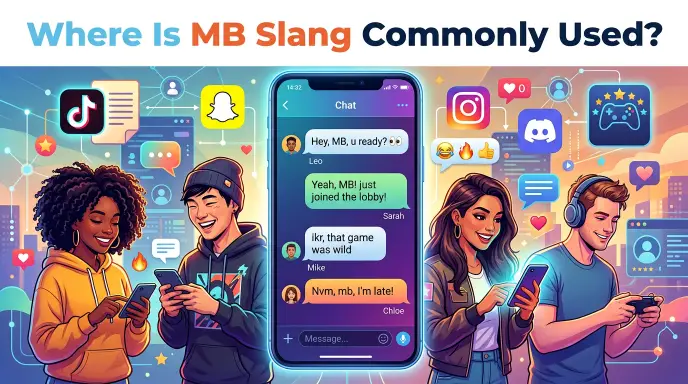
People mainly use MB in quick and informal communication. It works best when everyone understands casual texting language.
Text Messages
Friends often use MB because it saves time.
“MB, I forgot to call you back.”
The message sounds casual and natural.
Snapchat and Instagram
Short abbreviations fit fast social media conversations. Someone may write “MB” after sending something by mistake or misunderstanding a message.
For example:
“MB, wrong person 😭”
The emoji makes the message feel playful.
Discord and Gaming
Gamers often admit small mistakes quickly. A player may type “mb” after making a bad move or missing an important action.
For example:
“MB, I went the wrong way.”
The player accepts responsibility and keeps the game moving.
Casual Group Chats
MB also appears in group chats among friends. It works well when someone makes a small mistake and wants to correct it quickly.
However, it may confuse people who do not know texting slang.
Real Life Examples of MB in Slang
Here are several examples that show how people use MB in different situations.
Friendly Conversation
Friend 1: Did you bring my book?
Friend 2: Oh, MB! I left it at home.
Here, “MB” means “my bad.” Friend 2 admits the mistake in a relaxed way.
Casual Texting
Person 1: You were supposed to send the photo.
Person 2: MB, I completely forgot. I’ll send it now.
The abbreviation keeps the apology short.
Argumentative Situation
Person 1: You gave me the wrong time again.
Person 2: MB, I mixed up the schedule.
In this case, MB can help calm the situation because the person accepts the mistake. However, a serious problem may need a clearer apology.
Gaming Context
Player 1: Why did you leave the team?
Player 2: MB, my internet disconnected.
The player explains what happened while using casual chat language.
Social Media Context
Someone might comment:
“MB, I read your post wrong at first 😂”
This use feels light and friendly.
How Does MB Change the Tone of a Message?
MB makes an apology sound shorter and more casual. It works well for small mistakes, especially between friends.
Compare these examples:
| Expression | Tone | Best Use |
| MB | Very casual | Friends and quick chats |
| My bad | Casual | Everyday conversations |
| Sorry | Neutral | Most situations |
| I apologize | Formal | Serious or professional situations |
The meaning stays similar, but the tone changes.
For example, saying “MB” to a close friend may sound completely natural. Saying it to a teacher after a serious mistake may sound too relaxed.
When Should You Avoid Using MB?
You should avoid MB when the situation requires a serious, respectful, or professional apology.
For example, do not rely on “MB” when:
- You make a major mistake at work
- You need to apologize to a teacher
- You hurt someone’s feelings
- You discuss a serious problem
- You write a formal email
- The other person may not understand slang
Imagine missing an important work deadline. Writing only “MB” may sound careless. A better response would explain the mistake and show responsibility.
For example:
“I’m sorry for missing the deadline. I understand the delay caused a problem, and I will complete the work as soon as possible.”
Context matters more than the abbreviation itself.
Can You Use MB at Work or School?
MB is usually not the best choice for formal communication. You can use it in a relaxed chat with close classmates or coworkers who use casual language. However, professional messages usually need clearer wording.
Instead of:
“MB, I missed the meeting.”
You could write:
“Sorry, I missed the meeting. I will review the notes and catch up.”
This version sounds more responsible and professional.
Teachers, managers, clients, and people you do not know well may not understand MB. Clear language often works better.
Why Do People Use MB?
People use MB because it makes communication fast and simple. Texting slang often removes extra words when the meaning remains clear.
MB can also make a conversation feel less formal. Instead of writing a long apology for a small mistake, someone can simply say:
“MB 😅”
That short response may be enough when everyone understands the situation.
People also use slang like MB because it matches the speed of online conversations. Gaming chats, group messages, and social media comments often move quickly.
The Origin and Background of “My Bad”
The phrase “my bad” existed in spoken informal English before people started using MB as a texting abbreviation. People used the phrase to take responsibility for a mistake in a relaxed way.
Over time, texting and online communication encouraged shorter forms. Users began shortening common phrases into initials, especially when they wanted to type quickly.
The exact first person who started using MB as shorthand for “my bad” is difficult to identify. Slang often spreads through conversations rather than through one official source.
Today, “my bad” remains widely understood in casual English, while “MB” works best with people who already know texting abbreviations.
MB vs Similar Texting Slang
Several expressions can communicate a similar idea. However, each one has a slightly different tone.
| Slang or Phrase | Meaning | Tone |
| MB | My bad | Very casual |
| My bad | I made a mistake | Casual |
| Oops | I made a small mistake | Playful |
| Sorry | I apologize | Neutral |
| My mistake | I was wrong | Neutral |
| IDK | I don’t know | Casual, but not an apology |
The biggest difference involves responsibility. MB and “my bad” clearly show that the speaker accepts a mistake. “Oops” can sound lighter and may not always show the same level of responsibility.
Common Misunderstandings About MB
A common mistake involves assuming that MB always has one meaning. Like many abbreviations, its meaning depends on context.
MB Does Not Always Mean “My Bad”
In technology, MB often means megabyte or another technical term. You should not automatically read “my bad” into every use of MB.
For example:
“This file is 20 MB.”
Here, MB clearly relates to file size.
MB Is Not a Full Apology in Every Situation
“My bad” can work for a small mistake. However, a serious issue may require a more thoughtful response.
A quick “MB” may sound dismissive if someone expects a real apology.
Not Everyone Knows Texting Slang
Parents, teachers, coworkers, and people from different age groups may not understand MB. If clarity matters, write “my bad” or explain what you mean.
Is MB Safe to Use on Social Media?
Yes, MB is generally safe and harmless when you use it in its common slang meaning. It does not usually carry an offensive message.
Still, you should think about your audience. Public comments can reach people from different backgrounds, and not everyone understands abbreviations.
If a misunderstanding could cause a problem, use clear words instead.
For example, “Sorry, I misunderstood your post” communicates your meaning more clearly than simply writing “MB.”
Does MB Have Different Meanings on TikTok, Snapchat, or Discord?
The meaning usually stays the same across social platforms when people use MB as slang. It commonly means “my bad.”
However, platform culture can affect how often people use abbreviations. Fast moving chats and gaming spaces often encourage shorter messages. A person on Discord may type “mb” quickly during a game, while someone in a longer Instagram conversation may write “my bad.”
The key point remains simple: look at the words around MB before deciding what it means.
Why Context Matters With MB Slang
Context helps you understand almost every form of slang. A two letter abbreviation cannot always explain itself.
Ask yourself:
- What were people discussing?
- Did someone make a mistake?
- Does “my bad” fit the sentence?
- Is the conversation casual or technical?
- Who sent the message?
For example:
“MB, I clicked the wrong link.”
“My bad” fits perfectly.
But in this sentence:
“The video is 500 MB.”
The abbreviation has a completely different meaning.
Reading the whole message prevents confusion.
FAQ’S
Q1:What does MB mean in slang?
MB most commonly means “my bad.” People use it to admit a mistake or give a casual apology.
Q2:What does MB stand for in text?
In casual texting, MB usually stands for “my bad.” However, context can give MB other meanings.
Q3:Is MB the same as saying sorry?
Not exactly. MB can mean something similar to “sorry,” but it sounds more casual. It works best for small mistakes.
Q4:Is MB rude?
No, MB is generally not rude or offensive. However, it may sound too casual when the situation requires a serious apology.
Q5:Can I use MB with my teacher or boss?
You should usually avoid it in formal communication. Writing “sorry” or “I apologize” provides a clearer and more respectful tone.
Q6:What does “mb bro” mean?
“MB bro” usually means “my bad, bro.” The speaker admits a mistake while using a friendly and informal tone.
Conclusion
MB in slang most often means “my bad.” People use it to admit small mistakes, correct misunderstandings, or offer a quick casual apology. You will most often see it in texting, social media, group chats, and gaming conversations.
The abbreviation is usually harmless and friendly, but context still matters. MB may have other meanings outside slang, so always read the full conversation before deciding what someone means.
For casual chats with friends, MB can save time and sound natural. For work, school, or serious situations, clearer language often works better. use MB when the setting feels casual, and choose a fuller apology when the situation needs more care.
Discover More About!
- Pansies Slang: What Does Pansies Mean?
- Throw Forcefully in Slang Crossword Clue: What Does It Mean?
- Mass Slang: What Does Mass Mean in Text?