Wing slang usually means helping, supporting, or backing someone, especially in a social situation. The idea comes from wingman, which means a friend who helps and supports another person, often when they want to meet a romantic interest.
You may see wing slang in texts, social media posts, group chats, or casual conversations. Someone might say, “I’ll wing you tonight,” to mean, “I’ll help you out.” The exact meaning can change with the context, so the surrounding conversation matters.
This guide explains the wing slang meaning, where the term comes from, how people use it, and if it works in formal conversations. You will also see simple examples from texting and social situations.
Quick Answer
- Wing slang means to help, support, or back someone up, especially in a social situation. It comes from the idea of a wingman, a friend who helps another person in social or dating situations.
For example:
“Don’t worry. I’ll wing you at the party.”
This means:
“Don’t worry. I’ll help and support you at the party.”
The phrase sounds casual, friendly, and informal.
What Does Wing Slang Mean?
The simple wing slang definition is to help or support someone.
The word often connects to wingman. A wingman can help a friend feel more comfortable in a social setting. The help may involve starting a conversation, giving advice, or staying close when a friend feels nervous.
For example:
“I’m nervous about talking to her.”
“Relax. I’ll wing you.”
Here, the speaker offers support.
However, wing does not have one fixed slang meaning in every conversation. Context matters.
Wing vs. Wingman
These terms have a close connection:
| Term | Simple meaning |
| Wing | Help or support someone |
| Wingman | A friend who gives support |
| Wingwoman | A woman who gives similar support |
| Back someone up | Support someone |
| Help out | Give someone assistance |
Cambridge and Oxford both list wingman as a friend who supports another person, especially in social or romantic situations.
Is Wing Slang the Same as Wingman?
Not exactly.
Wingman names the person who gives the support. Wing can work as a shorter, more casual way to describe the action of helping someone.
For example:
“Can you be my wingman tonight?”
This asks a friend to provide social support.
You may also see:
“Can you wing me tonight?”
This uses wing as a verb and carries the idea of helping someone.
The shorter form sounds more casual. Some speakers may prefer the more familiar wingman instead.
Where Is Wing Slang Commonly Used?
Wing slang works best in informal conversations.
You may see related uses in:
- Text messages
- Group chats
- Instagram DMs
- TikTok comments
- Snapchat chats
- Discord conversations
- Gaming chats
- Casual conversations
- Social events
- Dating conversations
The meaning often stays close to help, support, or backup.
Wing Slang in Texting
A friend might text:
“I’m going to talk to him tonight. You wing me?”
The speaker asks for support.
Another example:
“Thanks for winging me at the party!”
That means the person appreciated the friend’s help.
Is Wing Slang Rude or Offensive?
Wing slang is generally harmless and friendly.
The term does not normally contain an insult or offensive meaning. However, the social situation can change the tone.
For example:
“I’ll wing you at the party.”
This sounds friendly.
But some older uses of wingman focus heavily on dating and helping a man approach women. Modern speakers can use the word more broadly for general support. Cambridge and Collins both show the wider support meaning.
So, the safest way to understand wing slang is to look at the full conversation.
Can You Use Wing Slang at Work?
You can use it in a very casual workplace, especially with close coworkers.
However, it may sound too informal in professional writing.
Instead of:
“Can you wing me on this project?”
Use:
“Can you help me with this project?”
Better formal choices include:
- Help
- Support
- Assist
- Back me up
- Work with me
For an email to a client, manager, teacher, or official contact, help or support sounds clearer.
Real Life Examples of Wing Slang
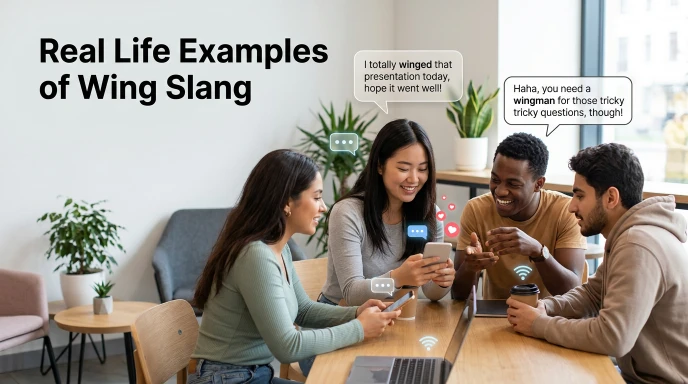
Here are natural examples that show how the phrase can work.
Example 1: At a Party
A: “I don’t know anyone here.”
B: “Relax. I’ll wing you.”
Meaning: B will stay nearby and help A feel comfortable.
Example 2: Meeting Someone New
A: “I want to talk to her, but I’m nervous.”
B: “I got you. I’ll be your wingman.”
Meaning: B will support A during the conversation.
Example 3: Text Message
A: “Are you coming tonight?”
B: “Yeah. I’ll wing you.”
Meaning: B plans to support the friend.
Example 4: Group Chat
A: “I need someone to help me start this conversation.”
B: “I’m in. I’ll wing you.”
Meaning: B agrees to provide support.
Example 5: Casual Gaming Chat
A: “Can someone help me with this level?”
B: “Sure, I’ll wing you.”
Meaning: B will help the player.
The gaming example depends more on community style. Wingman remains a clearer and more established term than the shortened verb wing.
Where Did Wing Slang Come From?
The modern slang idea connects to wingman.
The original wingman referred to a pilot who flies behind and to the side of a lead aircraft. That position gives the pilot a supporting role within the formation. Dictionaries trace the informal social meaning from this aviation idea.
Later, the word gained a broader social meaning. A wingman became a friend who supports another person, especially during social or romantic situations.
The shortened use of wing can build on that idea, but the exact path from wingman to every modern use of wing is less clear. It makes more sense to treat wing as a casual extension of the support idea rather than claim one exact origin date.
Wing Slang on Different Platforms
The meaning can stay similar across platforms, but the tone can change.
| Platform | Likely use |
| Texting | Asking a friend for help |
| Casual social support | |
| TikTok | Playful comments |
| Snapchat | Friendly conversation |
| Discord | Team or social support |
| Gaming | Helping another player |
| Workplace chat | Casual help between coworkers |
The term works best when people already share a relaxed relationship.
Similar Slang and Related Terms
Several expressions can carry a similar idea.
“I Got Your Back”
This means I will support you.
“Don’t worry. I got your back.”
“Back Me Up”
This means support me or help me.
“Can you back me up if they ask?”
“Wingman”
This is the closest related term.
“I need a wingman tonight.”
“Help Me Out”
This is simpler and more widely understood.
“Can you help me out?”
Among these options, help me out works in the widest range of situations.
When Should You Avoid Wing Slang?
Avoid wing slang when you need clear and formal English.
For example, do not use it in:
- Formal business emails
- Academic papers
- Job applications
- Official reports
- Formal customer messages
- Important professional documents
You can use help, support, or assist instead.
Also, avoid assuming that everyone knows the slang. If someone asks what you mean, explain it in simple words.
Polite Alternatives to Wing Slang
If you want a clearer expression, try one of these:
| Casual phrase | Clear alternative |
| I’ll wing you | I’ll help you |
| I’ll wing you tonight | I’ll support you tonight |
| Can you wing me? | Can you help me? |
| Be my wingman | Help me out |
| I got you | I’ll support you |
These alternatives work well when you want to avoid slang.
Why Do People Use Wing Slang?
People use slang because it can make conversations feel relaxed and personal.
The word can also make support sound playful.
Compare:
“I will assist you.”
with:
“I’ll wing you.”
The first sentence sounds formal. The second feels more casual and friendly.
That difference matters in texting and social conversations.
Common Misunderstandings About Wing Slang
Does wing always mean dating?
No.
The dating meaning connects strongly to wingman, but the broader idea involves support. Modern dictionary definitions also include general social support.
Does wing mean “do something without preparation”?
Not necessarily.
The phrase “wing it” has a different meaning. It means doing something without much preparation. That phrase should not be confused with the support related use of wing.
Is wing a formal English word?
Wing itself is a standard English word, but the casual support use belongs to informal language.
Can women use wingman?
Yes. People also use wingwoman or simply wing. The broader idea involves helping a friend, regardless of gender.
FAQ’S
Q1:What does wing slang mean?
Wing slang means to help or support someone, often in a casual social situation. The idea connects to the word wingman, which describes a friend who supports another person.
Q2:Is wing slang rude?
No. Wing slang is usually friendly and harmless. The tone depends on the conversation.
Q3:Is wing slang used on TikTok?
You may see related uses in casual social media conversations. However, the exact meaning depends on the sentence and context.
Q4:Is wing slang used in texting?
Yes. Casual texting can use wing to express the idea of helping or backing up a friend.
Q5:Can I use wing slang at work?
You can use it with close coworkers in casual chats. For formal work communication, choose help, support, or assist.
Q6:Is wing the same as wingman?
They connect closely, but they are not identical. Wingman refers to the supporting friend, while wing can describe the act of giving that support.
Conclusion
Wing slang usually expresses the idea of helping, supporting, or backing someone up. The meaning connects to wingman, a term that grew from aviation language and later gained a social meaning.
The phrase works best in casual conversations, texts, group chats, and social situations. It can sound friendly and playful, but formal settings call for clearer words such as help, support, or assist.
So, when a friend says, “I’ll wing you,” they usually mean, “I’ll help you out.”
Dig More About!
- Irish Slang for Idiot: Meaning, Terms & Examples
- Pants British Slang: Meaning & UK Usage
- Vulgar British Slang: Meaning, Words & Examples