Pants British slang can mean “rubbish,” “bad,” or “not very good” in informal British English. However, British speakers also use pants as a normal noun for underwear, so context matters.
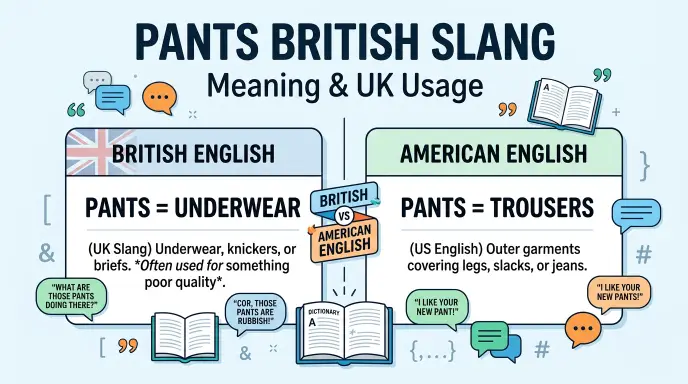
This word can confuse American and British English speakers. In American English, pants usually means trousers. In British English, trousers means the clothing that covers your legs, while pants usually means underwear.
The slang meaning adds another layer. A British speaker might say, “That film was pants,” to mean the film was poor or disappointing. Oxford lists this slang use as a British English expression for something the speaker considers poor quality.
In this guide, you will learn what pants British slang means, how people use it, where it comes from, and when you should avoid it.
Quick Answer
- In British slang, pants means bad, rubbish, poor, or disappointing. Someone might say, “That movie was pants,” when they think the movie was not good. British English also uses pants as a noun for underwear, so the meaning depends on the sentence.
What Does Pants British Slang Mean?
Pants can describe something that a person thinks has poor quality.
It works as an informal adjective after a linking verb. For example:
“That restaurant was pants.”
The speaker means:
“That restaurant was rubbish.”
You can also hear pants when someone talks about a disappointing experience.
For example:
“The concert was pants.”
This means the concert was not very good.
The word sounds casual and slightly humorous. It usually fits relaxed conversations better than formal writing.
Simple Meaning
| Word | British slang meaning |
| Pants | Bad |
| Pants | Rubbish |
| Pants | Poor |
| Pants | Not very good |
| Pants | Disappointing |
The exact feeling depends on the speaker. Someone might use it as a mild complaint rather than a strong insult.
Pants Has Another British Meaning
Before looking at the slang use, you should know the standard British meaning.
In British English, pants usually means underwear. Cambridge defines the word as underwear that covers the lower body.
For example:
“I need to buy some new pants.”
Here, the speaker means underwear.
This meaning differs from American English.
| British English | American English |
| Pants = underwear | Pants = trousers |
| Trousers = outer leg clothing | Pants = outer leg clothing |
| Knickers = women’s underwear | Panties = women’s underwear |
Cambridge confirms this major British-American difference.
So, if someone in Britain says “I forgot my pants,” they usually mean underwear.
If someone says “That film is pants,” they mean the film is bad.
Different Meanings of Pants
The word pants has several uses. Keep them separate to avoid confusion.
1. Pants Means Underwear
This is the normal British English noun.
Example:
“He changed his pants after his shower.”
The sentence talks about underwear.
2. Pants Means Bad or Rubbish
This is the informal British slang use.
Example:
“That game was pants.”
The speaker thinks the game was poor.
Oxford lists this British slang meaning as something the speaker considers poor quality.
3. Pants Means Trousers in American English
American speakers usually use pants for clothing that covers the legs.
Example:
“I bought a new pair of pants.”
An American listener usually understands this as trousers.
This difference can create funny misunderstandings between British and American English speakers.
Where Is Pants Used in British Slang?
People mainly use pants in casual British conversation.
You may hear it when people talk about:
- Movies
- TV shows
- Food
- Music
- Games
- Sports
- Products
- Services
- Plans
- Everyday experiences
For example:
“The new restaurant was pants.”
“That game is pants.”
“The weather is pants today.”
The speaker uses the word to show disappointment or dislike.
You may also see pants in informal online comments and social media posts. However, the word does not belong to one specific app or online community.
Is Pants Rude, Offensive, or Harmless?
Pants usually sounds harmless and mildly negative.
It does not normally count as a strong swear word. Still, the word remains informal, so you should consider your audience.
For example, telling a close friend:
“That movie was pants.”
sounds casual.
Telling a customer:
“Your service is pants.”
sounds rude and unprofessional.
The problem comes from the criticism, not from the word itself. You use pants to judge something negatively.
Tone of Pants
The tone can range from playful to critical.
| Situation | Likely tone |
| Talking with friends | Casual |
| Making a joke | Playful |
| Reviewing a bad movie | Negative |
| Complaining about service | Critical |
| Formal meeting | Too informal |
| Academic writing | Not suitable |
Real Life Examples of Pants British Slang
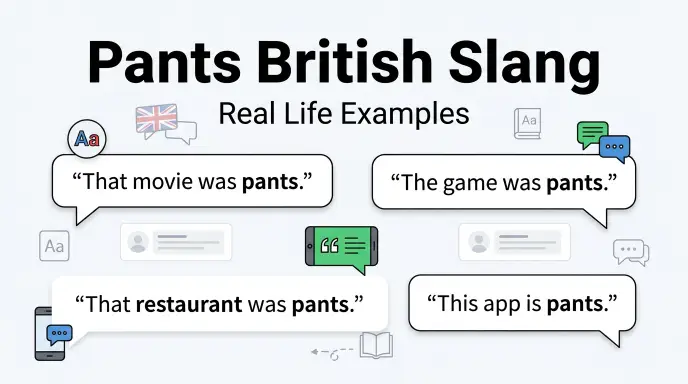
Here are some natural examples.
Talking About a Movie
“I watched that new film last night. It was pants.”
Meaning: The film was bad.
Talking About Food
“The pizza from that place was pants.”
Meaning: The pizza was poor or disappointing.
Talking About a Game
“This game is pants. I’m going to play something else.”
Meaning: The speaker dislikes the game.
Talking About a Product
“I bought these headphones last week, but they’re pants.”
Meaning: The headphones do not work well or meet expectations.
Talking About a Plan
“That sounds like a pants idea.”
Meaning: The speaker thinks the idea is bad.
These examples show how pants works as an informal judgment.
Pants British Slang: Origin and History
The word pants has a long clothing history, but the slang meaning deserves separate attention.
Oxford traces pants as a clothing word to the mid-19th century. The word comes from pantaloons, an older term for a type of trousers.
The British slang meaning developed from the idea of something being poor or worthless. Oxford records pants as British slang for something that a person considers poor quality.
The exact point when this slang use first appeared can vary across sources. Because of that, it makes more sense to describe pants as an established British informal expression rather than claim one exact invention date.
That approach also avoids a common mistake: confusing the slang meaning with the much older clothing meaning.
Pants in British English vs American English
This difference causes some of the funniest English misunderstandings.
British English
Pants = underwear
“I need some new pants.”
Trousers = outer clothing
“I bought new trousers.”
American English
Pants = outer clothing
“I bought new pants.”
Underwear = clothing worn under other clothes
The same word can therefore create a very different mental picture for British and American speakers. Cambridge clearly separates these two meanings by region.
Pants on Social Media and in Texting
People can use pants in texts, comments, and social media posts when they want to describe something as bad.
For example:
“That new update is pants 😂”
The emoji can make the complaint feel playful.
You might also see:
“This app is absolute pants.”
The writer means the app works badly or disappoints them.
However, pants does not have a special Snapchat, TikTok, Instagram, or Discord meaning. The slang meaning stays the same across these platforms.
Is Pants Used at Work?
You can hear pants in a relaxed workplace conversation, especially among colleagues who know each other well.
Still, avoid it in formal workplace writing.
Instead of:
“The new system is pants.”
Use:
“The new system has several problems.”
Or:
“The new system does not work well.”
These alternatives sound clearer and more professional.
Similar British Slang Terms
Several informal British words can express a similar idea.
| Term | Meaning | Tone |
| Pants | Bad or rubbish | Mild |
| Rubbish | Very poor or worthless | Mild |
| Crap | Bad or poor quality | Stronger |
| Awful | Very bad | Neutral |
| Terrible | Very bad | Neutral |
| Dodgy | Unreliable or suspicious | Context-based |
Rubbish often works as the closest simple alternative.
For example:
“That film was pants.”
You could say:
“That film was rubbish.”
Both sentences express a negative opinion.
When Should You Avoid Pants?
You should avoid pants when you need formal or professional language.
Avoid the slang use in:
- Job applications
- Academic essays
- Formal reports
- Business proposals
- Official complaints
- Professional presentations
- Formal customer communication
You should also avoid it when your audience may not know British slang.
For example, an American reader may understand pants as trousers rather than bad.
In those cases, choose a clearer word such as poor, bad, rubbish, or disappointing.
Polite Alternatives to Pants
If you want to criticize something without sounding too casual, choose a more neutral word.
Instead of:
“That restaurant was pants.”
You could say:
“That restaurant was disappointing.”
Instead of:
“The service is pants.”
You could say:
“The service needs improvement.”
Instead of:
“This product is pants.”
You could say:
“This product does not work well.”
These options work better in professional situations.
Why Do British People Say Pants?
People use pants because it gives a short, casual way to describe something poor or disappointing.
It can also make criticism sound less harsh.
Compare:
“That film was terrible.”
with:
“That film was pants.”
The second sentence can sound more playful and conversational.
That does not mean every speaker uses the word in exactly the same way. Age, region, personality, and social setting can affect how often someone uses British slang.
Common Misunderstandings About Pants
Does pants mean underwear in British English?
Yes. British English commonly uses pants for underwear. Cambridge lists this as the UK meaning.
Does pants mean trousers in British English?
Usually, no. British English generally uses trousers for the outer clothing that Americans call pants.
What does pants mean in British slang?
It means bad, rubbish, poor, or disappointing.
Is pants a swear word?
No. The slang use usually sounds mild and informal.
Can I say pants at work?
You can use it in relaxed conversation with people who understand the slang. However, choose more formal words for professional writing.
Is pants used on TikTok or Snapchat?
Yes, British speakers can use the word on social platforms. However, pants does not have a special meaning on these apps.
What is the American equivalent of British slang pants?
There is no single perfect match. Depending on context, Americans might say bad, lousy, terrible, rubbish, or crap.
FAQ’S
Q1:What is the British slang word pants?
Pants is a British slang term that can mean bad, rubbish, or poor quality. For example, “That movie was pants” means the speaker thought the movie was bad.
Q2:What does pants mean in British English?
In normal British English, pants means underwear. In British slang, pants can also mean something poor or disappointing.
Q3:Do British people call trousers pants?
Usually, British speakers call that clothing trousers. They normally use pants for underwear.
Q4:What does “That is pants” mean?
“That is pants” means “That is bad” or “That is rubbish.” The speaker expresses a negative opinion in a casual way.
Q5:Is pants a rude word in the UK?
The slang meaning usually sounds mild. However, it can sound rude if you use it to criticize someone’s work, product, service, or idea.
Q6:What is the opposite of pants in British slang?
There is no single exact opposite. Depending on the context, you could use great, brilliant, excellent, good, or fantastic.
Conclusion
Pants British slang means bad, rubbish, poor, or disappointing. People use it in casual British English when they want to criticize something in a short and informal way.
However, remember the other important meaning. In British English, pants usually means underwear, while trousers means the outer clothing that Americans call pants.
Context makes the meaning clear. If someone says, “I bought new pants,” they likely mean underwear. If they say, “That film was pants,” they mean the film was bad.
For formal writing, choose clearer words such as poor, bad, rubbish, or disappointing. In casual British conversation, though, pants can add a light and natural way to express dislike.
Learn More About!
- Vulgar British Slang: Meaning, Words & Examples
- Spoiled in Spanish Slang Meaning in Text
- Maje Spanish Slang Meaning in Text