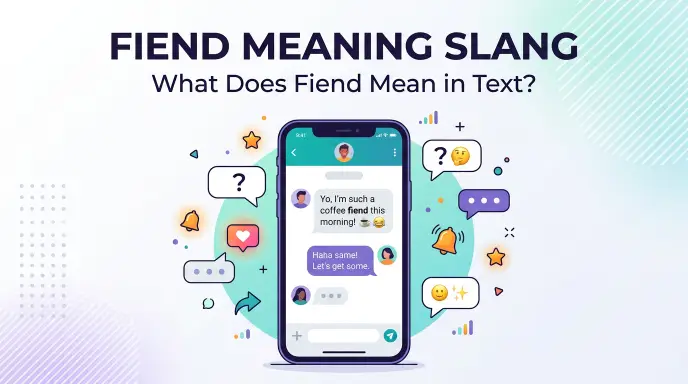
Fiend meaning slang usually refers to someone who strongly wants or enjoys something, often to the point of seeming obsessed with it. For example, a person who loves coffee may call themselves a “coffee fiend.” In some contexts, fiend can also describe someone who acts badly or cruelly.
If you saw fiend in a text, comment, TikTok caption, or online post, the meaning can depend on the sentence. Some people use it in a playful way, while others use it as an insult.
This guide explains the fiend meaning slang, its common uses, tone, examples, origin, and similar words. You will also learn when the word sounds harmless and when you should avoid it.
Quick Answer
- In slang, fiend often means a person who really wants, loves, or constantly seeks something. For example, “He is a coffee fiend” means he loves coffee and wants it often. The word can also describe a cruel or unpleasant person, so context matters.
What Does Fiend Mean in Text?
Fiend can have a few different meanings in everyday English and slang.
The most common casual use describes someone who has a strong desire for something.
For example:
“I’m a chocolate fiend.”
This means the person really loves chocolate and wants it often.
The word can also describe someone who behaves badly. In that sense, fiend sounds much more negative.
For example:
“That guy is a fiend.”
The exact meaning depends on the conversation.
Common slang meanings of fiend
| Meaning | Tone | Example |
| Someone who loves something | Playful | “She’s a coffee fiend.” |
| Someone who wants something often | Casual | “He’s a gaming fiend.” |
| A cruel or nasty person | Negative | “That villain is a fiend.” |
| Someone obsessed with a habit | Casual or humorous | “I’m a snack fiend.” |
So, you should always check the words around fiend before deciding what someone means.
Fiend Full Meaning and Definition
Fiend does not have a special full form because it is a normal English word, not an abbreviation.
In casual speech, people often use it to describe someone with a strong liking for something.
You may see combinations such as:
- coffee fiend
- food fiend
- fitness fiend
- music fiend
- gaming fiend
- movie fiend
- book fiend
- shopping fiend
These phrases usually sound informal.
For example:
“My sister is a book fiend.”
The speaker means that their sister loves books and reads them often.
The word can add a playful sense of intensity. Instead of saying “I really like coffee,” someone might say, “I’m a coffee fiend.”
Different Meanings of Fiend
The word fiend can carry different meanings. Here are the main ones.
1. A Person Who Really Loves Something
This is one of the most common casual uses.
People use fiend to show a strong interest in something.
Examples:
“I’m a sneaker fiend.”
“She’s a true movie fiend.”
“He’s a coffee fiend.”
These sentences do not usually sound offensive. They simply show that someone enjoys something a lot.
2. Someone Who Wants Something Constantly
People can also use fiend for someone who keeps looking for or wanting something.
For example:
“He’s a snack fiend.”
This can mean that he always wants snacks.
The speaker may use the word as a joke. The meaning does not always suggest a serious problem.
3. A Cruel or Wicked Person
The word also has a strong negative meaning.
A fiend can describe a cruel, evil, or very unpleasant person.
For example:
“The story’s villain acts like a fiend.”
Here, the word does not describe someone’s hobby or strong interest. It describes bad behavior.
This meaning often appears in books, movies, stories, and dramatic speech.
4. Someone Obsessed With a Habit
In some contexts, people use fiend to describe someone who strongly depends on or constantly seeks something.
This meaning can sound more serious.
For example:
“He’s a caffeine fiend.”
This may simply mean that he drinks a lot of coffee. However, some uses can suggest an unhealthy habit.
Context gives you the real meaning.
Where Is Fiend Commonly Used?
You can see fiend in many casual settings.
Text Messages
Friends may use the word while talking about hobbies, food, drinks, games, or entertainment.
“You’re such a pizza fiend 😂”
This sounds playful.
TikTok and Instagram
Social media users may add fiend to captions or comments.
For example:
“Coffee fiend forever.”
The phrase creates a casual and humorous tone.
Reddit users may use the word when talking about hobbies or strong interests.
“I’m a huge keyboard fiend.”
Here, the word shows strong interest.
Discord
Gaming communities may use fiend in a playful way.
“He’s a Minecraft fiend.”
The speaker means that the person plays the game a lot or loves it.
Everyday Conversation
People can also use the word when speaking with friends or family.
“Dad is a barbecue fiend.”
This usually sounds light and humorous.
Is Fiend Rude or Offensive?
Fiend can sound harmless or insulting, depending on context.
When you attach it to a hobby or interest, it often sounds playful.
For example:
“She’s a book fiend.”
That usually sounds positive.
However, calling someone simply a fiend can sound negative.
For example:
“You’re a fiend.”
The tone could suggest that the person acts badly or wants something too much.
The speaker’s tone also matters. A friend may say it as a joke. A stranger may use it as an insult.
Quick tone guide
- “Coffee fiend” → usually playful
- “Music fiend” → usually positive
- “Gaming fiend” → usually casual
- “You are a fiend” → can sound negative
- “That person is a fiend” → often negative
Real Life Examples of Fiend Slang
Here are some natural examples.
Friendly Conversation
Alex: You bought another coffee?
Sam: I know. I’m a coffee fiend.
Here, Sam jokes about loving coffee.
Text Message
“I’m such a dessert fiend. I can’t say no to cake.”
The person uses fiend in a humorous way.
Gaming
“Jake is a gaming fiend. He plays every night.”
The phrase shows strong interest in gaming.
Social Media
“Book fiend 📚❤️”
This caption tells people that the person loves reading.
Instagram Comment
“You’re becoming a skincare fiend 😂”
The comment suggests that the person buys or enjoys skincare products often.
Negative Context
“The villain was a cruel fiend.”
Here, fiend has a clearly negative meaning.
Fiend Origin and Background
Fiend is not a new internet word.
The word has a long history in English. It comes from Old English fēond, which meant an enemy or hater. The word later developed the sense of a wicked or evil person.
Modern English still uses that older negative sense.
Over time, casual speech also developed lighter uses. People began using fiend after nouns to describe someone with a strong interest in something.
That explains phrases such as:
- coffee fiend
- movie fiend
- book fiend
- fitness fiend
The exact moment when each casual phrase became popular can vary. So, it would not be accurate to claim that one specific website or social platform created this usage.
Fiend vs. Fan
Fiend and fan can both describe strong interest, but they do not sound exactly the same.
| Word | Meaning | Tone |
| Fan | Someone who likes something | Neutral |
| Fiend | Someone who really loves or wants something | Stronger and more playful |
| Enthusiast | Someone with a strong interest | More formal |
| Addict | Someone who constantly seeks something | Strong and sometimes negative |
For example:
“She is a coffee fan.”
This sounds normal.
“She is a coffee fiend.”
This sounds more intense and playful.
Fiend vs. Addict
These words can overlap in casual speech, but they do not always carry the same feeling.
Fiend can sound humorous:
“I’m a chocolate fiend.”
Addict can sound more serious:
“He has an addiction.”
Because of this difference, fiend can work better when someone simply wants to make a playful comment about a hobby or preference.
Still, context matters.
Why Do People Use Fiend in Slang?
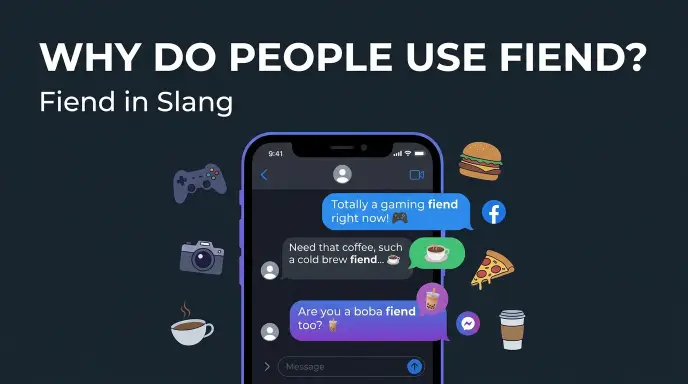
People often use fiend because it makes a simple statement sound stronger and more expressive.
Compare these:
“I like coffee.”
and
“I’m a coffee fiend.”
The second sentence shows much stronger enthusiasm.
People may use the word to:
- show strong interest
- make a joke
- describe a habit
- add personality to a caption
- exaggerate their love for something
- make casual conversation more colorful
It can also help people describe themselves in a short and memorable way.
When Should You Avoid Using Fiend?
You should think about the context before calling someone a fiend.
Avoid the word when the listener may interpret it as an insult.
This matters most in:
- professional emails
- job interviews
- school assignments
- formal presentations
- conversations with people you do not know well
For example,
calling a coworker “a fiend” may sound strange or rude.
Instead, choose a clearer word.
You can say:
“She really enjoys coffee.”
That sentence works in almost any setting.
Polite Alternatives to Fiend
If you want a softer word, several options work well.
hobbies
- fan
- enthusiast
- lover
- admirer
- hobbyist
interest
- passionate fan
- big fan
- keen follower
- enthusiastic user
For example:
Casual:
“He’s a gaming fiend.”
Polite:
“He’s a big gaming fan.”
Both sentences show strong interest, but the second one sounds more neutral.
Common Misunderstandings About Fiend
Does fiend always mean a bad person?
No.
The word can describe a cruel person, but casual phrases such as coffee fiend or book fiend usually show strong interest.
Is fiend the same as addict?
Not always.
People often use fiend as playful exaggeration. Addict can carry a more serious meaning.
Does fiend mean friend?
No.
The two words look and sound somewhat similar, but they have different meanings.
Friend means a person you know and like.
Fiend can mean a person with an intense desire for something or a cruel person.
Is fiend internet slang?
Not exactly.
Fiend has existed in English for centuries. Social media and texting can use the word, but they did not create it.
Is Fiend Safe for Social Media?
Yes, fiend is generally safe for normal social media use.
The meaning depends on the context.
A caption such as:
“Coffee fiend ☕”
usually sounds harmless.
A statement such as:
“He’s a dangerous fiend.”
has a negative meaning.
So, the word itself does not create a problem. Your sentence and tone determine how readers understand it.
Fiend on TikTok, Instagram, and Discord
Different platforms can give the word slightly different tones.
| Platform | Common feel |
| TikTok | Playful and humorous |
| Caption friendly and casual | |
| Discord | Casual, especially around hobbies and games |
| Informal and topic focused | |
| Texting | Friendly and conversational |
| Workplace chat | Better to use with care |
People often use the word to show enthusiasm for food, games, music, fashion, books, or other interests.
FAQ’S
Q1:What does fiend mean in slang?
In slang, fiend often describes someone who strongly loves or wants something. “Coffee fiend” means someone who really loves coffee. The word can also mean a cruel person.
Q2:What does fiend mean in text messages?
In text messages, fiend often has a playful meaning. Someone may call a friend a “snack fiend” or “coffee fiend” to joke about their strong preference.
Q3:Is fiend a bad word?
No. Fiend is not always a bad word. It can sound playful when people use it for hobbies or interests. It can sound negative when it describes a cruel person.
Q4:Is fiend the same as friend?
No. Fiend and friend have different meanings. A friend is someone you know and like. A fiend can describe someone with an intense desire for something or someone who acts cruelly.
Q5:Can I use fiend at work?
You can use it in a casual workplace conversation when the meaning feels clear. However, avoid it in formal emails and professional documents. Words such as fan or enthusiast sound safer.
Q6:What does “coffee fiend” mean?
“Coffee fiend” usually means someone who loves coffee and drinks it often. People often use the phrase in a humorous or playful way.
Conclusion
The fiend meaning slang depends on context. In casual speech, fiend often describes someone who strongly enjoys or wants something. Phrases such as “coffee fiend” and “gaming fiend” usually sound playful.
The word can also describe a cruel or unpleasant person. That meaning sounds much more negative.
If you see fiend in a text, comment, or social media post, look at the words around it. A phrase like “book fiend” usually shows enthusiasm, while “evil fiend” clearly points to bad behavior.
The safest approach is simple: check the context and tone before deciding what “fiend” means.
Discover More About!
- Define Goat Slang: What Does GOAT Mean?
- A Grass British Slang Meaning in Text
- What Does ATM Stand for Slang?