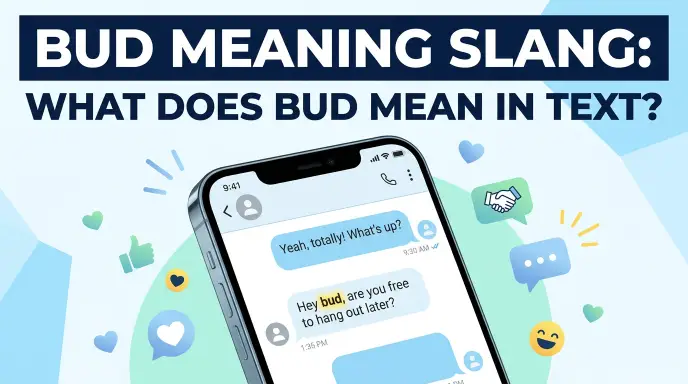
Bud meaning slang usually refers to “bud” as a casual word for a friend, buddy, or someone you know well. People often use it in texts and everyday conversation to sound friendly and relaxed. However, the tone can change based on the situation.
You may see bud in text messages, social media comments, gaming chats, or casual conversations. For example, someone might say, “Hey bud, how are you?” to greet a friend. In another situation, “Listen, bud” can sound annoyed or sarcastic.
This guide explains the bud meaning slang, its common uses, tone, origin, examples, and related words. You will also learn when “bud” sounds friendly and when it may sound rude.
Quick Answer:
- Bud is casual slang for “buddy” or “friend.” It usually describes a person in a friendly or familiar way. Depending on the speaker’s tone and context, bud can also sound playful, sarcastic, or slightly confrontational.
What Does Bud Mean in Slang?
The slang word bud commonly means friend, buddy, or pal.
It works as a short and casual way to address someone. You might hear it between friends, coworkers, family members, or people who have a relaxed relationship.
For example:
“Thanks for helping me, bud.”
Here, bud sounds warm and friendly.
You can also use it when talking to someone you do not know very well:
“Hey bud, do you know where the station is?”
The meaning stays simple, but the tone depends on the speaker and situation.
Common meanings of “bud”
| Meaning | Tone | Example |
| Friend or buddy | Friendly | “Good to see you, bud!” |
| Familiar way to address someone | Casual | “Hey bud, what’s up?” |
| Friendly nickname | Warm | “Thanks, bud.” |
| Sarcastic address | Annoyed | “Listen, bud.” |
| Young male person in some contexts | Casual | “That little bud is growing fast.” |
The first meaning is the most common in everyday slang.
Bud Meaning in Text
In texting, bud usually means buddy or friend.
People often use it as a casual form of address. It can make a short message sound warmer.
For example:
“Morning, bud! Ready for the game?”
The message feels friendly and relaxed.
Another example is:
“Appreciate it, bud.”
This often shows thanks or friendliness.
However, you should not judge the meaning from the word alone. The surrounding message matters.
Compare these two examples:
- “Thanks, bud 😊” :friendly and warm.
- “Okay, bud.” :may sound dismissive or sarcastic.
The same word can create different feelings because of context, punctuation, and tone.
Is “Bud” Short for Buddy?
Yes. Bud commonly works as a shortened form of buddy in informal English.
People often use both words in similar situations.
For example:
“Hey buddy, how are you?”
and
“Hey bud, how are you?”
Both sentences can express friendliness.
“Bud” often feels shorter and more casual. “Buddy” can sound warmer, more playful, or more familiar depending on the speaker.
Is Bud Rude or Offensive?
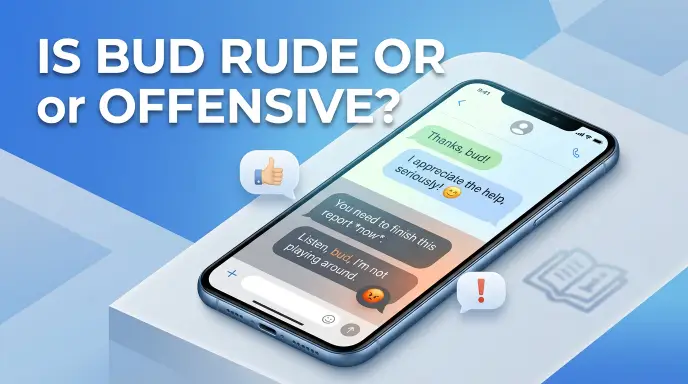
Bud is usually not rude or offensive. In friendly situations, it normally sounds casual and positive.
Still, the word can sound rude when someone uses it during an argument or in a dismissive way.
Consider:
“Calm down, bud.”
This sentence may sound patronizing. The speaker might not actually feel friendly toward the other person.
Another example:
“You better stop, bud.”
Here, the word can add a warning or confrontational tone.
Tone matters
| Phrase | Likely tone |
| “Thanks, bud!” | Friendly |
| “Hey bud!” | Casual |
| “Good job, bud.” | Supportive |
| “Sure, bud.” | Possibly sarcastic |
| “Listen, bud.” | Possibly confrontational |
So, bud itself is not offensive. The situation gives it its tone.
Where Is “Bud” Commonly Used?
People use bud in many informal settings. It does not belong to one specific social media platform.
You may see it in:
- Text messages
- Instagram comments
- TikTok comments
- Snapchat chats
- Discord conversations
- Reddit discussions
- Gaming chats
- Casual conversations
- Family conversations
- Friendly workplace chats
The meaning stays close to friend, buddy, or familiar person.
Bud in texting
Texting gives “bud” a quick and natural feel.
“You coming over later, bud?”
Bud on social media
A comment might say:
“Nice one, bud!”
The commenter probably uses the word to show friendliness.
Bud in gaming
Gamers may use it while talking with teammates:
“Good save, bud!”
This use often shows encouragement.
Bud on Discord
In a casual Discord chat, someone might write:
“Hey bud, check the new update.”
Again, the word usually signals familiarity.
Real Life Examples of “Bud”
The best way to understand slang is to see it in natural situations.
1. Friendly conversation
“Hey bud, it’s been a while!”
Meaning: Hey friend, it’s been a while.
The tone feels warm and familiar.
2. Saying thank you
“Thanks for picking me up, bud.”
Meaning: Thanks, friend.
Here, “bud” adds a friendly touch.
3. Text message
“Are you free tonight, bud?”
The speaker likely feels comfortable with the person.
4. Gaming
“Nice play, bud!”
This shows praise and encouragement.
5. Social media
“You nailed that edit, bud!”
The comment sounds casual and supportive.
6. Playful use
“Look who finally showed up, bud!”
This could sound playful between close friends.
7. Slightly annoyed use
“Listen, bud, that’s not what I said.”
Here, the tone changes. The speaker sounds irritated.
8. Sarcastic use
“Sure, bud. Whatever you say.”
This example can sound dismissive or sarcastic.
Origin and Background of “Bud”
The casual use of bud connects to the longer word buddy. English speakers have used buddy as an informal term for a friend or companion for many years.
“Bud” also has older English meanings unrelated to friendship. In ordinary English, a bud can mean a young flower or a developing part of a plant.
The slang use developed as a shortened, familiar form of buddy. Because the word has several meanings, context helps readers understand which meaning the speaker intends.
There is no need to treat every use of “bud” as internet slang. People used the word in spoken and written informal English long before modern social media.
Bud vs. Buddy vs. Pal
Several casual words can describe a friend. Their meanings overlap, but their tone can differ.
| Word | Basic meaning | Common tone |
| Bud | Friend or buddy | Casual |
| Buddy | Friend or companion | Friendly |
| Pal | Friend or person you know | Casual |
| Bro | Friend or male person | Very informal |
| Mate | Friend or companion | Common in British English |
Bud often feels short, relaxed, and familiar.
Buddy can feel a little warmer or more playful.
Pal can sound friendly, but context can also make it sarcastic.
Bro has a stronger casual and modern feel.
Mate appears often in British and Australian English.
When Should You Avoid Using “Bud”?
Although bud is harmless in most casual situations, it does not fit every setting.
Avoid it when you need a formal or highly professional tone.
For example, an email to a client should not normally begin with:
“Hey bud!”
A better choice would be:
“Hello Mr. Smith,”
You should also avoid using “bud” with someone who may interpret it as overly familiar.
Be careful in these situations
- Formal business emails
- Job interviews
- Academic writing
- Official letters
- Customer complaints
- Formal meetings
- Conversations with people you do not know well
The word itself is not inappropriate. The level of familiarity may simply feel wrong.
Polite Alternatives to “Bud”
If you want a more neutral word, several options work well.
Casual alternatives
- Buddy
- Friend
- Pal
- Mate
- Bro
More polite alternatives
- Friend
- Sir
- Ma’am
- Their name
- Mr. or Ms. + last name
The best choice depends on your relationship with the person.
For example:
“Thanks, bud.”
works well with a friend.
For a professional conversation, you could say:
“Thank you for your help.”
The second version sounds more formal.
Why Do People Use “Bud”?
People use bud because it makes conversation feel casual and personal.
A short word can show familiarity without requiring a long explanation.
Common reasons include:
- Showing friendliness
- Addressing a friend
- Making a message feel relaxed
- Showing appreciation
- Encouraging someone
- Adding humor
- Creating a sense of familiarity
The word can also soften a simple message.
Compare:
“Thanks.”
with:
“Thanks, bud!”
The second message often feels more personal.
Is “Bud” Used for Men Only?
No. Bud does not have to describe a man.
People can use “bud” as a casual form of address for different people. The exact use depends on the speaker, relationship, and community.
However, some speakers may use it more often with male friends. That does not make the word exclusively male.
Context matters more than gender.
Common Misunderstandings About “Bud”
1. Bud always means friend
Not always.
The word can also describe a flower or developing plant growth, which has nothing to do with slang.
For example:
“The rose has a new bud.”
That sentence uses the standard noun, not slang.
2. Bud always sounds friendly
Not necessarily.
“Listen, bud.”
can sound annoyed or threatening depending on the situation.
3. Bud only appears online
No.
People use “bud” in everyday speech as well as texting and social media.
4. Bud always means close friend
Not always.
A person may call a stranger “bud” in a casual conversation. The word does not prove that two people have a close friendship.
Is “Bud” Safe for Social Media?
Yes. Bud is generally harmless and safe to use on social media.
It does not normally contain offensive or explicit meaning. Still, users should consider tone and audience.
A friendly comment such as:
“Great work, bud!”
should usually feel casual and positive.
A sarcastic comment such as:
“Nice try, bud.”
could sound mocking.
The surrounding words matter more than the slang word itself.
FAQ’S
Q1. What does bud mean in slang?
Bud usually means buddy, friend, or pal. People use it as a casual way to address someone they know or someone they want to address in a friendly manner.
Q2. Is bud short for buddy?
Yes. Bud commonly works as a shortened form of buddy in informal English.
Q3. Is bud a rude word?
No. Bud is usually friendly or neutral. However, someone can use it sarcastically or during an argument, which can make it sound rude.
Q4. What does bud mean in texting?
In texting, bud usually means friend or buddy. The exact feeling depends on the message. “Thanks, bud!” sounds friendly, while “Sure, bud” may sound sarcastic.
Q5. Can I use bud at work?
You can use it in a very casual workplace with people you know well. However, formal emails, meetings, interviews, and client communication usually call for more professional language.
Q6. Does bud mean a male friend?
Not necessarily. People can use bud for different people. The word usually focuses on familiarity rather than gender.
Conclusion
Bud meaning slang usually refers to a casual way of saying buddy, friend, or pal. People use it in conversations, text messages, gaming chats, and social media to sound friendly and relaxed.
The tone can change with context. “Thanks, bud!” usually sounds warm, while “Listen, bud” can sound annoyed or confrontational.
You can safely use bud in casual conversations with people who understand your tone. For formal emails, interviews, and professional situations, choose a more neutral form of address.
Learn More About!
- OD Definition Slang: What Does OD Mean?
- Goofy Meaning Slang: What Does Goofy Mean?
- Merch Meaning in Slang: What Does Merch Mean?