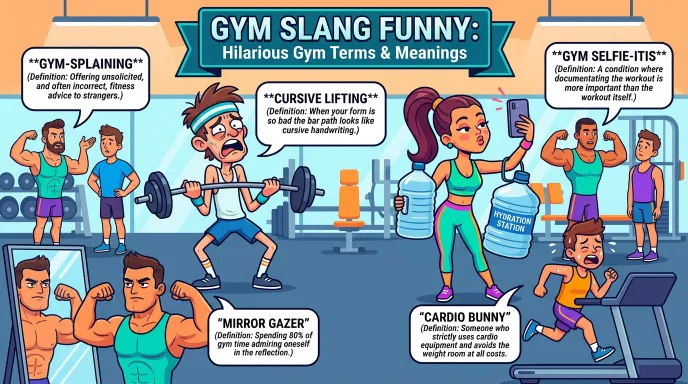
Gym slang funny refers to the playful, weird, and humorous words gym goers use when they talk about workouts, muscles, lifting, and gym life. These terms can make gym conversations more fun and easier to understand.
If you have ever heard someone say “gym bro,” “gains,” “ego lifting,” or “gym rat,” you may have wondered what they mean. Some terms describe real workout habits. Others poke fun at common gym behavior. Gym communities use this language in person and online, especially in fitness groups and social media.
This guide explains gym slang funny terms in simple English. You will learn what they mean, where people use them, and how they sound in real conversations. You will also see funny examples that show the difference between serious gym talk and playful gym slang.
Quick Answer
- Gym slang funny means humorous words, phrases, and jokes that gym goers use to describe workouts, gym habits, fitness culture, and people at the gym.
- Common examples include gym bro, gym rat, gains, bro science, ego lifting, and “one more rep.” Some terms sound funny because they turn normal gym habits into jokes.
What Does Gym Slang Funny Mean?
Gym slang funny does not describe one specific slang word. Instead, it refers to a group of playful terms that people use around gym culture.
Some terms have a real fitness meaning. Others have a humorous twist.
For example, gains means progress from training, often muscle or strength. Gym rat describes someone who spends a lot of time at the gym. Bro science refers to fitness advice that gym goers share without strong scientific support.
The funny part often comes from how people use these terms.
A friend might say:
“I cannot hang out tonight. The gains need me.”
The person does not mean that the muscles can actually call them. The joke simply makes their gym commitment sound dramatic.
What Does Gym Mean in Slang on TikTok and in Chat?
The gym meaning slang readers look for usually depends on the conversation. In everyday language, gym refers to a place where people exercise, lift weights, and work on their fitness. In casual conversations, people may also use the word when they talk about workouts, gym culture, or fitness habits.
If you wonder what does gym mean in slang, the word usually keeps its regular meaning. However, the surrounding words can give it a playful tone. For example, someone might say, “I cannot go out tonight. The gym is calling!”
The phrase gym meaning in slang can also interest people who see fitness jokes on social media. The gym meaning slang tiktok users see often appears in workout videos, fitness memes, and captions about leg day, muscle gains, or spending too much time training.
In text messages, gym meaning in chat usually refers to the gym or a workout session. Friends might write, “Are you going to the gym today?” or “Meet me at the gym after school.”
Some readers also ask what does gym stand for in slang. In most everyday contexts, gym is a shortened form of gymnasium, not a special slang acronym. The conversation can make it funny, but the word itself does not have one universal slang meaning.
Why Is Gym Slang Funny?
Gym slang often sounds funny because gym culture has many familiar habits.
People joke about:
- Spending hours at the gym
- Talking about protein
- Taking progress photos
- Chasing bigger muscles
- Counting every rep
- Saying “one more rep”
- Taking long rests
- Checking the mirror
- Talking about supplements
- Giving friends workout advice
These habits create plenty of material for jokes.
The humor usually comes from exaggeration, teasing, and shared gym experiences.
For example:
“Just one more set.”
A gym friend may hear this and laugh because “one more set” can turn into several more sets.
Popular Funny Gym Slang Terms
Here are some common terms that can appear in funny gym conversations.
| Gym Slang | Simple Meaning | Funny Use |
| Gym bro | A person who loves gym culture | Used for playful teasing |
| Gym rat | Someone who spends lots of time at the gym | Jokes about living at the gym |
| Gains | Progress in muscle or strength | Used dramatically for fitness progress |
| Bro science | Informal gym advice without strong evidence | Used to joke about strange fitness tips |
| Ego lifting | Using more weight than you can handle well | Used to tease risky lifting |
| Natty | Natural, without performance enhancing drugs | Often used in fitness debates |
| Beast mode | Very intense effort | Used to describe hard workouts |
| Pump | Temporary muscle fullness during or after training | Often used in gym jokes |
| PR | Personal record | Used when someone beats their previous best |
| Work in | Share equipment during a workout | Common gym floor phrase |
Fitness sources use terms such as gains, gym bro, gym rat, bro science, ego lifting, and work in in gym culture.
Gym Bro
Gym bro usually describes someone who spends a lot of time around gym culture.
A gym bro may love lifting, talking about workouts, discussing protein, and sharing training tips. The term can sound friendly or teasing, depending on the speaker.
Funny example:
“I asked my brother what he wanted for his birthday. He said a new gym bag. Definitely a gym bro.”
The phrase does not always insult someone. Friends often use it as a light joke.
Gym Rat
A gym rat means someone who spends a lot of time at the gym.
Imagine someone who arrives before you and leaves after you. You may joke:
“Do you actually live here?”
They might answer:
“Basically.”
That is the kind of situation where gym rat fits.
Funny example:
“My friend knows every machine in the gym. He is officially a gym rat.”
Gains
Gains means progress from training. People often use it for muscle growth or strength increases.
The term becomes funny when someone treats every small improvement like a major achievement.
For example:
“I carried all the grocery bags in one trip. The gains are real.”
The speaker uses gym language for an everyday task.
Another example:
“I lifted the laundry basket without stopping. Huge gains.”
The humor comes from exaggeration.
Bro Science
Bro science refers to informal fitness advice that people share without strong scientific support.
For example, someone may confidently say:
“If you do exactly 100 push ups before breakfast, you will become huge in a week.”
A friend might reply:
“That sounds like bro science.”
The term often works as a joke, but it also has a serious side. Not every popular gym tip has good evidence behind it.
When fitness advice affects health, training, or nutrition, check a reliable source instead of trusting a random gym claim.
Ego Lifting
Ego lifting describes lifting a weight that feels too heavy for the person to control with good form. Fitness guides often use the term for lifting that focuses more on the weight than proper technique.
The term often appears in gym jokes.
For example:
“He added another plate and immediately started using his whole body to move it.”
A friend might say:
“Bro, that is ego lifting.”
The phrase can sound funny, but the idea matters. Good technique usually matters more than showing off heavy numbers.
“One More Rep”
“One more rep” is a classic gym phrase.
Someone may say:
“Just one more rep.”
Then they do another rep.
Then another.
That makes the phrase perfect for gym humor.
Funny example:
“Me: One more rep.
Also me: Somehow still lifting 20 minutes later.”
The joke works because many gym goers recognize the situation.
Beast Mode
Beast mode describes a period of intense effort or focus.
For example:
“I am going into beast mode today.”
The phrase can sound dramatic. That is why people often use it humorously.
A funny example:
“I entered beast mode and lifted the heaviest grocery bag.”
The speaker applies serious gym language to a normal task.
Pump
A pump refers to the temporary feeling and appearance of fuller muscles during or after resistance training.
Gym goers often talk about getting a good pump.
A funny example:
“My arms looked huge after the workout. Ten minutes later, reality returned.”
This joke highlights the temporary nature of the pump.
PR
PR means personal record in many gym conversations. It refers to a person’s best performance for a specific exercise or activity.
For example:
“I hit a new PR on the bench press today!”
A funny version might sound like:
“New PR: I carried six grocery bags upstairs without taking a break.”
The joke comes from using serious fitness language for an everyday achievement.
Funny Gym Slang in Text Messages
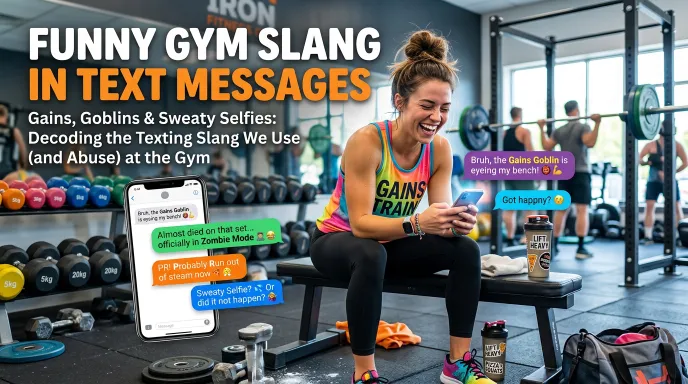
Gym slang works well in texts because short phrases can carry a lot of meaning.
1: Friendly
Jake: “You going to the gym?”
Sam: “Yep. Gains do not make themselves.”
Jake: “Gym bro confirmed.”
The conversation uses playful gym language between friends.
2: After a Hard Workout
Mia: “My legs are finished.”
Lena: “Leg day got you?”
Mia: “Absolutely destroyed.”
Lena: “Worth it for the gains 😂”
Here, the tone stays friendly and humorous.
3: About Ego Lifting
Alex: “He put way too much weight on the bar.”
Ben: “Ego lifting?”
Alex: “100%.”
This example uses the slang in a normal gym discussion.
Does Gym Have a Funny Acronym or Full Form?
People sometimes search for a gym acronym because they see funny fitness captions, jokes, or abbreviations online. However, gym does not have one official acronym or special full form in everyday slang. It is commonly a shortened form of gymnasium.
The search gym full form in chat often comes from people who want to understand a message or a social media caption. In most cases, the person simply means a place to exercise or a workout session.
For a laugh, people can invent a gym acronym funny enough to fit their fitness routine. For example, they might joke that GYM means “Get Your Muscles” or “Go, You Might!” These are creative jokes, not official definitions.
A gym funny full form can work well in a meme or a playful message between friends. Someone might write, “GYM means Get Your Motivation!” to encourage a friend to exercise. Treat these examples as wordplay rather than established slang meanings.
When you see an acronym in a fitness post, check the context before assuming that it has a standard definition. Online jokes often use made up full forms to make ordinary gym habits sound more entertaining.
Funny Gym Slang on TikTok and Instagram
Fitness creators often use humor to make workout content more relatable.
A video may show someone walking into the gym with confidence and then struggling with the final set.
A caption might say:
“Went into beast mode. Came out looking for snacks.”
Another post might joke:
“POV: You said one more rep 45 minutes ago.”
These examples fit the playful side of fitness culture.
The exact slang can change over time. Social media also moves quickly, so a phrase that feels popular today may sound old to another group later.
Funny Gym Slang on Reddit and Discord
Reddit and Discord can have a more conversational style.
Users may discuss:
- Workout routines
- Personal records
- Gym fails
- Training jokes
- Gym etiquette
- Muscle gains
- Fitness myths
- Gym culture
A person may write:
“I tried a new workout today. My legs have left the chat.”
Another user may respond:
“Classic leg day.”
The humor comes from treating tired muscles as if they can actually leave a conversation.
Real Life Examples of Funny Gym Slang
Here are some fresh examples you can use to understand the tone.
Friendly Example
“You have been at the gym for three hours. Are you training or moving in?”
This jokes about someone who spends a lot of time at the gym.
Casual Example
“I missed one workout. The gains are filing a complaint.”
This uses exaggeration for humor.
Gaming Example
“My character has max strength. Time to enter beast mode.”
Here, gym language crosses into gaming humor.
Social Media Example
“POV: You said ‘one more set’ and now it is dark outside.”
This works as a relatable gym meme.
Family Example
“Dad bought another protein shaker.”
“Does he own stock in shaker bottles?”
This joke pokes fun at a common gym habit.
Gym Slang vs. Regular Fitness Terms
Not every gym word counts as slang.
Some terms describe real training concepts. Others mainly describe gym culture.
| Regular Fitness Term | Gym Slang or Casual Term |
| Strength training | Gains |
| Personal record | PR |
| Muscle pump | Pump |
| Excessively heavy lifting | Ego lifting |
| Fitness misinformation | Bro science |
| Frequent gym visitor | Gym rat |
| Gym enthusiast | Gym bro |
| Share equipment | Work in |
This difference can help beginners understand gym conversations without treating every fitness term as slang.
Is Funny Gym Slang Rude?
Most funny gym slang is harmless when friends use it in a friendly way.
However, some terms can sound insulting.
For example, meathead can describe someone who seems obsessed with bodybuilding or lifting. Some people use it as a joke, while others may find it disrespectful.
The same idea applies to terms that comment on someone’s body, weight, strength, or appearance.
Before joking, think about the person and the setting.
A joke between close friends may feel harmless. The same joke from a stranger may feel rude.
Is Gym Rat an Insult?
People who search is gym rat an insult usually want to know if the phrase sounds rude or friendly. A gym rat is someone who spends a lot of time exercising at the gym. The phrase often sounds playful, especially when friends use it to describe someone who loves working out.
For example, a friend might say, “You are such a gym rat. You spend every evening lifting weights!” In a friendly conversation, this comment can show that the person takes fitness seriously.
However, tone and context matter. Someone may use the phrase sarcastically to tease another person about spending too much time at the gym. If the comment targets someone’s habits in a hurtful way, the person may take it as an insult.
In most casual fitness conversations, gym rat is not automatically offensive. Consider your relationship with the person and how they respond before using the term as a joke.
When Should You Avoid Funny Gym Slang?
You should avoid slang when it may confuse, embarrass, or offend someone.
Be careful when:
- Talking to a new gym member
- Giving serious fitness advice
- Speaking with a client
- Writing a professional fitness plan
- Discussing someone’s body
- Talking about injuries
- Giving health or nutrition advice
- Speaking with someone who does not understand gym culture
Clear language works better when the topic matters.
Instead of saying:
“Bro, stop ego lifting.”
You can say:
“That weight looks hard to control. Try a lighter load.”
The second version gives useful advice without teasing.
Why Do People Use Funny Gym Slang?
People use gym slang because it creates a shared sense of humor.
A new gym member may feel confused by words like PR, gains, or work in. Once they understand the terms, gym conversations become easier.
Funny slang also helps people connect.
It can:
- Make conversations lighter
- Create inside jokes
- Build group identity
- Make fitness content more entertaining
- Turn common struggles into humor
- Help people talk about gym culture
That shared language appears in gyms, online fitness groups, social media, and casual chats.
Common Misunderstandings About Gym Slang
“Gains” Does Not Only Mean Bigger Muscles
People can use gains for strength or other training progress.
“Gym Rat” Does Not Mean an Actual Rat
It describes someone who spends a lot of time at the gym.
“Bro Science” Does Not Mean Real Science
It usually refers to informal fitness claims that lack strong evidence.
“PR” Can Mean Different Things
In gym talk, PR commonly means personal record. In other contexts, it can mean something completely different.
Always check the conversation before assuming the meaning.
FAQ’S
Q1:What is funny gym slang?
Funny gym slang includes playful words and phrases that people use to joke about workouts, gym habits, muscles, and fitness culture.
Q2:What is a gym bro?
A gym bro usually means someone who enjoys gym culture and spends a lot of time training or talking about fitness.
Q3:What does gym rat mean?
A gym rat is someone who spends a lot of time at the gym. The phrase often has a playful tone.
Q4:What does gains mean in gym slang?
Gains usually means progress from training, especially improvements in muscle size or strength.
Q5:What does bro science mean?
Bro science means informal fitness advice that people share without strong scientific support. It often appears in gym jokes.
Q6:Is gym slang appropriate at work?
It depends on the situation. Casual gym slang may work in a friendly chat, but clear and professional language works better in formal communication.
Conclusion
Gym slang funny covers the playful language that makes gym culture more entertaining. Terms such as gym bro, gym rat, gains, bro science, ego lifting, PR, pump, and beast mode can describe real gym experiences while adding humor.
Context matters. A phrase may sound funny among friends but rude in another setting. Some terms also describe real fitness ideas, so beginners should learn the meaning before using them.
If you are new to gym language, start with simple terms such as gains, PR, pump, and gym rat. Once you understand the basics, the jokes become much easier to catch.
The main takeaway is simple: gym slang can make fitness talk fun, but clear language always works best when safety, health, or serious advice matters.
Learn More About!
- Area Between Anus and Scrotum Slang: Meaning & Terms
- Military Slang Insults: Meanings, Terms & Examples
- 80’s Slang Meaning in Text: 80s Words & Phrases