Military slang insults are informal words or phrases that service members use to criticize, tease, or describe someone’s poor behavior. These terms can target a person who acts selfishly, lacks discipline, makes a mistake, or hurts team trust.
The phrase military slang insults covers many different expressions. Some terms sound funny or harmless, while others contain strong profanity. Their meaning can also change by branch, unit, country, and situation.
This guide explains common military insults in simple English. You will learn what these terms mean, where people use them, how strong they sound, and when you should avoid them. You will also see realistic examples that show how the words work in conversation.
Quick Answer
- Military slang insults are informal terms that service members use to criticize, tease, or describe someone in a negative way. They often focus on poor teamwork, weak discipline, bad judgment, laziness, or behavior that causes trouble for others.
- These expressions often rely on humor and shared military culture. Some can sound playful among friends, but the same words can feel harsh when someone uses them toward a stranger or superior.
What Do Military Slang Insults Mean?
Military slang insults usually describe behavior rather than a person’s identity.
A service member might use one to describe someone who:
- Lets the team down
- Breaks trust
- Avoids responsibility
- Makes careless mistakes
- Shows poor discipline
- Creates extra work for others
- Acts selfishly
- Performs badly during a task
The tone matters. A phrase can work as friendly teasing in one conversation and as a serious insult in another.
Military slang also differs across branches and communities. A word that feels common in one group may sound strange or unfamiliar in another.
Common Military Slang Insults
Military slang includes many terms, but not every insult has the same meaning or strength.
| Slang term | Simple meaning | Tone |
| Blue Falcon | Someone who betrays or undermines their teammates | Strong |
| Shitbag | A person who performs poorly or lacks discipline | Vulgar |
| Shitbird | A person who acts poorly or lacks discipline | Vulgar |
| Soup sandwich | Someone or something that seems badly organized or useless | Humorous |
| Jerk | A rude or unpleasant person | Mild |
| Screw up | Someone who makes repeated mistakes | Mild |
| Rat | Someone who informs on others | Negative |
| Snitch | Someone who reports another person’s wrongdoing | Negative |
Some of these terms have narrow military uses. Others also appear in everyday English.
For example, Blue Falcon has a clear military slang meaning. U.S. military sources use the phrase for someone who betrays or undermines teammates.
Blue Falcon: A Well Known Military Insult
Blue Falcon describes someone who puts their own interests ahead of their teammates.
The term often points to behavior such as:
- Throwing a teammate under the bus
- Reporting a teammate to protect yourself
- Creating trouble for the whole group
- Taking credit while others do the work
- Avoiding blame by blaming someone else
The term has a strong negative tone.
The exact history of Blue Falcon has different explanations, so it makes sense to avoid presenting one origin story as certain. The phrase clearly appears in U.S. military contexts, including official military writing.
Example
“He blamed the whole problem on his teammate. Everyone called him a Blue Falcon.”
Here, the speaker does not simply call the person careless. The insult focuses on betrayal and selfish behavior.
Shitbag and Shitbird
Some military slang insults use strong profanity.
Shitbag can describe a soldier who lacks discipline, avoids duties, or performs poorly. A military slang glossary lists the term as derogatory U.S. Army slang.
Shitbird also appears as a derogatory term in U.S. Marine Corps slang. It can describe someone who does not maintain proper appearance or discipline.
These terms carry much more force than words such as “jerk” or “screw up.”
Example
“He kept ignoring his duties, so the others called him a shitbag.”
The speaker uses the term to criticize poor behavior. The word itself remains vulgar.
Soup Sandwich
Soup sandwich gives military slang a more humorous flavor.
It describes something that seems badly organized, ineffective, or useless. People can use it for a person, plan, task, or situation.
Example
“That plan is a complete soup sandwich.”
The speaker does not mean an actual sandwich. The phrase mocks the poor quality of the plan.
This type of slang often relies on absurd humor. The funny image makes the insult easier to remember.
Rat and Snitch
Rat and snitch can describe someone who tells others about another person’s wrongdoing.
The terms do not always count as strictly military slang. People use them in many other settings too.
In a military context, however, they can carry extra weight because trust and teamwork matter so much.
Example
“Nobody wanted to work with him after he became known as a snitch.”
The exact meaning depends on the situation. Reporting serious misconduct does not automatically make someone a “snitch.” The label often reflects the speaker’s opinion rather than an objective fact.
Where Are Military Slang Insults Used?
Military slang insults can appear in several settings.
Barracks and Informal Conversations
Service members may use slang while talking casually with friends or teammates.
This setting often allows more humor and stronger language.
Training Environments
People may use insults during stressful training. In some groups, teasing can help build a sense of shared identity.
Still, not every person enjoys this style of humor.
Text Messages and Group Chats
Military slang can also appear in private messages and group chats.
A service member might write:
“Who made this soup sandwich of a schedule?”
The phrase adds humor while criticizing the schedule.
Online Communities
Military veterans and current service members may use military slang on forums, social media, gaming servers, and other online spaces.
People outside the military can also learn these terms through movies, TV shows, games, memes, and online discussions.
Are Military Slang Insults Rude or Offensive?
Yes, many military slang insults are rude, and some are highly offensive.
The strength depends on the word.
| Type | Example | Strength |
| Mild criticism | Jerk | Low |
| Mistake focused insult | Screw up | Low to medium |
| Negative label | Rat | Medium |
| Team betrayal insult | Blue Falcon | High |
| Vulgar insult | Shitbag | High |
| Vulgar derogatory term | Shitbird | High |
Strong profanity can create problems in formal settings.
A person may joke with a close friend but avoid the same language around a commanding officer, customer, teacher, interviewer, or unfamiliar person.
Real Life Examples of Military Slang Insults
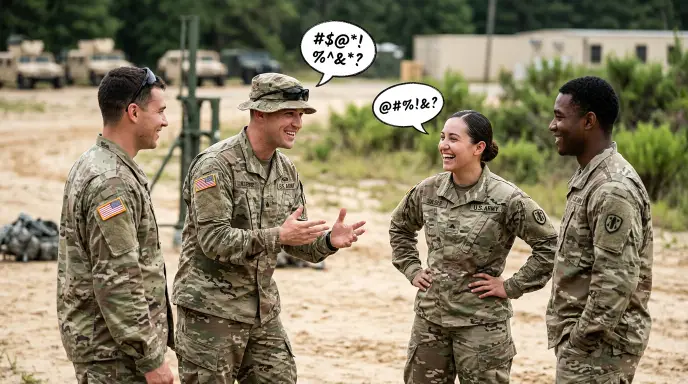
Here are simple examples that show how these expressions can work.
1: Teamwork
Sam: “Why did Jake tell the supervisor about our mistake?”
Alex: “He wanted to save himself.”
Sam: “That was a Blue Falcon move.”
The insult focuses on betrayal.
2: Poor Performance
Sam: “Did he finish the task?”
Alex: “No. He ignored it again.”
Sam: “That guy is such a screw up.”
This example uses a milder insult.
3: A Bad Plan
Alex: “What do you think about this plan?”
Sam: “Honestly? It looks like a soup sandwich.”
Here, the speaker criticizes the plan rather than directly attacking a person.
4: Casual Teasing
Friend 1: “I forgot my keys again.”
Friend 2: “You’re such a screw up.”
The same phrase may sound playful between close friends.
5: Strong Language
Friend 1: “He skipped another duty.”
Friend 2: “That guy is a real shitbag.”
This example shows stronger language. It would not fit a formal conversation.
Military Slang Insults vs Regular Insults
Military insults often focus on teamwork, discipline, duty, and reliability.
Regular insults can target many other things.
| Military style focus | Common idea |
| Teamwork | Someone lets others down |
| Discipline | Someone ignores rules or duties |
| Reliability | Someone cannot be trusted |
| Performance | Someone repeatedly makes mistakes |
| Loyalty | Someone betrays teammates |
| Responsibility | Someone avoids blame |
This focus comes from the group based nature of military life.
However, military slang does not represent one universal vocabulary. Different services, countries, generations, and units can use different expressions.
Origin and History of Military Slang Insults
Military slang has a long history, but individual terms have different origins.
Some expressions developed from military life. Others came from ordinary English and gained special meanings inside military communities.
For example, Blue Falcon appears in U.S. military writing and discussion as a negative label for someone who betrays or undermines others.
Military slang can also change over time. A term may become popular in one generation and less common later.
That makes it risky to claim that one insult belongs to every soldier or every branch.
The safest approach is to identify the branch or community when reliable evidence supports it.
Why Do People Use Military Slang Insults?
People use these expressions for several reasons.
Humor
Some insults make stressful situations feel lighter.
Group Identity
Shared slang can create a sense of belonging.
Quick Communication
A short phrase can describe a complex behavior.
For example, calling someone a Blue Falcon can quickly suggest betrayal or selfish behavior.
Emotional Release
Military life can involve stress, long hours, and difficult tasks. Informal language can give people a way to express frustration.
Teasing
Friends may use insults without serious intent. Tone and relationship matter a lot.
When Should You Avoid Military Slang Insults?
You should avoid strong military insults in many formal situations.
Avoid them when:
- You speak with a superior or commander.
- You speak with someone you do not know well.
- You write a professional email.
- You attend a formal meeting.
- You speak with customers or clients.
- You post on an official work account.
- The other person clearly dislikes that kind of humor.
- The insult could damage someone’s reputation.
You should also avoid using a military insult as a serious accusation without knowing the facts.
Calling someone a “rat” or “Blue Falcon” can make a conflict worse.
Can You Use Military Slang at Work?
Usually, you should avoid strong military insults in professional settings.
A workplace may have its own culture, but profanity can still create problems.
Military personnel may understand these expressions in casual settings. That does not make every term suitable for official communication.
For professional writing, use clear words such as:
- Unreliable
- Unprofessional
- Dishonest
- Careless
- Uncooperative
- Irresponsible
- Poor teammate
These words explain the problem without using vulgar slang.
Common Misunderstandings About Military Slang Insults
Not Every Military Insult Means the Same Thing
A term can target poor performance, betrayal, laziness, or bad discipline. Check the context before you interpret it.
Military Slang Is Not Universal
A term from the U.S. military may not carry the same meaning in the British, Canadian, Australian, or other armed forces.
An Insult Does Not Always Show Serious Anger
Friends sometimes use strong words as jokes. Their relationship and tone can change the meaning.
Reporting Wrongdoing Does Not Automatically Make Someone a “Snitch”
That label expresses an opinion. A person may report dangerous or serious misconduct for a valid reason.
Military Slang Is Not Official Military Language
Slang belongs to informal communication. It should not replace official terms in formal instructions or documents.
FAQ’S
Q1:What is the meaning of military slang insults?
Military slang insults are informal words or phrases that criticize people for poor behavior, weak discipline, bad teamwork, or other problems.
Q2:What is a Blue Falcon?
A Blue Falcon is military slang for someone who betrays, undermines, or lets down their teammates. U.S. military sources use the phrase in this sense.
Q3:Is Blue Falcon a bad word?
The phrase itself does not contain profanity, but it carries a strong negative meaning. It can accuse someone of betraying their own team.
Q4:What does shitbag mean in military slang?
Shitbag is a vulgar derogatory term that can describe a poorly disciplined or ineffective service member.
Q5:Are military slang insults always serious?
No. Some people use them as jokes or friendly teasing. However, strong insults can still hurt people or create conflict.
Q6:Can civilians use military slang?
Civilians can understand or use military slang, especially in online communities. However, they should learn the meaning and tone first.
Q7:Is military slang appropriate at work?
Strong military insults usually do not fit formal workplace communication. Use clear and respectful language instead.
Q8:Why does military slang include so many insults?
Military slang often reflects close group relationships, stress, humor, teamwork, and shared experiences. Insults can express frustration or create playful banter within a group.
Conclusion
Military slang insults describe a wide range of negative behaviors. Some terms focus on poor discipline or mistakes. Others focus on betrayal, selfishness, or weak teamwork.
Terms such as Blue Falcon, shitbag, shitbird, screw up, and soup sandwich can carry very different levels of force. Context, tone, branch, and relationship all matter.
The best way to understand military slang is to look beyond the words. Ask what behavior the speaker wants to describe and how seriously they use the term.
If you plan to use one yourself, choose carefully. A phrase that sounds funny among close friends may sound rude, vulgar, or disrespectful in a formal setting.
Learn More About!
- Gym Slang Funny: Hilarious Gym Terms & Meanings
- Slang From 90s: Popular 90s Words & Phrases
- Area Between Anus and Scrotum Slang: Meaning & Terms