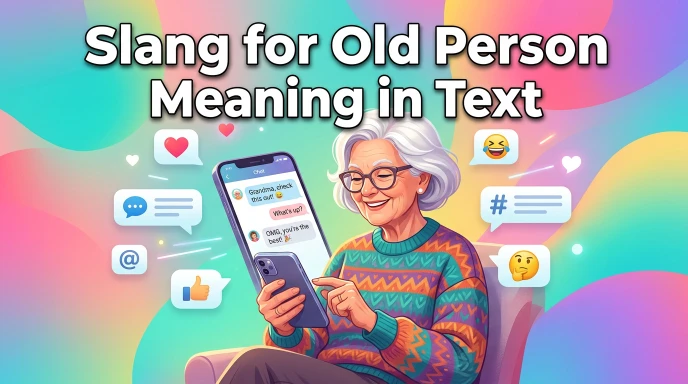
Slang for old person can refer to informal words such as geezer, old timer, boomer, codger, fogey, oldster, and oldie. The right word depends on the speaker, region, relationship, and tone.
People often search for slang for old person because they see an unusual word in a text, comment, meme, or social media post and want to know if it sounds funny, friendly, rude, or insulting. Some terms simply describe age in a casual way. Others suggest that someone seems old fashioned, out of touch, or difficult to relate to.
The word boomer, for example, originally refers to a member of the Baby Boomer generation. Online, people also use it more loosely for an older person or someone they see as out of touch with modern technology or ideas.
This guide explains common slang for old person, what each term means, where people use it, and which words you should avoid in polite or professional conversations.
Quick Answer:
Common slang for an old person includes geezer, old timer, boomer, codger, fogey, oldster, and oldie. Some sound playful, while others can sound disrespectful, so context and tone matter.
What Does Slang for Old Person Mean in Text?
Slang for old person means an informal word or phrase people use to describe someone who is older. The tone can range from friendly and playful to rude or dismissive.
There is no single slang word that fits every situation. For example, someone might call a family member Gramps as a friendly nickname. Another person might use geezer as a joke. Someone who says boomer may refer to a generation or may criticize a person for seeming out of touch.
Here are some common choices:
| Slang term | Basic meaning | Typical tone |
| Geezer | Older person, often an older man | Casual, humorous |
| Old timer | Older or long time person | Friendly or nostalgic |
| Boomer | Baby Boomer; sometimes older person generally | Neutral to dismissive |
| Codger | Older man, often with an eccentric image | Humorous, sometimes negative |
| Fogey | Old fashioned older person | Negative or teasing |
| Oldster | An old person | Informal, sometimes disrespectful |
| Oldie | Older person or something old | Casual, playful |
| Gramps | Grandfather or older man | Familiar, friendly |
These words do not have exactly the same meaning. The relationship between the speakers can change how they sound.
Common Slang Words for an Old Person
Different words carry different feelings. Understanding those differences can help you choose the right term.
1. Geezer
Geezer is an informal word for an older person, especially an older man. It can sound humorous or friendly in some conversations, but it can also sound disrespectful when used about a stranger.
Example:
“That old geezer always sits in the same chair.”
The sentence can sound teasing rather than seriously insulting, depending on the speaker’s tone.
2. Old Timer
Old timer usually describes an older person or someone who has been part of a place, group, or activity for a long time.
It can carry a warm or respectful feeling.
Example:
“My grandfather is an old timer who still loves fixing cars.”
Unlike some harsher terms, old timer can focus on experience rather than weakness or lack of ability.
3. Boomer
Boomer is short for Baby Boomer, the generation that followed World War II’s baby boom. Cambridge also notes that people sometimes use the word for an older person more generally.
Online, boomer can also describe someone who seems out of touch with modern technology, culture, or social attitudes.
Example:
“My uncle called TikTok a waste of time. Such a boomer take.”
Here, boomer does not necessarily mean the person belongs to the Baby Boomer generation. The speaker uses it to describe an old fashioned opinion.
Because of this broader internet use, boomer can sound dismissive or insulting.
4. Codger
Codger is an informal word for an older man. It often creates an image of an elderly man with unusual habits or a slightly grumpy personality.
Example:
“That old codger still walks to the shop every morning.”
The word often appears in humorous or old fashioned writing. It may sound less natural in everyday texting than old timer or boomer.
5. Fogey
Fogey, also written old fogey, describes someone who seems old fashioned or behind current trends.
Age alone does not always make someone a fogey. The word often focuses on behavior, tastes, or attitudes.
Example:
“He refuses to use streaming apps because he’s an old fogey.”
This use carries a teasing or negative tone.
6. Oldster
Oldster is an informal word for an older person. It has existed in English for a long time and comes from old + ster, modeled partly on words such as youngster.
The word can sound playful, but some people may find it disrespectful.
Example:
“The club has activities for young people and oldsters.”
It works better in a casual context than in formal communication.
7. Oldie
Oldie can refer to an older person, although people also use it for something old, such as an old song or movie.
Example:
“My grandpa is an oldie, but he still keeps up with everyone.”
Because the meaning can change with context, readers should check the surrounding sentence.
8. Gramps
Gramps is an informal name for a grandfather. People may also use it casually for an older man who has a grandfather like role.
Example:
“Gramps is coming over for dinner tonight.”
This word often sounds affectionate when someone uses it for their own grandfather. It can sound rude if a stranger uses it for another person’s older relative without permission.
Is Slang for Old Person Rude, Offensive, or Neutral?
It depends on the word and the relationship between the speakers.
Some terms sound friendly. Others can reduce a person to their age or suggest that they are out of touch.
A simple guide:
- Old timer: often friendly or respectful.
- Gramps: usually affectionate when used for a grandfather.
- Geezer: casual and sometimes humorous, but not always respectful.
- Oldster: informal and potentially disrespectful.
- Codger: humorous but can sound negative.
- Fogey: usually teasing or negative.
- Boomer: can be neutral when discussing the generation, but it can become dismissive online.
The phrase OK boomer shows this difference clearly. People often use it to dismiss an older person’s opinion as out of touch or disconnected from younger people’s experiences.
So, boomer is not automatically an insult. The surrounding message determines the tone.
Where Is Slang for Old Person Commonly Used?
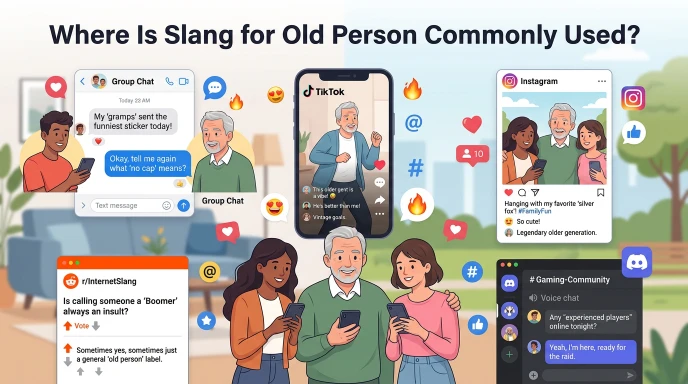
You may see these words in many casual settings.
Texting
Friends may use words like boomer, geezer, or old timer when joking about someone’s age.
TikTok and Instagram
Boomer appears in online discussions about generations, technology, trends, and differences between older and younger people. The phrase OK boomer helped spread this use widely online.
Reddit discussions may use terms such as boomer, old timer, geezer, or fogey, especially when users discuss generational differences.
Discord and Gaming
Gaming communities may use boomer as a joke about someone who does not understand a new game, feature, meme, or technology.
For example:
“I don’t understand this new update. I’m such a boomer.”
Here, the speaker may be joking about themselves.
Workplace Chat
These terms need more care at work. Even when coworkers joke about age, slang can sound disrespectful or create tension.
Real Life Examples of Slang for Old Person
Friendly Example
Friend 1: “Your grandpa still plays chess every weekend?”
Friend 2: “Yep. That old timer never misses a game.”
Here, old timer sounds warm and playful.
Casual Example
Friend 1: “Who taught you how to fix that?”
Friend 2: “My old man.”
Here, old man can mean someone’s father, so context matters. It does not always mean an elderly person.
Social Media Example
User 1: “My dad still prints every photo.”
User 2: “Okay, boomer 😂”
Here, boomer works as a joke about an old fashioned habit.
Gaming Example
Player 1: “How do I change this setting?”
Player 2: “Go to the menu and tap settings.”
Player 1: “Thanks. I was having a boomer moment.”
Here, boomer moment means the speaker struggled with modern technology. It does not necessarily describe their actual age.
Argumentative Example
Person 1: “Young people should stop using phones.”
Person 2: “Okay, boomer.”
Here, the phrase dismisses the first person’s opinion. It can sound sarcastic and rude.
Origin and Background of These Terms
There is no single origin for slang for old person because English has many age related informal words.
Words such as old timer, geezer, codger, and oldster have different histories.
Boomer has a clearer background. It comes from baby boomer, a term for people born during the post World War II baby boom. Cambridge places the generation roughly between 1945 and 1965, while other commonly used definitions place the U.S. Baby Boom generation at 194:1964.
The internet later expanded boomer beyond a strict generation label. The phrase OK boomer became especially visible online in 2019 and helped popularize the dismissive use of the word among younger internet users.
This history matters because boomer does not simply mean “old person.” Its original meaning connects to a specific generation, while its slang use can describe someone who seems old fashioned.
Slang for Old Person vs. Similar Terms
Not every word that refers to age has the same tone.
| Term | Meaning | Tone |
| Senior | Older adult | Neutral |
| Older adult | Person who is older | Respectful |
| Elder | Older person, often with respect or authority | Respectful |
| Old timer | Older or experienced person | Casual, often friendly |
| Geezer | Older person, often a man | Casual, humorous |
| Boomer | Baby Boomer or older/out of touch person | Neutral to dismissive |
| Fogey | Old fashioned person | Teasing or negative |
| Oldster | Old person | Informal |
| Gramps | Grandfather | Familiar, affectionate |
For general writing, older adult or senior usually sounds more respectful than slang.
When Should You Avoid Using Slang for Old Person?
Avoid age related slang when you do not know how the other person feels about it.
You should also avoid it when:
- You are speaking to a customer.
- You are writing a formal email.
- You are talking to a teacher or supervisor.
- You are writing a school or workplace document.
- You are discussing someone’s age in a sensitive situation.
- You are talking about someone you do not know.
- The word could sound like an insult.
For example, calling a stranger a geezer may sound disrespectful even if you intended it as a joke.
When the person’s age does not matter, there may be no reason to mention it at all.
Polite Alternatives to Slang for Old Person
If you want to sound respectful, choose a neutral term.
Good alternatives include:
- Older adult
- Older person
- Senior
- Senior citizen
- Elder
- Older man
- Older woman
- Retired person:only when retirement actually matters to the context
Older adult often works well because it describes age without turning the person’s age into a joke.
The key is simple:
know the meaning, understand the tone, and consider the person before using age related slang.
Why Do People Use This Slang?
People use age related slang for several reasons.
Humor
Friends may joke about age without intending harm.
Generational Identity
Words like boomer can quickly identify a generation or generational viewpoint.
Online Culture
Internet users often shorten complex ideas into one familiar word. Calling something a boomer take, for example, can communicate “an old fashioned opinion” without a long explanation.
Familiarity
Family members and close friends may use terms such as Gramps or old timer because they already share a comfortable relationship.
Teasing
Some words work as light teasing between people who know each other well.
The same word can sound much harsher when a stranger uses it.
Impact of Using Age Related Slang
Age related slang can make a conversation feel relaxed, funny, or personal. It can also create tension if the listener feels that the word mocks their age.
The biggest issue comes from reducing someone to their age.
For example, saying:
“My grandfather is an old timer who loves fishing.”
may sound affectionate.
But saying:
“You don’t understand technology because you’re a boomer.”
can sound dismissive.
The difference comes from the context and the intention behind the words.
Is Slang for Old Person Safe for Social Media?
Most age related slang is not dangerous by itself, but some terms can become insulting or ageist.
Words such as boomer, geezer, fogey, and oldster can appear in casual social media conversations. However, public posts can reach people outside your intended audience.
Before posting, ask:
- Could this sound insulting?
- Am I making fun of someone’s age?
- Does the person know I am joking?
- Would a neutral word communicate the same idea?
The internet removes much of the facial expression and voice tone that help people understand jokes. A phrase that sounds playful in person may look harsher in a comment.
FAQ’s
Q1. What is slang for an old person?
Common examples include geezer, old timer, boomer, codger, fogey, oldster, and oldie. Each word has a different tone.
Q2. What is a slang word for an old man?
Geezer and codger can refer to an older man. Old timer can also describe an older man, often with a more friendly tone.
Q3. Does boomer mean old person?
Sometimes. Boomer originally refers to a Baby Boomer, but people also use it online for an older person or someone who seems out of touch with modern ideas or technology.
Q4. Is calling someone a boomer rude?
It can be. When boomer refers to a generation, it can sound neutral. When someone uses it to dismiss another person’s views, it can sound insulting or ageist.
Q5. Is geezer a rude word?
Geezer is informal and can sound humorous, but it may also sound disrespectful when you use it for someone you do not know.
Q6. What is the polite way to say old person?
Older person and older adult are generally safer choices in respectful communication. Senior can also work depending on the context.
Conclusion
The best slang for old person depends on the situation and the relationship between the speakers. Words such as geezer, old timer, boomer, codger, fogey, oldster, and oldie can all refer to older people, but they do not carry the same tone.
Boomer deserves special attention because it can mean a member of the Baby Boomer generation or, in online slang, someone seen as old fashioned or out of touch.
If you are joking with a close friend, casual slang may work. In professional, school, or unfamiliar settings, older person or older adult usually makes a safer choice.
Discover More About!
NFT Slang: What Does NFT Mean?
Out of Pocket Slang Meaning: What Does Out of Pocket Mean?
ASL Meaning Slang Text: What Does ASL Mean in Text?