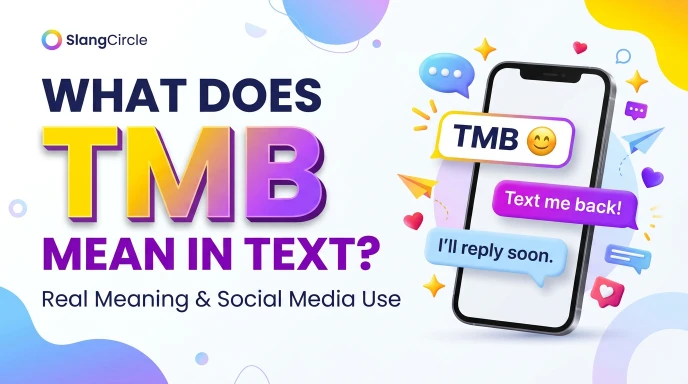
TMB usually means “Text Me Back” in text messages. People use this abbreviation when they want someone to reply to their message. You may see TMB in WhatsApp chats, Snapchat messages, Instagram DMs, TikTok comments, and everyday texting.
For example, your friend might text, “TMB when you get home.” This means they want you to send them a message after you arrive.
However, TMB can have other meanings. On social media, it may mean “Tag Me Back.” In Spanish texting, “tmb” often stands for también, which means “also” or “too.”
The right meaning depends on the conversation. This guide explains TMB in simple English, with real chat examples, social media uses, reply ideas, and helpful tips.
TMB Meaning in Text
TMB most commonly stands for “Text Me Back” in casual English texting. People use it when they want someone to reply to a message or continue a conversation.
Instead of typing the full phrase, someone can write three letters. This makes the message shorter and faster to send.
For example:
- “Hey, TMB when you’re free.”
- “I have something important to tell you. TMB!”
- “Call me after class and TMB.”
- “TMB when you reach home 😊”
In each example, the sender wants the other person to respond.
TMB does not always mean that someone expects an instant reply. The sender may simply want an answer later. Words such as “when you’re free” or “after work” help explain when they expect a response.
What Does TMB Stand For?
The most common English texting meaning breaks down like this:
| Letter | Word |
| T | Text |
| M | Me |
| B | Back |
Together, the letters form “Text Me Back.”
People often use TMB after asking a question, sharing news, or making plans. They may also send it when they have tried to contact someone and want to continue the conversation.
For example:
A: Are we still meeting tomorrow?
B: I’m not sure yet. TMB after I check with my parents.
Here, TMB means the person will send another message after checking their plans.
Is TMB Slang or an Acronym?
TMB is an informal abbreviation that people use in digital communication. It also fits the broad category of texting slang.
People often shorten common phrases to save time. You may recognize other examples, such as:
- IDK: I don’t know.
- IDC: I don’t care.
- IMO: In my opinion.
- BRB: Be right back.
- TMB: Text me back.
People usually say the letters separately as “T M B.” They do not normally pronounce the abbreviation as a single word.
You may see TMB in capital letters or lowercase. In English texting, “TMB” and “tmb” often carry the same meaning.
Other Possible Meanings of TMB
Although “Text Me Back” is a common meaning in English chats, the letters can mean something else in the right context.
| Meaning | Where You May See It | Example |
| Text Me Back | Text messages and private chats | “TMB when you’re free.” |
| Tag Me Back | Social media posts and comments | “I tagged you, TMB!” |
| Tweet Me Back | Older Twitter related conversations | “Tweet me back when you see this.” |
| Take Me Back | Nostalgic posts or conversations about the past | “Those school days! TMB 😭” |
| También (also or too) | Spanish language texting | “Yo tmb quiero ir.” |
These meanings do not appear equally often in every community. In an ordinary English text, start by considering “Text Me Back.” If the conversation involves tags, old memories, or Spanish, another meaning may fit better.
Where People Use TMB
TMB can appear on many messaging and social media platforms. Its meaning usually depends on the words around it, rather than the app alone.
TMB Meaning on TikTok
On TikTok, people may use TMB in comments, captions, or private messages. The phrase “Text Me Back” fits situations where someone wants a reply or hopes to continue a conversation.
For example:
- “TMB when you see this video.”
- “I have tea to spill. TMB 😂”
- “TMB later, I need to tell you something.”
These examples show how someone might use TMB to ask for a response.
You may also see the abbreviation in comments about tagging someone. In that case, “Tag Me Back” may fit better.
For example, a person might comment, “Tag me in your next video, TMB!” The mention of a tag gives you a useful clue.
TMB Meaning on Snapchat
Snapchat users often send quick messages to friends, so TMB can fit naturally into casual conversations.
For example:
A: I have a funny story to tell you.
B: Okay, I’m getting ready right now.
A: TMB when you’re done 😂
Here, TMB means “Text Me Back.” The sender wants to continue the conversation later.
People may also use it after sending a Snap or asking a question. However, TMB does not automatically mean that someone is angry or upset because you have not replied.
The sender may simply want to hear from you when you have time.
TMB Meaning on Instagram
On Instagram, TMB may appear in direct messages, comments, captions, and conversations about posts.
For example:
- “TMB when you get a chance.”
- “I sent you the details. TMB!”
- “TMB after you check the pictures.”
In these messages, TMB asks someone to reply.
A different meaning may fit when the conversation focuses on tagging. For example, someone might write, “Tag me in your Story and TMB.” Here, they may ask you to tag them back.
Look at the surrounding words before deciding which meaning fits.
TMB Meaning on WhatsApp
WhatsApp conversations often include short forms because friends, family members, and classmates exchange quick messages.
For example:
A: Did you ask your brother about the tickets?
B: Not yet. I’ll ask him tonight.
A: Okay, TMB when you know.
In this conversation, TMB means “Text Me Back.” The first person wants an update after the other person checks.
You may also see TMB in family groups or conversations about plans. For example, a friend might write, “TMB when you reach the restaurant,” because they want confirmation that you arrived.
If you need more time to answer, you can send a quick message explaining when you will reply.
TMB Meaning in SMS Text Messages
TMB also works in ordinary SMS messages. You do not need a social media account to use it.
For example:
- “I’m leaving now. TMB later.”
- “Let me know what time works for you, TMB.”
- “I missed your call. TMB when you’re free.”
- “TMB after your appointment.”
These messages ask someone to reply or continue the conversation.
Still, not everyone recognizes texting abbreviations. If you are messaging someone who prefers complete sentences, write “Text me back when you can” instead.
TMB Meaning in Spanish Texting
TMB has another important meaning in Spanish language messages. People often use lowercase tmb as an abbreviation for también, which means “also” or “too.”
For example:
A: Me gusta esa canción.
B: A mí tmb.
The second person means, “I like it too.”
Another example:
A: ¿Quieres ir al cine?
B: Sí, yo tmb quiero ir.
Here, “tmb” means “también,” not “Text Me Back.”
This distinction matters if you chat with Spanish speakers. The language of the message can change the meaning completely.
Real Chat Examples of TMB
These conversations show how people might use TMB in everyday situations. Most examples use “Text Me Back,” while the final example shows the Spanish meaning.
Making Plans
A: Are we going shopping tomorrow?
B: I need to ask my sister first.
A: Okay, TMB when you know.
The sender wants the other person to reply after checking their plans.
Getting Home Safely
A: I’m leaving the party now.
B: Okay, TMB when you get home.
A: Sure, I’ll message you.
Here, TMB means “Text Me Back.” The sender wants confirmation that their friend arrived safely.
Sharing Important News
A: I have something important to tell you.
B: What happened?
A: I’m busy right now. TMB in an hour.
In this example, the sender plans to continue the conversation later. The context suggests that they want the other person to respond when they can.
Asking About Homework
A: Did you finish the science project?
B: Almost. I need to fix one more thing.
A: Okay, TMB when you’re done.
The sender asks for an update after the project is complete.
Waiting for an Answer
A: Have you decided which movie to watch?
B: Not yet. Give me a few minutes.
A: No problem. TMB when you decide.
Here, TMB helps keep the plans moving without requiring an immediate answer.
Talking to a Friend
A: Guess what happened at school today!
B: Tell me!
A: I’m in class right now. TMB at lunch 😂
The sender wants to share the story later, when they have time to chat.
Missing a Call
A: Hey, I called you earlier.
B: Sorry, my phone was on silent.
A: It’s okay. TMB when you’re free.
In this conversation, TMB asks the other person to reconnect through text.
A Friendly Reminder
A: Don’t forget to send me the pictures.
B: I won’t!
A: Thanks, TMB when you send them.
The sender wants a reply or confirmation after the pictures arrive.
A Social Media Tag
A: I tagged you in my new post.
B: Just saw it! Thanks.
A: TMB if you share it in your Story.
Here, the context involves a social media post. Depending on the user’s intention, TMB may mean “Tag Me Back” or ask the person to respond. The surrounding conversation helps clarify the request.
Spanish Texting
A: Me encanta esta película.
B: A mí tmb.
A: ¡Entonces vemos otra mañana!
In this conversation, “tmb” means también, or “too.” The second person agrees that they also love the movie.
How to Reply When Someone Says TMB
The best response depends on what the sender wants. If they ask you to text back, simply answer their message. If you are busy, let them know when you can reply.
Funny Replies
Use these responses when you are joking with a friend:
- “I’m here, no need to send a search team 😂”
- “Reply delivered! Mission complete.”
- “You summoned me? 👀”
- “I have returned from the dead 😂”
- “Your favorite texter is back!”
Example:
A: TMB when you see this.
B: I’m here, no need to send a search team 😂
Casual Replies
These short responses work well in everyday chats:
- “Hey, what’s up?”
- “I’m free now.”
- “Just saw your message.”
- “Sure, tell me.”
- “What’s going on?”
Example:
A: TMB when you’re free.
B: I’m free now. What’s up?
Friendly Replies
Choose these responses when you want to sound warm and helpful:
- “Sorry, I was busy. What’s up?”
- “Hey! I’m here now 😊”
- “Of course, tell me what’s going on.”
- “Sorry for the late reply.”
- “I’m listening. Tell me everything!”
Example:
A: TMB, I need to talk to you.
B: Hey! I’m here now 😊 What’s going on?
Neutral Replies
If you want to keep things simple, try these options:
- “Okay, I’ll reply later.”
- “I saw your message.”
- “I’ll text you after work.”
- “Give me a little time.”
- “I’ll get back to you soon.”
You do not have to reply immediately if you are busy. A short, honest response can help the other person understand when you will be available.
What If You Don’t Understand TMB?
If you cannot tell what the sender means, ask a simple question.
For example:
- “Do you mean text me back?”
- “Are you asking me to tag you?”
- “What does TMB mean here?”
There is nothing wrong with asking for clarification. It is better to check than to guess and misunderstand the message.
Is TMB Rude or Offensive?
TMB is not usually rude or offensive. When it means “Text Me Back,” it is a casual request for someone to reply.
However, the tone depends on the situation. A friendly message such as “TMB when you’re free 😊” sounds relaxed. A repeated message such as “TMB NOW!!!” may sound demanding.
The abbreviation itself does not automatically make a message rude. The sender’s wording, punctuation, and relationship with the reader all affect how it sounds.
Is TMB Safe to Use With Friends?
Yes. TMB usually works well in casual conversations with friends, relatives, and people who understand texting slang.
For example:
“Hey, TMB when you finish class. I need your opinion.”
This sounds like a simple request.
Still, avoid sending the same message repeatedly if someone has not replied. They may be busy, sleeping, studying, or dealing with something important.
Can You Use TMB at School?
You can use TMB in casual messages to classmates if they understand the abbreviation.
For example:
“Can you send me the homework details? TMB when you’re free.”
However, write complete sentences in assignments, essays, and formal messages to teachers. A phrase such as “Please reply when you have time” sounds clearer and more respectful.
Is TMB Appropriate at Work?
TMB may work in a casual conversation with a coworker who understands texting abbreviations. However, it is not the best choice for formal workplace communication.
Instead of writing:
“Please check the report. TMB.”
You could write:
“Please check the report and let me know when you have an update.”
The complete sentence explains exactly what you need and sounds more professional.
Who Uses TMB?
TMB can appear in messages from different age groups. People who use casual texting and online chats may recognize it, but not everyone uses the same abbreviations.
Do Gen Z Users Use TMB?
Some Gen Z users use TMB in private messages, group chats, and casual online conversations. It offers a quick way to ask for a reply without typing the full phrase.
For example:
“TMB when you get home 😊”
This message asks someone to send another text after arriving.
However, you should not assume every Gen Z user knows or uses TMB. Texting habits differ from person to person.
Do Adults Use TMB?
Adults may use TMB when chatting with friends, relatives, or people they know well.
For example:
“I’m heading into a meeting. TMB this evening.”
The message asks the other person to respond later.
Still, many adults prefer complete phrases, especially in professional conversations. The best choice depends on the person and the situation.
How Common Is TMB Online?
TMB appears in texting and online slang references, especially with the meaning “Text Me Back.” However, its exact frequency varies by platform, language, and social group.
You may see it in private chats more often than in formal posts. Other meanings, such as “Tag Me Back” or Spanish también, need the right context.
There is no need to assume that every message containing TMB has the same meaning.
Origin of TMB
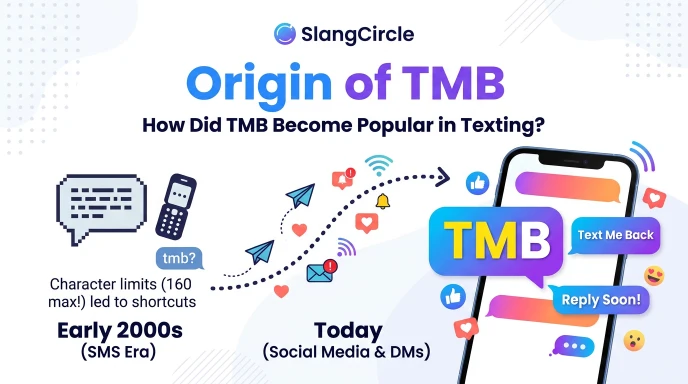
The exact origin of TMB as a texting abbreviation is unclear. People have shortened everyday phrases for years, especially when sending messages on phones with limited keyboards or character space.
“Text Me Back” naturally lends itself to the initials T, M, and B. The abbreviation fits the same general pattern as other short forms that people use to save time while messaging.
As texting and online communication grew, abbreviations became part of everyday digital conversations. People began using them in private messages and online communities.
However, there is no reliable basis for naming one person or social media platform as the original creator of TMB. It is more accurate to explain how people use the term today than to claim an exact invention date.
The Spanish abbreviation “tmb” has a separate explanation: it shortens también, a common Spanish word meaning “also” or “too.” This is why the language of the conversation matters.
TMB Compared With IDK, IDC, IMO, and BRB
TMB belongs to the wider group of abbreviations that people use in digital communication. However, each term has a different purpose.
| Term | Meaning | Type | Usage | Popularity |
| TMB | Text Me Back | Abbreviation | Asking someone to reply | Recognized in casual texting |
| IDK | I Don’t Know | Initialism | Expressing uncertainty | Widely recognized |
| IDC | I Don’t Care | Initialism | Expressing indifference | Widely recognized |
| IMO | In My Opinion | Initialism | Sharing an opinion | Widely recognized |
| BRB | Be Right Back | Initialism | Saying you will return soon | Widely recognized |
These popularity descriptions are general observations, not measured rankings.
For example, “IDK what to wear” shows uncertainty. “BRB, someone is at the door” tells the reader that the sender will return soon. “TMB when you decide” asks someone to send a reply.
Learning these differences makes everyday messages easier to understand.
Real World Usage Example
Imagine you and your friend are planning a weekend trip. You need to know whether they can come, but they have not checked their family’s schedule yet.
You send this message:
You: Are you coming with us on Saturday?
Friend: I need to ask my parents first.
You: No problem. TMB when you know.
Later, your friend checks and replies:
Friend: Yes! They said I can come.
You: Great! I’ll send you the plan.
In this situation, TMB means “Text Me Back.” You use it to ask your friend to send an update after making a decision.
Now imagine that you are chatting in Spanish and your friend writes, “Yo tmb quiero ir.” That means “I want to go too.” The same letters can carry a different meaning because the language and sentence have changed.
These examples show why context matters more than the abbreviation alone.
Common Mistakes People Make With TMB
A few simple mistakes can cause confusion when people read or use TMB.
1. Assuming TMB Always Means Text Me Back
“Text Me Back” is a common meaning in English texting, but TMB can also mean other things.
If the conversation involves a social media tag, “Tag Me Back” may fit better. In Spanish messages, “tmb” may mean también.
2. Thinking TMB Always Sounds Impatient
TMB does not automatically mean the sender is angry. A friend may simply want you to reply when you have time.
Read the whole message before judging the tone.
3. Sending TMB Too Many Times
Repeated messages can make the sender seem impatient or demanding.
If someone has not replied, give them time. They may be busy or unable to check their phone.
4. Using TMB in Formal Emails
TMB works best in casual communication. In a formal email, write “Please reply when you have time” or “Please let me know when you have an update.”
These phrases sound clearer and more professional.
5. Ignoring the Language of the Conversation
In English, TMB often means “Text Me Back.” In Spanish, tmb can stand for también.
Always consider the language and surrounding words before choosing a meaning.
When Should You Use TMB?
TMB works best when you want someone to reply in a casual conversation.
You can use it when:
- You need an answer about plans.
- You want a friend to reply when they are free.
- You are waiting for an update.
- You want to continue a conversation later.
- You need someone to confirm that they received your message.
For example, “TMB when you reach home” sounds natural in a casual chat.
Avoid using TMB in formal documents or when the other person may not understand texting abbreviations. You should also avoid pressuring someone to respond immediately unless the situation truly requires an urgent answer.
FAQ’S
Q1. What does TMB mean in text messages?
TMB usually means “Text Me Back” in English text messages. People use it when they want someone to reply or send an update. For example, “TMB when you get home” means “Text me back when you get home.” In Spanish texting, tmb can mean también, or “too.”
Q2. What does TMB mean on TikTok?
On TikTok, TMB may mean “Text Me Back” in captions, comments, or private messages. In conversations about tagging someone in a post or video, it may mean “Tag Me Back.” Check the surrounding words to understand the intended meaning.
Q3. Is TMB slang?
Yes, TMB works as an informal texting abbreviation when it means “Text Me Back.” People use it in casual messages to ask for a reply. It is not a standard formal expression, so complete wording usually works better in professional communication.
Q4. Is TMB rude or offensive?
TMB is generally not rude or offensive. It usually asks someone to reply. However, repeated messages or demanding wording may sound impatient. A friendly message such as “TMB when you’re free” feels more relaxed than “TMB RIGHT NOW!”
Q5. How should you reply to TMB?
If someone asks you to text back, simply answer their message. You could say, “Hey, what’s up?” or “Sorry, I was busy. I’m here now.” If you need more time, tell them when you can reply. If the meaning is unclear, ask what they mean.
Conclusion
TMB usually means “Text Me Back” in English text messages. People use it when they want a reply, need an update, or hope to continue a conversation. You may see it in WhatsApp chats, Snapchat messages, Instagram DMs, TikTok comments, and ordinary SMS messages.
For example, “TMB when you’re free” means the sender wants you to reply when you have time. The phrase does not automatically sound rude, although repeated messages can feel demanding.
Remember that TMB can have other meanings. In some social media conversations, it may mean “Tag Me Back,” while Spanish speakers often use tmb as a short form of también, meaning “also” or “too.”
The best way to understand TMB is to read the entire message. Use it with friends when the meaning feels clear, but choose complete sentences in formal communication.
Discover More About!
What Does TM Mean in Text?Examples & Social Media Use
What Does TG Mean in Text? Examples & Social Media Use
What Does TD Mean in Text?Examples & Social Media Use