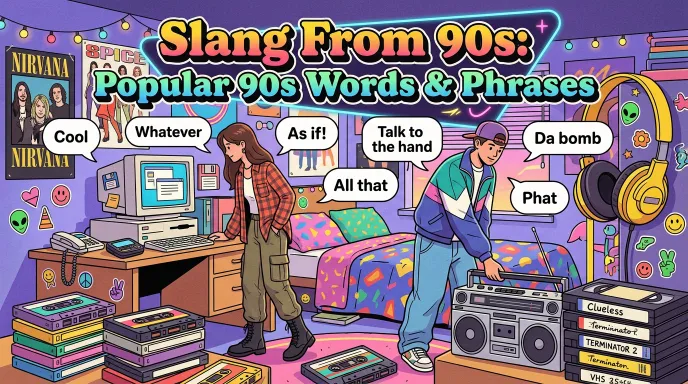
Slang from 90s includes fun words and phrases that people used during the 1990s. Popular examples include “all that,” “as if,” “da bomb,” “phat,” “talk to the hand,” “whatever,” and “my bad.”
The 1990s gave English slang a strong mix of music, television, movies, school culture, and youth speech. Many phrases from that decade still appear in memes, social media posts, retro content, and conversations about 90s culture.
People search for slang from 90s because they want to understand old expressions, write a 90s themed character, or bring a little retro style into modern conversations. Some phrases still sound natural today, while others clearly belong to the 90s.
This guide covers popular 90s slang, their meanings, examples, origins, and modern use. It also explains which phrases still work and which ones may sound dated.
Quick Answer
- Slang from 90s refers to informal words and phrases that people commonly used during the 1990s. These expressions often appeared in teen conversations, movies, music, television, and pop culture.
Popular examples include:
- All that : very impressive or attractive
- As if! : a sarcastic way to say “no way”
- Da bomb : excellent or amazing
- Phat : very cool or impressive
- My bad : my mistake
- Talk to the hand : I do not want to listen
- Whatever : I do not care or disagree
- Bling : flashy jewelry or expensive style
- Homeboy : a close male friend
- Fly : stylish or cool
What Does Slang From 90s Mean?
Slang from 90s does not describe one single word. It refers to many informal expressions that became popular during the decade.
The 1990s had a distinct youth culture. Hip hop, sitcoms, teen movies, video games, skateboarding, and pop music all helped spread new expressions.
Some phrases described style and popularity. Others showed humor, sarcasm, friendship, surprise, or disagreement.
For example:
“Those shoes are da bomb!”
Here, da bomb means something is excellent.
Another example:
“As if!”
This phrase shows disbelief or sarcastic rejection.
The meaning becomes much easier to understand when you look at the situation around the phrase.
Popular Slang From 90s
The 1990s had many memorable expressions. Here are some of the most recognizable examples.
| 90s Slang | Meaning | Example |
| All that | Very impressive | “She thinks she’s all that.” |
| As if! | No way; I don’t believe it | “You think I’d do that? As if!” |
| Da bomb | Excellent | “This song is da bomb.” |
| Phat | Cool or impressive | “Those sneakers are phat.” |
| My bad | My mistake | “My bad. I forgot your book.” |
| Talk to the hand | Stop talking to me | “Talk to the hand!” |
| Whatever | I don’t care | “Whatever. Do what you want.” |
| Fly | Cool or stylish | “That jacket looks fly.” |
| Bling | Flashy jewelry | “He showed off his new bling.” |
| Homeboy | Close male friend | “My homeboy lives nearby.” |
90s Slang for Something Cool
Several 90s words described something impressive, stylish, or exciting.
Da Bomb
Da bomb meant something was excellent or extremely good.
Example:
“That pizza is da bomb!”
The phrase often appeared in casual speech and pop culture.
Phat
Phat described something cool, attractive, or impressive.
For example:
“Those new shoes are phat.”
The spelling may look unusual. However, slang often plays with spelling to create a distinct style.
Fly
Fly meant cool, stylish, or fashionable.
Example:
“Your new jacket looks fly.”
The word can still appear today, although younger speakers may not use it as often as people did during the 1990s.
All That
All that described someone or something impressive.
For example:
“He thinks he’s all that.”
The phrase can sound positive or sarcastic. Tone makes the difference.
90s Slang for Friends
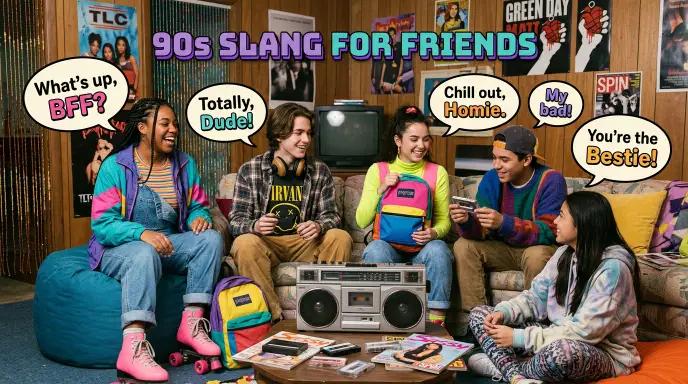
The decade also had casual words for friends and people in your social circle.
Homeboy
Homeboy referred to a close male friend.
Example:
“My homeboy is coming over later.”
The word often appeared in casual speech and hip hop influenced language.
Homie
Homie also referred to a friend or someone from your close social group.
Example:
“What’s up, homie?”
People still use homie today, although its frequency varies by community and speaker.
Dawg
Dawg worked as a casual form of address between friends.
Example:
“What’s up, dawg?”
The spelling gives the word a slang style. It does not refer to an actual dog in this context.
90s Slang for Agreement and Apologies
Some expressions from the decade became common because they made everyday conversations shorter.
My Bad
My bad means “my mistake.”
Example:
“I sent you the wrong file. My bad.”
This phrase remains common today. People use it in casual conversations when they want to admit a small mistake.
Word
Word could show agreement or approval.
Example:
“We’re meeting at eight.”
“Word.”
In this context, the speaker means something like “I understand” or “I agree.”
The meaning depends on the conversation.
90s Slang for Disagreement
The 1990s also gave people plenty of ways to show sarcasm or disagreement.
As If!
As if! means something like “No way!” or “I don’t believe that.”
Example:
“You think I’m going to apologize first?”
“As if!”
The phrase became strongly associated with the 1990s through teen pop culture.
Talk to the Hand
Talk to the hand told someone to stop talking because the speaker did not want to listen.
Example:
“You keep complaining, but talk to the hand.”
The phrase often had a sarcastic or dismissive tone.
Whatever
Whatever could show disagreement, annoyance, or a lack of interest.
Example:
“You should come with us.”
“Whatever.”
The speaker may mean, “I don’t care.”
Because tone matters, whatever can sound playful between friends or rude during an argument.
Funny Slang From the 90s
Some 90s expressions stand out because they sound playful today.
Booyah!
Booyah! expressed excitement, victory, or celebration.
Example:
“I got the highest score. Booyah!”
Take a Chill Pill
Take a chill pill meant “calm down.”
Example:
“Take a chill pill. It’s not that serious.”
People used the phrase when someone seemed too angry, excited, or stressed.
Get a Grip
Get a grip told someone to calm down and control their emotions.
Example:
“Get a grip. We still have plenty of time.”
The phrase can sound friendly or harsh, depending on the speaker’s tone.
Where Did 90s Slang Come From?
90s slang came from many parts of popular culture. No single group created all of these expressions.
Several influences helped spread slang during the decade:
- Hip hop and rap music
- Teen movies
- Sitcoms and television shows
- Video games
- Skateboarding culture
- Fashion
- School and youth culture
- Magazines and radio
- Pop stars and celebrities
Television played a major role in spreading catchphrases. Movies also helped certain expressions reach audiences far beyond their original communities.
Music had an especially strong influence. Hip hop introduced and popularized many words and phrases that later entered wider American English.
That does not mean every 90s slang term started in the 1990s. Some expressions existed earlier but gained wider attention during the decade.
90s Slang vs. Modern Slang
90s slang and modern internet slang can feel very different.
Modern users can spread a new phrase worldwide within hours through social media.
| 90s Slang | Modern Equivalent |
| Da bomb | Fire |
| Fly | Drip |
| My bad | My bad / my fault |
| As if! | No way |
| Awesome | Fire / amazing |
| Homeboy | Bro / bestie |
| Talk to the hand | Leave me alone |
| Bling | Drip / iced out |
These comparisons do not mean the terms have exactly the same meaning. They simply show how casual language can change over time.
Are 90s Slang Words Still Used?
Some 90s slang words remain common, while others now sound dated or nostalgic.
For example, my bad still feels natural in everyday casual English.
Words such as phat and phrases such as talk to the hand may sound more strongly tied to 90s culture.
Modern speakers may use older slang for humor, nostalgia, costumes, themed parties, videos, or references to 90s movies and music.
A phrase can also return through social media. Younger users sometimes reuse older expressions because they find them funny or interesting.
Is 90s Slang Rude or Offensive?
Most 90s slang is informal rather than offensive.
Still, some expressions can sound rude because they dismiss another person.
For example:
“Talk to the hand.”
This phrase can easily sound disrespectful.
Similarly:
“Whatever.”
can sound dismissive during an argument.
Some slang also came from specific cultural communities. You should understand that background before using an expression casually. Avoid treating slang from a particular community as a costume or joke.
The safest approach involves context and respect.
Real Life Examples of 90s Slang
Here are some simple examples that show how people might use these expressions.
Friendly Conversation
“Your new bike is fly!”
Here, fly means stylish or cool.
Text Message
“I forgot to call you back. My bad!”
The speaker admits a small mistake.
School Conversation
“That movie was da bomb.”
The speaker means the movie was excellent.
Funny Reaction
“You think I’m going to believe that? As if!”
The speaker shows disbelief in a playful way.
Argument
“Talk to the hand. I’m done listening.”
Here, the phrase sounds rude and dismissive.
Celebrating a Win
“We won the game! Booyah!”
The speaker celebrates the victory.
When Should You Avoid 90s Slang?
You can use many 90s expressions in casual conversations, but formal settings need clearer language.
Avoid heavy 90s slang when you:
- Write a school essay.
- Send a formal business email.
- Talk to someone in a professional setting.
- Write an academic report.
- Explain something serious.
- Communicate with someone who may not understand the phrase.
For example, instead of:
“That idea is da bomb.”
a professional message could say:
“That idea looks excellent.”
Clear language works better when the situation requires professionalism.
Why Do People Still Like 90s Slang?
People often enjoy 90s slang because it brings back memories and adds personality to conversations.
Common reasons include:
- Nostalgia: It reminds people of their childhood or teenage years.
- Humor: Older phrases can sound funny today.
- Pop culture: Movies and music keep many expressions recognizable.
- Style: Some people enjoy retro language.
- Creativity: Slang can make casual speech more expressive.
- Entertainment: 90s themed content often uses these phrases.
You may also see these words in retro parties, movies, memes, social media captions, and 90s inspired fashion content.
Common Misunderstandings About 90s Slang
Not Every Old Slang Word Started in the 90s
Some expressions existed before the decade. The 1990s simply gave them more attention or wider use.
90s Slang Does Not Have One Meaning
A phrase can change meaning based on tone.
For example, whatever may sound playful among friends but rude during an argument.
Not Every 90s Phrase Sounds Natural Today
Some expressions remain common. Others now sound dated.
That difference can help you choose the right phrase for your audience.
Movies Do Not Always Show Real Life Speech Perfectly
Movies and television often exaggerate slang for humor or character development. A phrase appearing in a popular show does not automatically mean everyone used it every day.
FAQ’S
Q1:What is slang from the 90s?
Slang from the 90s refers to informal words and phrases that gained popularity during the 1990s. Examples include my bad, as if, da bomb, fly, phat, and whatever.
Q2:What was popular slang in the 90s?
Popular 90s slang included all that, as if, da bomb, phat, fly, my bad, booyah, bling, and talk to the hand.
Q3:What did “da bomb” mean in the 90s?
Da bomb meant something was excellent, exciting, or very impressive.
Q4:What did “phat” mean?
Phat described something cool, attractive, stylish, or impressive.
Q5:Is 90s slang still used today?
Yes. Some phrases remain common, while others now sound old fashioned or nostalgic. My bad, for example, still appears in casual English.
Q6:What 90s slang means cool?
Words such as fly, phat, and da bomb could describe something cool or impressive.
Conclusion
Slang from 90s gives us a fun look at the language and pop culture of the decade. Words such as da bomb, fly, phat, my bad, as if, and booyah helped shape the casual style of the era.
Some expressions still fit modern conversations. Others work better when you want a clear 90s feel.
Context matters most. Use these phrases with friends, in jokes, or in retro themed content when they fit the situation. For formal writing, choose simple and direct English instead.
The best 90s slang does more than sound nostalgic. It shows how music, television, movies, fashion, and youth culture can shape everyday language.
Meta Description: Explore slang from 90s, including popular words, meanings, examples, origins, and phrases like da bomb, phat, fly, my bad, and as if.
Find Out More About!
- Gym Slang Funny: Hilarious Gym Terms & Meanings
- 80’s Slang Meaning in Text: 80s Words & Phrases
- Area Between Anus and Scrotum Slang: Meaning & Terms