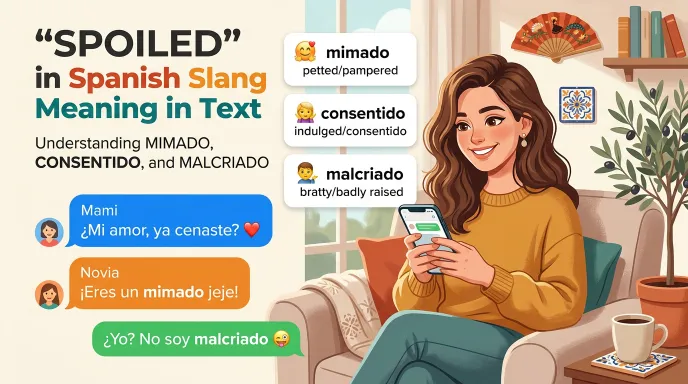
Spoiled in Spanish slang can have different meanings depending on the person and the situation. Spanish speakers often use words such as mimado, consentido, and malcriado when they describe a spoiled person. Each word adds a slightly different idea.
People search for spoiled in Spanish slang because the English word “spoiled” does not always match one Spanish word. The best choice depends on if you mean a person who gets too much attention, someone who always gets what they want, or a person who acts like a brat.
This guide explains the main Spanish words for “spoiled.” You will learn what each word means, how it sounds, where it fits, and how to use it in everyday sentences.
Quick Answer
- Mimado means spoiled or pampered. Consentido often describes someone who gets too much special treatment. Malcriado points more strongly to rude, bratty, or badly behaved behavior.
What Does “Spoiled in Spanish Slang” Mean?
When people ask about spoiled in Spanish slang, they usually want a casual Spanish word for a person who gets too much attention, too many gifts, or too much freedom.
Spanish has several useful choices:
- Mimado / mimada : spoiled or pampered
- Consentido / consentida : spoiled because someone gives the person too much special treatment
- Malcriado / malcriada : spoiled, badly behaved, rude, or bratty
These words overlap, but they do not always create the same feeling.
For example, mimado can describe someone who receives lots of care and attention. Consentido can suggest that someone gets too many things or too many chances. Malcriado sounds more negative because it focuses on poor behavior.
Also, these words do not always count as “slang” in the strict sense. They are common Spanish words that people can use in casual speech. The word malcriado, for example, can describe a spoiled brat or a badly behaved person.
Spanish Words for a Spoiled Person
Here is a simple comparison:
| Spanish word | Basic meaning | Tone | Best use |
| Mimado | Spoiled or pampered | Mild to negative | Someone who gets lots of care |
| Consentido | Spoiled or overindulged | Mild to negative | Someone who gets special treatment |
| Malcriado | Spoiled brat or badly behaved | More negative | Someone who acts rude or bratty |
The right word depends on what you want to say.
Mimado
Mimado often means spoiled or pampered. It can describe a person who receives a lot of attention, care, or special treatment.
For example:
Es un niño mimado.
He is a spoiled child.
The word can also describe a pet. In some situations, it can sound softer than malcriado because it does not always focus on bad behavior. Spanish references commonly translate mimado as “spoiled” or “pampered.”
Consentido
Consentido can describe someone who gets almost everything they want. The word often connects with too much special treatment.
For example:
Ese niño es muy consentido.
That child is very spoiled.
The word can sound critical, but the exact tone depends on the speaker. Cambridge also gives consentido the meaning “spoiled” when someone receives too much attention or gets their own way.
Malcriado
Malcriado carries a stronger negative feeling. It can describe someone who acts rude, badly behaved, or like a spoiled brat.
For example:
Ese niño es muy malcriado.
That child is very badly behaved.
You can use it when the main problem involves behavior. SpanishDictionary also connects malcriado with “spoiled brat,” “brat,” and “bad mannered child.”
What Does Mimado Mean in Spanish?
Mimado means spoiled or pampered. It often describes someone who receives lots of affection, care, or attention.
The word comes from mimar, which relates to giving someone a lot of care or attention. In everyday Spanish, mimado can describe both children and adults.
For example:
Mi hermano menor está muy mimado.
My younger brother is very spoiled.
You can also use the feminine form:
Ella es una niña mimada.
She is a spoiled girl.
The tone can range from affectionate to critical. Context matters.
If someone says a pet is mimado, the speaker may simply mean that the pet gets lots of love. If someone calls an adult mimado, the speaker may criticize that person’s behavior.
What Does Consentido Mean in Spanish?
Consentido describes someone who receives too many favors, gifts, or chances to get what they want.
For example:
Es un niño muy consentido.
He is a very spoiled child.
The word can also describe adults.
Su hija es muy consentida.
Their daughter is very spoiled.
Consentido often focuses on the treatment a person receives. The idea usually involves someone giving that person too much.
This meaning makes consentido useful when you want to explain why someone acts spoiled.
What Does Malcriado Mean in Spanish?
Malcriado puts more attention on behavior.
A malcriado person may interrupt others, talk back, demand things, or ignore basic manners. English speakers may translate the word as “spoiled brat,” “brat,” “rude,” or “badly behaved,” depending on context.
For example:
El niño es malcriado y siempre contesta mal.
The boy is badly behaved and always talks back.
The word can sound stronger than mimado or consentido. Use it with care when you talk about someone’s child or family member.
Is “Spoiled” Rude in Spanish?
It can sound rude, especially when you call someone malcriado.
The three words have different levels of criticism:
- Mimado can sound mild.
- Consentido can sound critical but still fairly common.
- Malcriado can sound more direct and negative.
Your tone also matters. A parent may use these words while correcting a child. Friends may use them jokingly. A stranger may hear them as an insult.
If you do not know the person well, choose your words carefully.
Where Is “Spoiled” in Spanish Commonly Used?
You can hear these words in everyday Spanish conversations. People may use them when they talk about:
- Children
- Teenagers
- Adults
- Pets
- Family members
- Friends
- Someone who always gets what they want
You may also see them in social media posts, comments, text messages, and casual online conversations.
However, the exact word can vary by country and region. Spanish speakers across different places may prefer different expressions.
That is why context matters more than a simple one word translation.
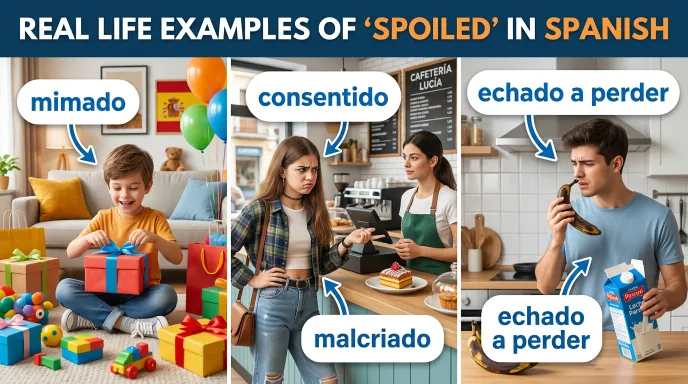
Real Life Examples of “Spoiled” in Spanish
Friendly Example
Mi perro está muy mimado.
My dog is very spoiled.
Here, mimado can sound warm. The speaker may simply mean that the dog gets lots of love.
Family Example
Mi hermana es muy consentida.
My sister is very spoiled.
This sentence can suggest that the family gives the sister special treatment.
Negative Example
Ese chico es malcriado.
That boy is badly behaved.
Here, malcriado focuses on his behavior.
Casual Example
Te tienen muy consentido.
They really spoil you.
This sentence can sound playful. Friends may use it when someone receives lots of gifts or attention.
Social Media Example
Mi gato está demasiado mimado.
My cat is way too spoiled.
This sentence works well for a casual pet post.
Argument Example
No seas malcriado.
Don’t act like a brat.
This sentence has a stronger tone. It can sound like a direct correction.
Is “Spoiled” the Same as “Bratty”?
Not always.
English speakers often use spoiled for someone who gets too much. They use bratty for someone who acts badly because they expect special treatment.
Spanish makes a similar distinction.
Mimado and consentido can focus on the special treatment. Malcriado can focus more on poor manners or bad behavior.
Think of it this way:
Too much special treatment → consentido
Too much pampering → mimado
Bad or bratty behavior → malcriado
Spoiled Person vs. Spoiled Food in Spanish
This difference matters a lot.
When English uses spoiled for a person, Spanish may use mimado, consentido, or malcriado.
When English uses spoiled for food, these words do not fit.
Spanish uses expressions such as:
- Podrido :rotten
- Echado a perder :spoiled or gone bad
- Estropeado :spoiled, damaged, or ruined in some contexts
For example:
La leche se echó a perder.
The milk went bad.
You should not call spoiled milk mimado. That word describes a person or something that receives too much care.
The best Spanish choice depends on the food and the situation.
Similar Spanish Words and Their Meanings
Several Spanish words can look similar in English translation. Their meanings still differ.
| Word | Simple English meaning | Main idea |
| Mimado | Spoiled / pampered | Too much care or attention |
| Consentido | Spoiled | Too many favors or special treatment |
| Malcriado | Bratty / badly behaved | Poor manners or behavior |
| Podrido | Rotten | Food or organic matter |
| Echado a perder | Gone bad | Food or something that no longer works well |
| Arruinado | Ruined | Something damaged or spoiled in a broader sense |
Arruinado can describe something ruined or badly damaged. The RAE defines arruinar with meanings related to causing serious damage or destruction.
When Should You Avoid These Words?
Avoid calling someone malcriado if you do not know them well. The word can sound insulting.
You should also avoid using consentido or mimado as a joke when you do not know how the other person will react.
Use extra care in these situations:
- Talking to a stranger
- Speaking about someone’s child
- Talking to a teacher or manager
- Writing a formal message
- Discussing someone’s family
- Giving criticism
In formal settings, a neutral description often works better.
For example, instead of calling someone malcriado, you could describe the exact behavior:
No muestra buenos modales.
He does not show good manners.
That approach sounds more respectful.
Why Do People Use These Words?
People use these words because they quickly describe a familiar type of behavior.
Someone may call a person mimado when that person expects lots of attention. Another person may choose consentido because the person always gets what they want.
A speaker may choose malcriado when the behavior bothers them.
The words help speakers show their opinion without giving a long explanation.
Tone still matters. A smile can make mimado sound playful. A sharp voice can make malcriado sound like a serious insult.
Common Misunderstandings
1. “Mimado” always means badly behaved.
Not necessarily. Mimado can mean pampered or spoiled. The word does not always focus on rude behavior.
2. “Consentido” and “mimado” always mean exactly the same thing.
They overlap, but they can highlight different ideas. Consentido often points to special treatment, while mimado can focus on pampering or extra care.
3. “Malcriado” only means spoiled.
No. Malcriado can also describe someone who acts rude, impolite, or badly behaved.
4. These words describe spoiled food.
No. Use food related expressions such as echado a perder or podrido when you talk about food that has gone bad.
5. These words always count as slang.
Not exactly. Mimado, consentido, and malcriado are common Spanish words. People can use them in casual speech, but they do not all qualify as slang in the strict linguistic sense.
FAQ’S
Q1:What is “spoiled” in Spanish slang?
For a spoiled person, common choices include mimado, consentido, and malcriado. The best choice depends on the meaning and tone you want.
Q2:What does mimado mean?
Mimado means spoiled or pampered. It can describe someone who gets lots of care, attention, or affection.
Q3:What does consentido mean?
Consentido describes someone who gets too much special treatment or often gets what they want.
Q4:What does malcriado mean?
Malcriado can mean spoiled, bratty, rude, or badly behaved. It usually carries a more negative tone than mimado.
Q5:Which Spanish word means “spoiled brat”?
Malcriado often fits “spoiled brat” because it highlights bad or rude behavior.
Q6:How do you say spoiled food in Spanish?
You can use expressions such as echado a perder or podrido, depending on what you mean. These expressions differ from words for a spoiled person.
Conclusion
The best Spanish word for spoiled in Spanish slang depends on the situation. Use mimado when you mean spoiled or pampered. Choose consentido when someone gets too much special treatment. Use malcriado when you want to stress rude, bratty, or badly behaved actions.
Remember that spoiled can describe more than people. Spanish uses different words for spoiled food and ruined things. For example, echado a perder can describe food that has gone bad, while arruinado can describe something ruined or badly damaged.
When you choose a Spanish word, think about the person, behavior, context, and tone first. That small difference can help you sound much more natural.
Related Slang About!
- New York Slang Meaning in Text: A Simple Guide
- Güero in Spanish Slang: Meaning in Text
- Maje Spanish Slang Meaning in Text